
Let’s have a conversation
States and health plans are navigating overlapping Medicaid changes on compressed timelines. The January 1, 2027, changes under OB3, including six-month renewals for expansion adults, community engagement requirements and reduced retroactive coverage, rightly command attention. But readiness is already being tested by changes taking effect this fall.
October 1 brought narrower federal Medicaid and CHIP eligibility for certain noncitizens. Separately, a CMS final rule taking effect October 13 restricts federal Medicaid and CHIP funding for certain gender-affirming medical care for minors. These changes require plans to coordinate member notices, benefit configuration and provider communication. As states determine their responses, early engagement with state agencies can help plans anticipate operational needs and support affected members. The lessons emerging now should inform preparations for January.
Medical Frailty: Early Lessons From Nebraska
Medical frailty remains a key area of uncertainty. CMS's June interim final rule ties frailty to whether a condition significantly impairs a person's ability to work or take part in qualifying activities and it stops short of providing a diagnosis list, leaving states to define much of it. Nebraska, which began applying work requirements to new applicants May 1, offers an early look at what that means. The state built a nearly 300-page index of diagnosis and procedure codes before the federal rule landed. CMS has since directed Nebraska to revise its medical frailty verification process to align with federal requirements. Early state data show that 39% of new applicants and 57% of renewing members qualified for an exclusion and medical frailty was the largest category among applicants. The lesson for plans is that frailty determinations will carry a great deal of weight and plans hold much of the claims and encounter data states will rely on to make them.
What Health Plans Can Do Now
That is why we encourage plan leaders to monitor how each state is defining and verifying medical frailty and to engage their state agency early and collaboratively. Working with state partners, where possible, can help plans clarify documentation and verification processes, support consistent application of medical frailty criteria and protect access to care for eligible members. Plans can begin assessing members now, identify who may be affected and prepare to help members maintain coverage through outreach and education, assistance gathering documentation or referrals to qualifying programs. Unclear notices and missed deadlines can put members’ coverage at risk, making clear, repeated, multi-channel communication essential.
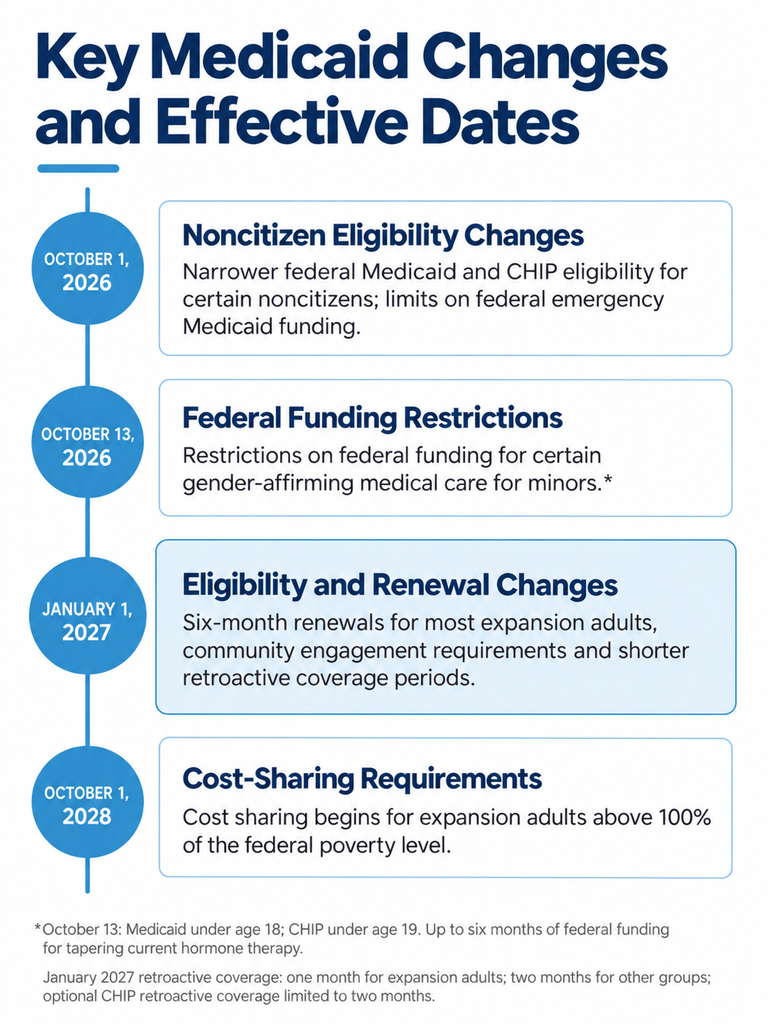
Key Dates at a Glance
- October 1, 2026: Federal Medicaid and CHIP eligibility narrows for certain noncitizens and federal funding for emergency Medicaid for noncitizens is limited.
- October 13, 2026: Federal Medicaid and CHIP funding ends for gender affirming medical care for minors (Medicaid under 18, CHIP under 19), with a taper of up to six months for current hormone therapy.
- January 1, 2027: Six-month renewals begin for most expansion adults, community engagement requirements begin and retroactive coverage is reduced (one month for expansion adults, two months for other groups and optional CHIP retroactive coverage drops to two months).
- October 1, 2028: Cost sharing begins for expansion adults above 100% FPL.
How ProspHire Can Help
ProspHire helps health plans translate changing Medicaid requirements into practical implementation plans. Our team can support readiness assessments, coordination with state agencies, operational planning and member communication strategies. As OB3 implementation unfolds alongside other Medicaid changes, we help plans identify gaps, prioritize next steps and prepare to support affected members.
Connect with our team to discuss your organization’s Medicaid readiness priorities.