Author: Gianna DiLauro

Frequently Asked Questions About CMS Reporting Requirements

1. What Are the New CMS Reporting Requirements?

CMS is expanding oversight of utilization management (UM) programs to ensure health plans deliver timely, appropriate, and high-quality care. Plans must now submit detailed reports on how they implement UM policies, track denials, appeals and decisions, and monitor clinical and operational outcomes.

2. Why Is This Important for Health Plans?

These requirements are about more than compliance—they impact member experience, clinical quality, and financial performance. Staying ahead of these reporting expectations reduces the risk of penalties, supports transparent operations, and strengthens trust with regulators and members alike.

3. How Will These Reporting Changes Affect Daily Operations?

Health plans may see increased workload in areas such as:

  • Collecting and analyzing UM data
  • Tracking and documenting denials and appeals
  • Monitoring adherence to clinical guidelines
  • Demonstrating compliance across all lines of business

4. What Challenges Might Health Plans Face in Adapting to These Requirements?

Many organizations struggle with:

  • Fragmented data sources
  • Limited integration between UM systems and reporting tools
  • Ensuring consistent documentation across teams and regions
  • Translating regulatory guidance into actionable operational workflows

5. How Can ProspHire Help Health Plans Respond Effectively?

ProspHire partners with health plans to:

  • Assess readiness for CMS reporting and UM oversight
  • Streamline data collection and reporting processes
  • Optimize operational workflows to ensure compliance
  • Provide actionable insights to improve UM program performance and member outcomes
6. What’s the Bottom Line for CMS?

CMS’s new reporting requirements are a signal that transparent, efficient, and clinically sound utilization management is critical. With the right strategy, processes, and support, health plans can meet regulatory expectations, reduce risk and improve care delivery—turning compliance into a competitive advantage.

Frequently Asked Questions On Improving Operational Efficiency in Healthcare

1. Why Is Operational Efficiency So Important in Healthcare?

Operational efficiency isn’t just about cutting costs—it’s about optimizing resources, enhancing member experience, and empowering teams to focus on what matters most: quality care. Efficient processes reduce waste, improve outcomes, and allow health plans to respond quickly to regulatory and market changes.

2. What Are the Common Operational Challenges Healthcare Organizations Face?

Many health plans and providers struggle with:

  • Inefficient workflows that slow down decision-making
  • Redundant administrative tasks that drain resources
  • Fragmented data systems that limit visibility
  • Misaligned priorities between clinical, operational, and administrative teams

3. How Can Organizations Identify Areas for Improvement?

Start by taking a data-driven approach:

  • Map workflows to identify bottlenecks
  • Analyze time and resource allocation across teams
  • Review technology utilization to ensure systems are fully leveraged
  • Benchmark against industry best practices to set clear improvement goals

4. What Practical Steps Can Improve Operational Efficiency?

Healthcare organizations can:

  • Standardize processes to reduce variability
  • Automate repetitive tasks where possible
  • Implement integrated systems to unify data and reporting
  • Repurpose resources toward high-value activities that directly impact care delivery

5. How Does Operational Efficiency Impact Patients and Members?

Streamlined operations mean:

  • Faster response times
  • Fewer errors and delays
  • Improved coordination across care teams
  • Higher satisfaction and better health outcomes

6. How Can ProspHire Support Healthcare Organizations in This Area?

ProspHire partners with health plans and providers to:

  • Conduct operational assessments and identify inefficiencies
  • Implement cost-saving process improvements without compromising quality
  • Design workflows that boost productivity and staff engagement
  • Deliver measurable results that enhance care delivery and member satisfaction

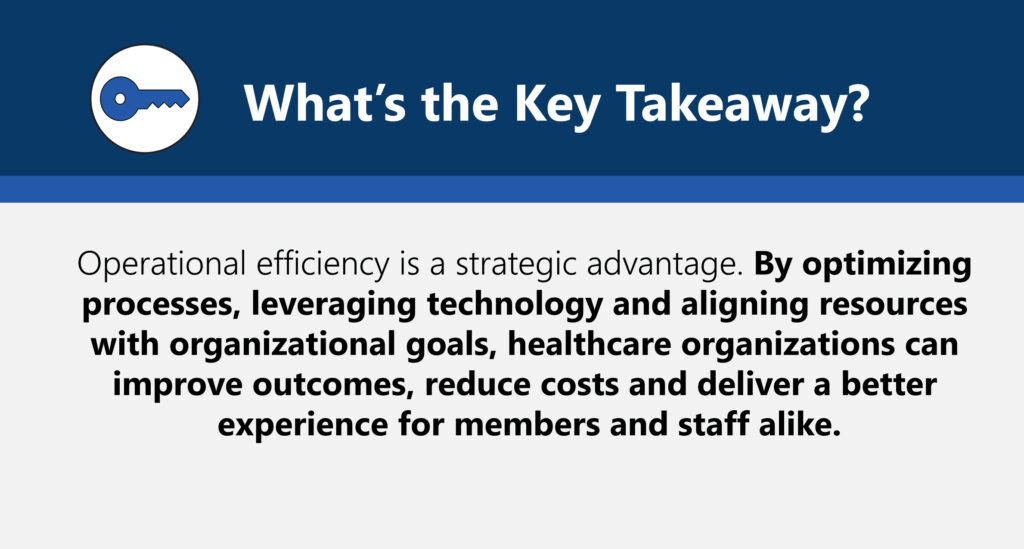
7. What’s the Key Takeaway?

Operational efficiency is a strategic advantage. By optimizing processes, leveraging technology, and aligning resources with organizational goals, healthcare organizations can improve outcomes, reduce costs, and deliver a better experience for members and staff alike.

Frequently Asked Questions on Compliance in Healthcare – Navigating Regulatory Changes

1. Why is Compliance in Healthcare So Important Right Now?

Healthcare regulations are constantly evolving and staying compliant is critical to protecting patient safety, safeguarding revenue and avoiding costly penalties. Proactive compliance ensures that your organization is prepared for audits, maintains trust with patients and operates efficiently in a complex regulatory landscape.

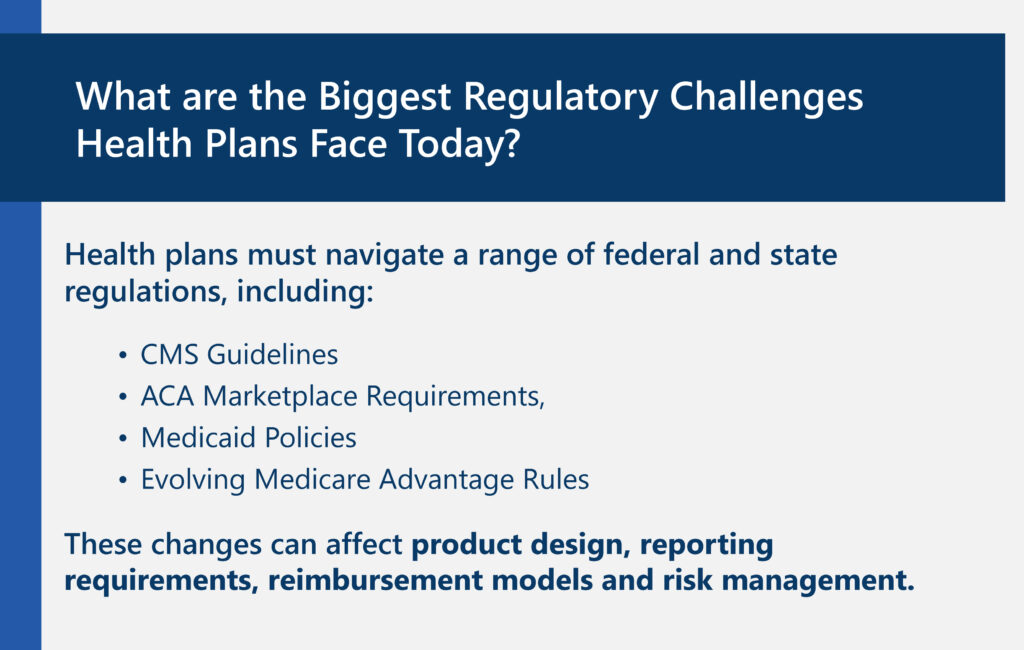
2. What Are the Biggest Regulatory Challenges Health Plans Face Today?

Health plans must navigate a range of federal and state regulations, including CMS guidelines, ACA marketplace requirements, Medicaid policies and evolving Medicare Advantage rules. These changes can affect product design, reporting requirements, reimbursement models and risk management.

3. How Do Regulatory Changes Impact Operations and Revenue?

Even minor adjustments in regulations can ripple across your organization. For example:

  • Reporting delays or errors can trigger penalties.
  • Changes in risk adjustment models affect financial performance.
  • Updated care requirements can impact operational workflows and resource allocation.

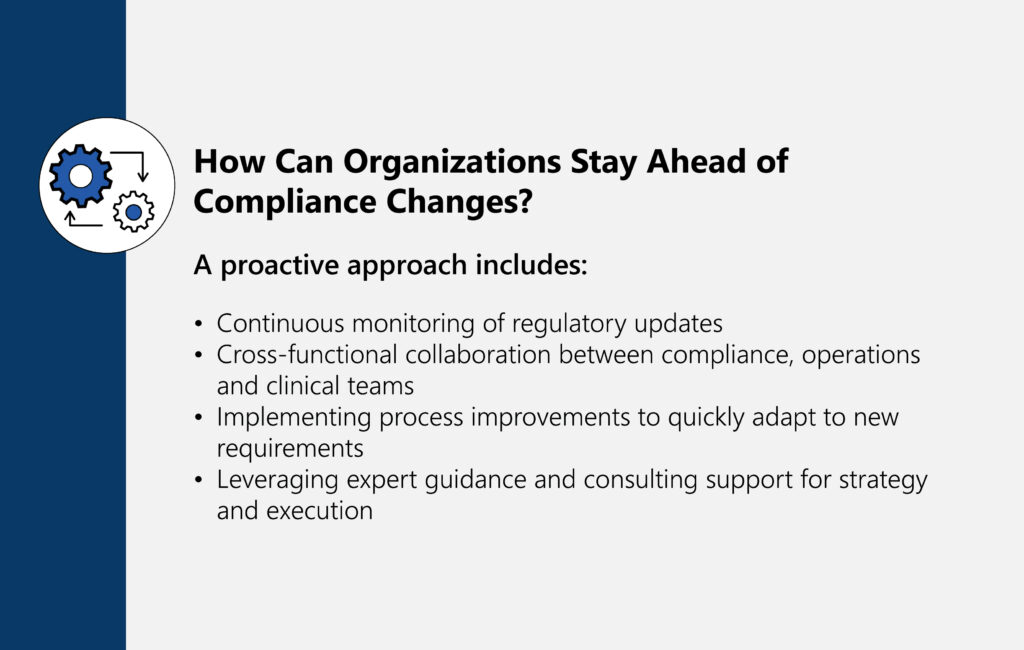
4. How Can Organizations Stay Ahead of Compliance Changes?

A proactive approach includes:

  • Continuous monitoring of regulatory updates
  • Cross-functional collaboration between compliance, operations and clinical teams
  • Implementing process improvements to quickly adapt to new requirements
  • Leveraging expert guidance and consulting support for strategy and execution

5. What Role Does Technology Play in Compliance?

Advanced systems can streamline data reporting, track regulatory deadlines and flag potential issues before they escalate. Integrating compliance technology helps health plans reduce administrative burden, improve accuracy and respond faster to regulatory changes.

6. How Can ProspHire Support Healthcare Organizations with Compliance?

ProspHire provides strategic guidance and hands-on support to help organizations:

  • Assess current compliance risks and gaps
  • Implement process and operational improvements
  • Stay aligned with the latest regulatory updates
  • Enhance data reporting, risk management and operational efficiency

7. What is the Bottom Line?

Effective compliance isn’t just about avoiding penalties—it’s about ensuring operational excellence, safeguarding revenue and maintaining trust with patients and regulators. With the right strategies and support, healthcare organizations can navigate regulatory changes confidently and efficiently.

Project Management in Healthcare – FAQs, Key Insights and Methodologies

1. Why Is Project Management Critical in Healthcare?

Healthcare is complex, fast-paced, and highly regulated. Effective project management ensures that initiatives—from technology implementations to process improvements—are delivered on time, on budget, and with measurable impact. It aligns teams, mitigates risk, and supports better patient and member outcomes.

2. What Challenges Do Healthcare Organizations Face Without Strong Project Management?

Without structured project management, organizations often encounter:

  • Missed deadlines and delayed implementations
  • Budget overruns and inefficient resource use
  • Poor communication across teams
  • Reduced quality and inconsistent outcomes
  • Difficulty tracking and demonstrating ROI

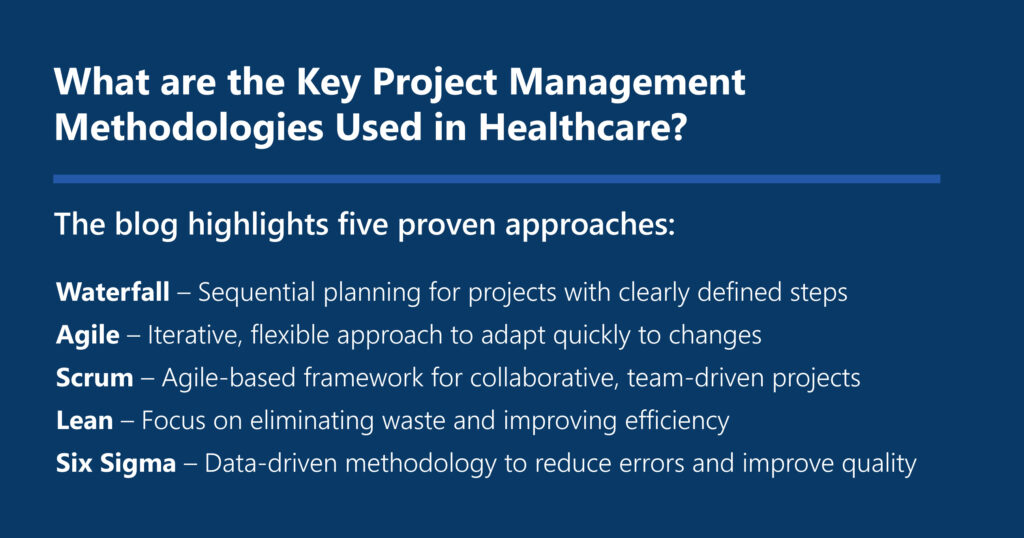
3. What Are the Key Project Management Methodologies Used in Healthcare?

The blog highlights five proven approaches:

  • Waterfall – Sequential planning for projects with clearly defined steps
  • Agile – Iterative, flexible approach to adapt quickly to changes
  • Scrum – Agile-based framework for collaborative, team-driven projects
  • Lean – Focus on eliminating waste and improving efficiency
  • Six Sigma – Data-driven methodology to reduce errors and improve quality

4. How Do These Methodologies Improve Healthcare Project Outcomes?

Each methodology helps organizations:

  • Standardize and streamline processes
  • Adapt to regulatory or operational changes
  • Optimize team collaboration and accountability
  • Deliver initiatives with measurable impact on cost, quality, and patient/member experience

5. How Can Healthcare Organizations Choose the Right Methodology?

Selecting the right approach depends on:

  • Project scope and complexity
  • Regulatory or compliance requirements
  • Team structure and stakeholder involvement
  • Desired speed and flexibility

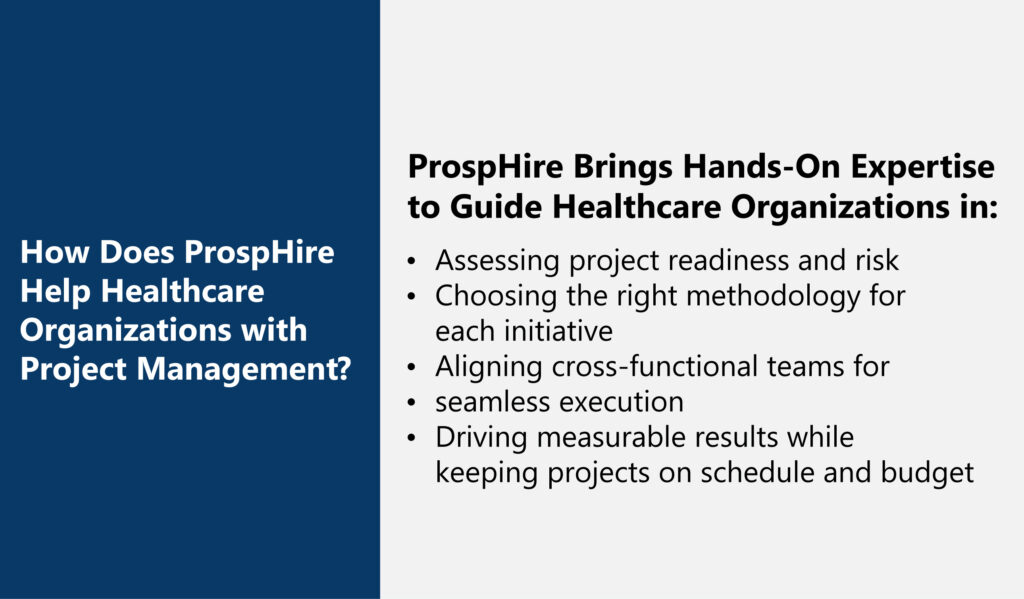
6. How Does ProspHire Help Healthcare Organizations With Project Management?

ProspHire brings hands-on expertise to guide healthcare organizations in:

  • Assessing project readiness and risk
  • Choosing the right methodology for each initiative
  • Aligning cross-functional teams for seamless execution
  • Driving measurable results while keeping projects on schedule and budget

7. What’s the Key Takeaway?

Strong project management is more than a tool—it’s a strategic capability. By applying the right methodologies and leveraging expert guidance, healthcare organizations can deliver complex initiatives efficiently, mitigate risk, and achieve better outcomes for patients, members, and the organization.

Frequently Asked Questions About System Integration in Healthcare

1. What is System Integration in Healthcare?

System integration in healthcare refers to the process of connecting various software applications, databases and medical devices within a healthcare organization to ensure seamless data flow, reduce duplication and improve patient care. It enables staff to access the right information at the right time.

2. Why is System Integration Important for Healthcare Organizations?

Integrated systems streamline workflows, reduce administrative burden, improve data accuracy, enhance patient safety and support regulatory compliance. Organizations with integrated systems can make faster, data-driven decisions that improve care outcomes and operational efficiency.

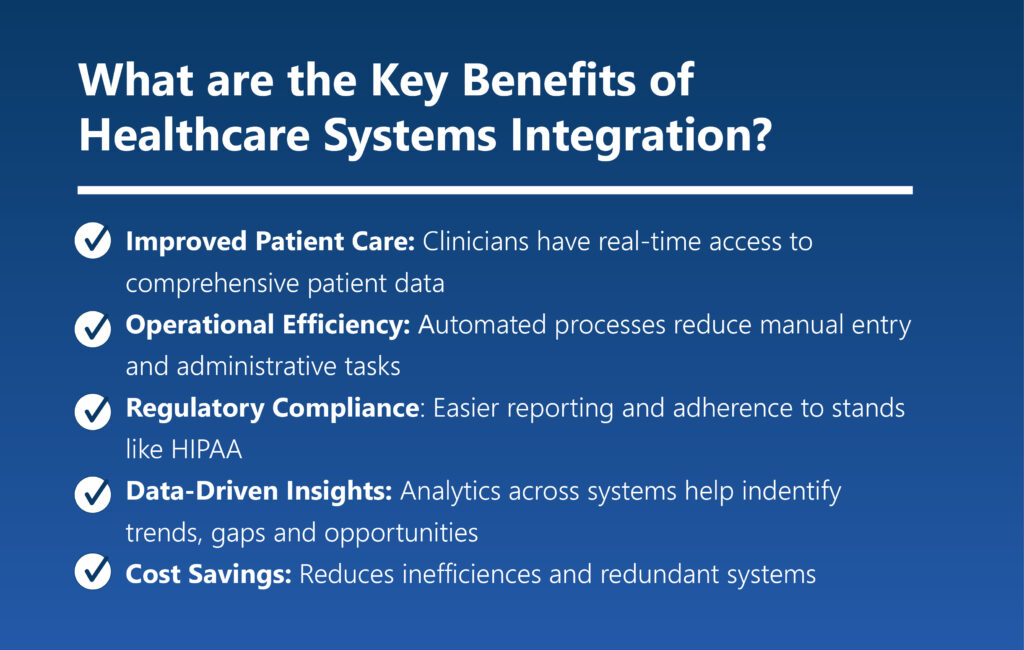
3. What Are the Key Benefits of Healthcare System Integration?

  • Improved Patient Care: Clinicians have real-time access to comprehensive patient data. 
  • Operational Efficiency: Automated processes reduce manual entry and administrative tasks. 
  • Regulatory Compliance: Easier reporting and adherence to standards like HIPAA. 
  • Data-Driven Insights: Analytics across systems help identify trends, gaps and opportunities. 
  • Cost Savings: Reduces inefficiencies and redundant systems. 

4. What Challenges Do Healthcare Organizations Face During System Integration?

Common challenges include legacy systems that don’t communicate well, data privacy concerns, high costs of implementation and ensuring staff adoption. Proper planning and expert guidance are crucial for success.

5. How Does System Integration Impact Patient Experience?

Patients benefit from smoother care coordination, fewer errors, faster service and better access to their medical records. Integrated systems also help reduce wait times and improve communication between providers.

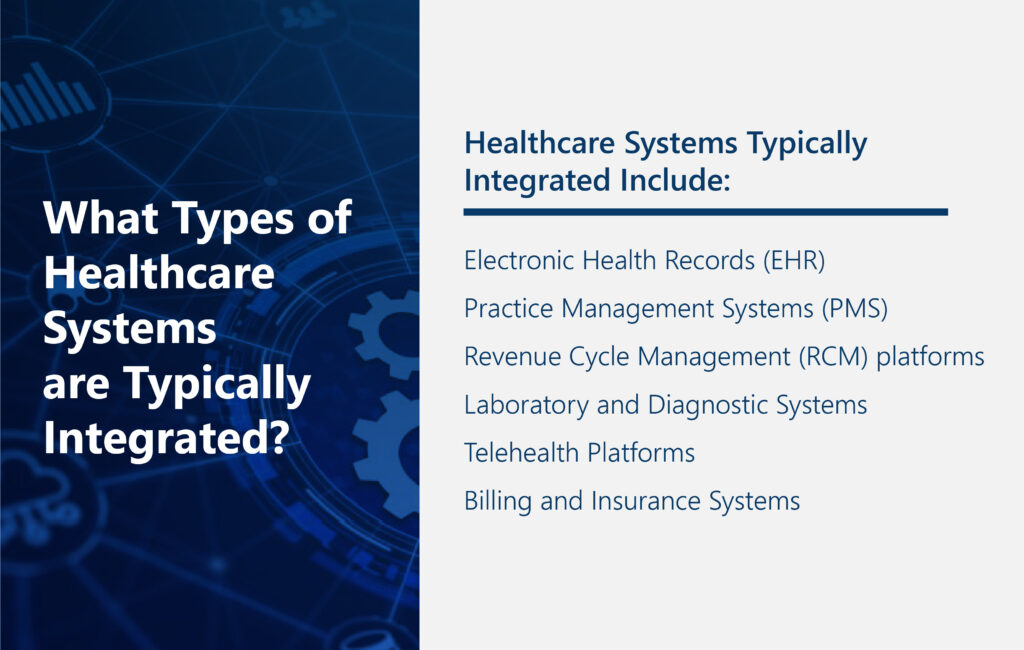
6. What Types of Healthcare Systems Are Typically Integrated?

Healthcare systems typically integrated include:

  • Electronic Health Records (EHR) 
  • Practice Management Systems (PMS) 
  • Revenue Cycle Management (RCM) platforms 
  • Laboratory and diagnostic systems 
  • Telehealth platforms 
  • Billing and insurance systems 

7. How Can Healthcare Organizations Ensure Successful System Integration?

Success depends on thorough needs assessment, selecting the right technology, involving stakeholders early, robust data governance and phased implementation with ongoing training and support.

8. Can Small Healthcare Practices Benefit from System Integration?

Absolutely. Even smaller practices can see significant improvements in workflow efficiency, patient satisfaction and reporting accuracy by integrating key systems, often with scalable cloud-based solutions.

9. How Does ProspHire Help with Healthcare System Integration?

ProspHire partners with healthcare organizations to assess existing systems, design integration strategies, select the right platforms and support implementation. Our team ensures that technology investments align with business goals and patient care objectives