Author: LBodnarchuk

Contract Year 2027 Medicare Advantage Proposed Rule: The Medicare Advantage Reset is Here and Stakes Couldn’t Be Higher

On November 25, 2025, CMS released the Contract Year (CY) 2027 Medicare Advantage and Part D Proposed Rule, a 400+ page regulation that reaches into nearly every aspect of MA and Part D operations.

Paired with the RFI on the future of Medicare Advantage, this rule marks a true turning point in the Medicare Advantage program. We’ve been talking a lot recently about the Medicare Advantage Reset and the need for plans to take a hard look at their models for success and now CMS has acted. Through the Proposed Rule, CMS is looking to simplify the program by reducing administrative burdens for marketing oversight, while also setting the stage for bigger shifts in risk adjustment, Stars & quality bonus payments and special needs plans. Plans need to take this moment seriously and recognize we’ve moved beyond business as usual. We’re now in the next era of Medicare Advantage.

Executive Summary: Four Big Themes for Plans

From a plan and operator perspective, four primary themes stood out to us in this proposed rule and related RFIs:

  1. A Leaner, Sharper Stars Program
    • After much anticipation and industry noise, CMS is finally proposing a shift away from operational obligations and toward measurable member health outcomes, proposing to remove 12 measures, introduce a new depression screening and follow-up measure. This pivot is also in line with the “MAHA” agenda from this administration.
    • CMs has also proposed not move forward with replacing the Health Equity Index (HEI) with the historical Reward Factor.
    • Given these changes, CMS simulations suggest 62% of contracts would see no Stars change, around 13% gain a half star, around 25% would lose a half star and one contract losing a full star, with around 9% gaining or losing QBP status.
    • CMS is explicitly asking for feedback on further simplifying the measure set and methodology while reorienting toward outcomes, prevention and healthy aging.
  2. Targeted Deregulation and Reduced Administrative Burden
    • CMS proposes to rescind several recent health equity and disparities reporting requirements (UM health equity analysis, QI health disparities activities, public posting) and eliminate the Mid-Year Supplemental Benefits Notice and Multi-Language Insert/Notice of Availability.
    • Third Party Marketing Organization (TPMO) rules are loosened, with fewer constraints on timing and location of marketing appointments, shorter call recording retention and more flexibility in marketing language, within a “not misleading” standard.
  3. A Deeper Look at Special Needs Plans
    • CMS has observed rapid growth in C-SNP and I-SNP enrollment, raising concerns that many of these members may be better served in a D-SNP, where their Medicare and Medicaid benefits can be fully integrated, something C-SNPs and I-SNPs do not provide.
    • The rule and RFI explore stronger state oversight of C-SNPs/I-SNPs (via SMAC-like requirements), extension of D-SNP “look-alike” policies and enhanced expectations for care coordination and integration.
  4. Future of Risk Adjustment and Stars QBP: CMS Wants Ideas
    • While no new risk adjustment model is proposed for 2027, CMS devotes significant attention to an RFI on modernizing risk adjustment and Quality Bonus Payments, with an explicit focus on competition, embracing technology and leveling the playing field for smaller and regional plans.
    • CMS also proposes to broaden access to risk adjustment data for research and oversight, reflecting a growing emphasis on transparency, program integrity and long-term sustainability of MA.
    • CMS is seeking information on how artificial intelligence can be leveraged alongside current or future risk adjustment methodologies.

The Net Message: CMS is willing to pull back on some administrative and reporting requirements but only if the industry steps up with credible, data-driven proposals to advance quality, integration, transparency and member value. This program isn’t going anywhere but changes are needed to ensure its long-term viability and longevity.

Stars Ratings: A Smaller Set with Bigger Consequences: What CMS is Proposing? 

Key changes to the Stars program in the CY 2027 proposed rule include:

  • Removal of 12 measures across Part C and D, including:
    • Administrative and operational measures such as appeals timeliness, appeals review, SNP care management, call center interpreter/TTY availability and plan complaint metrics.
    • Select clinical or process measures, including diabetes eye exam and statin therapy for patients with CVD.
    • CAHPS experience measures including customer service and rating of health care quality.
  • Addition of one clinical measure: Depression Screening and Follow-Up (Part C), reinforcing CMS’s growing focus on behavioral health.
  • Elimination of the Health Equity Index (HEI) or EHO4All and reinstatement of the historical Reward Factor for contract performance.
  • Faster, more flexible measure removal, allowing CMS to retire measures through rulemaking when low reliability, misaligned with current clinical guidance, or retired by the steward.

CMS’s impact simulations indicate:

  • Around 62% of contracts see no change in overall Star Rating
  • Around 13% gain 0.5 star
  • Around 25% lose 0.5 star
  • 1 contract loses 1.0 star
  • Around 9% of contracts gain or lose QBP status

What It Signals

The Stars Program is not being gutted (for now). CMS even acknowledges that the technical expert panel recommended more measures, to dilute a plans ability to only focus on a handful of “critical ones”. In our opinion, CMS could be gearing up for a new plethora of outcomes based and health/behavior health measures soon. Especially in this new “MAHA” world, CMS is reinforcing clinical outcomes, preventive care and member experience as the core levers of Stars. Results based and data driven is the name of the game here. Look to measure stewards for changes to measures and new possibilities.

Implications for Plans

Every plan needs to immediately refresh and re-run Stars models with the proposed changes, including new/removed measure changes and weighting implications. A fulsome examination of vendor partnerships, strategic priorities, technology stack and intervention plan needs complete, to ensure alignment toward CMS’s signaling changes. This includes a rebalance of interventions toward high-impact clinical measures such as chronic condition management and behavioral health. Lastly, decisions are made by those who show up…engage in the RFI process, offering data on outcomes and operational feasibility.

Administrative Simplification and Targeted Deregulation

A second through-line in the proposed rule is deregulation, removing certain requirements that have grown up around MA plans in recent years.

Key Proposals

CMS Proposes To:

  • Modify the SEP for provider terminations, creating a straightforward SEP for Provider Terminations that begins when enrollees are notified.
  • Rescind communication and reporting requirements, including:
    • Mid-Year Supplemental Benefits Notice
    • Multi-Language Insert or Notice of Availability
    • UM Committee health equity requirements
    • Quality Improvement Program health disparities requirement
  • Loosen TPMO and marketing constraints, including:
    • Removing the 48-hour waiting period between Scope of Appointment and personal marketing appointment.
    • Allowing marketing events to immediately follow educational events in the same location.
    • Permitting SOA forms to be obtained at educational events.
    • Moving the required disclaimer from “first minute” to “before benefits discussion.
    • Allowing superlatives as long as statements are accurate.
    • Shortening recorded call retention to 6 years, or possibly 3, while keeping enrollment record retention at 10 years.

Implications for Plans. Recalibrate, don’t over-relax. Even with looser marketing timing and language rules, strong internal monitoring and oversight remain essential to ensure guardrails are clear and consistently followed. Reinvest freed resources from reduced administrative tasks into more high value areas.

D-SNPs, C-SNPs, I-SNPs, and the Next Phase of Integration

The industry has experienced an explosion of growth in C-SNP and I-SNP enrollment and CMS has noticed. In this rule, CMS provided evidence that many of these members that are dual eligible and may be better served in a D-SNP, where their Medicare and Medicaid benefits can be fully integrated, something C-SNPs and I-SNPs do not provide.

Key Provisions and Ideas

  • Passive Enrollment for Integrated D-SNPs
    • Removes the requirement for “substantially similar” networks and instead requires 120 days of continuity of care and adequate care coordinator staffing.
  • Continuity of Enrollment for Full-Benefit Duals
    • Allows D-SNPs in HIDE or coordination-only structures to maintain enrollment for full-benefit duals in Medicaid FFS.
  • RFI on C-SNP/I-SNP Oversight
    • Possible SMAC requirements for C-SNPs and I-SNPs with high dual enrollment.
    • Extension of D-SNP look-alike contracting limits.
    • New care coordination expectations and focus on mental health and substance use disorder management.

Implications for Plans. CMS expects more integration between Medicare and Medicaid, not segmentation. The more closely aligned these programs are, ultimately provides a better experience for the member. Plans should reevaluate duals portfolio strategy and model the financial and operational impact of SMAC or look-alike rules. They should also continue to strengthen state partnerships and care coordination infrastructure and embrace AI/automation technology. Lastly, plan leaders should prepare for a regulatory environment that favors integrated D-SNP over C-SNPs and I-SNPs.

Future of Risk Adjustment and Stars QBP

Although CMS did not meaningfully commit to or propose sweeping change to Risk Adjustment or Quality Bonus Payments, CMS did ask, “what should the next generation of MA payment, risk adjustment and quality policy look like?”. CMS continues to express a willingness and frankly an eagerness to hear from the industry. CMS is seeking to enhance competition and level the field for smaller and regional plans, something that has been needed for some time now. They also are seeking perspectives on how artificial intelligence can be leveraged and how to improve accuracy and integrity of risk adjustment including expanding access to risk adjustment data for research and oversight. Although not reflected in this proposed rule, make no mistake, big changes are coming for Risk Adjustment either in a future proposed rule or through a mandatory Innovation Model.

Implications for Plans. Plans should be responding to CMS’s RFI and provide data-driven comments that balance fairness, accuracy and predictability in the Risk Adjustment program. Any small or regional plan should highlight regional plan challenges and propose practical remedies. Lastly, plans should seek to link innovation and data to measurable member outcomes.

Other Notable Proposals

  • SNP MOC Submission moves earlier in June with two off-cycle update windows (Jan–Mar, Oct–Dec).
  • Part D PDE Audit Appeals gains a new three-level process with defined rights and timelines.

Strategic Roadmap for Plans

Leading organizations should act now on three fronts:

  • Policy and Advocacy: Create a coordinated review strategy for this proposal to ensure thorough, well-supported and meaningful comments are provided back to CMS. Respond to RFIs related to Stars measure set, duals policy, risk adjustment modernization and TPMO rules.
  • Analytics and Scenario Modeling: Re-forecast Stars and QBP outcomes. Map dual populations across product types and simulate regulatory changes. Quantify administrative burden reductions and plan reinvestment opportunities.
  • Operating Model and Governance: Refresh Stars and Quality governance to reflect outcome-focused measures. Update marketing and compliance policies for new TPMO rules. Strengthen duals integration, care coordination and continuity processes.

Closing Thought:

The reality is that the 2027 Proposed Rule for Medicare Advantage, is not simply a minor adjustment or a small tweak to a legacy program, it is the opening move in a broader Medicare Advantage reset. The convergence of new technology, a changing regulatory environment and an intensely dynamic marketplace is making it impossible to succeed using yesterday’s playbook. Product strategy, benefit design, network and care models, Stars and quality, risk adjustment, duals integration, sales and marketing, data and technology, all of it is in scope. Old models of success need to be challenged and future models of success need to be invented and operationalized now.

Read the overview here

This is the first Medicare Advantage proposal of the new administration and it is a clear signal that more structural change is coming. Stars changes are here, and more are inevitably on the horizon. Risk adjustment will be changed, the only question is when and how, not if. Through the RFIs in this rule and related Innovation Center work, CMS is explicitly asking the industry to help design the next era of Medicare Advantage. Decisions are made by those who show up and plans that engage thoughtfully, offer data driven perspectives and put forward practical ideas will be better positioned for whatever comes next. ProspHire is here to help you navigate the flurry of change and take a thoughtful, methodical approach to this new reality.  We partner with health plans to reassess and modernize Medicare Advantage operating models, from Stars and risk adjustment to product and network strategy, duals and SNP portfolios, data and analytics and sales and marketing governance. We can help you game plan scenarios, quantify impact, redesign processes and craft clear, compelling responses to RFIs and proposed rules. The Medicare Advantage reset is underway. The organizations that thrive will be those willing to throw out outdated assumptions and start designing their next model of success today.

Expert Advisory: Translating Insights into Action

The Challenge: Navigating a Shifting Stars Landscape

Medicare Advantage plans are entering one of the most complex and high-stakes Stars cycles to date. As cut points tighten, new measures are added and a greater emphasis is placed on outcomes-based measures, plans are faced with the reality that every decision from governance design to resource allocation carries a lasting impact. Plans can no longer rely on reactive strategies or one-off improvement efforts. Sustained performance now requires foresight, alignment and deliberate planning across all levels of the organization.

What Successful Plans Are Doing Differently

Leading Medicare Advantage plans are shifting from short-term fixes to enterprise-wide Stars strategies that aligns product strategy, technology investment strategy and operational efficiency around sustained performance. These organizations focus on building accountability and clarity through governance structures, use predictive analytics to inform decision making and integrate real-time data to drive decision making at all levels.

As plans prepare for the 2026 measurement year, several priorities stand out:

Governance Optimization: Governance is basic but it is everything. Plans need to do more with less and that means they should be re-evaluating their current models. They need to seek transparent, accountable and cross-functional governance models that drive alignment and ownership across teams.

Align Product Strategy and Stars Strategy: This AEP has been one of the most hectic AEPs in MA history, with more plans exiting the market and reducing service areas than ever before. The gradual shift away from PPOs and toward HMOs is also telling. Plans need to take the opportunity to align current and future product strategies to Stars strategies to prepare for what’s coming in MA.

Stars Analytics and Forecasting: Analytics and forecasting capabilities are table stakes at this point in the Stars game. Plans need to apply those data-driven forecasts and existing competitive intelligence to stay ahead of regulatory changes and cut point shifts. Integrating Stars intelligence capabilities into network contracting, member engagement activities and business planning are a few of the many use cases of this type of data.

Performance Planning and Domain Expertise: Each domain from within Stars carries its own unique set of rules, nuances and minutia. Plans need expertise at the domain level to be able to connect what the data is telling them with the reality of operations on the ground.

Successful plans understand that Stars success is not just about closing gaps; it is about translating insights into coordinated action that drives measurable results year after year.

Our Perspective

Think Ahead. Plan Differently.

The path to future Stars success begins with informed, strategic action today. Let’s plan differently for 2026, combining insight with execution and experience with results.

Medicare Advantage CY2027 NOIA: Strategic Reset and Charting a Path Forward

On November 4th, CMS released the Notice of Intent to Apply (NOIA) applications calendar year 2027 for Medicare Advantage Prescription Drug (MAPD) plans. While often viewed as an administrative first step, the NOIA represents a plan’s formal commitment to participate in the upcoming contract year. More importantly, before the NOIA is even submitted, plans must use this moment to articulate their strategic intent by identifying which products to sustain, where to innovate and what new opportunities to pursue in the year ahead. 

This is especially critical amid the Medicare Advantage Reset we are experiencing today. Medicare Advantage headwinds are broad and big, such as shifting regulatory targets, potential policy changes under a new administration, heightened audit scrutiny, increased political pressure and increased need to improve and maintain strong Stars and quality performance.

Some key focus areas for this year’s NOIA cycle include:

  • Product Realignment: The NOIA enables plans to reassess offerings, retire underperforming products and refine benefits to stay competitive while balancing market appeal with cost containment for long-term sustainability.
  • Special Needs Plan (SNP) Penetration: SNP plans continue to see steady growth, as reflected in the October CMS landscape files. MAPDs that excel in care coordination and member outcomes are well positioned to capitalize on this trend and benefit from the higher rebate margins these plan types offer.
  • Market Expansion or Retraction: The NOIA period allows plans to evaluate where to grow their footprint and where to scale back, ensuring data-driven decisions on market participation ahead of bid development.
  • Organizational Readiness: Before committing to a strategic roadmap, plans should carefully evaluate their existing infrastructure and capabilities to ensure they can operationally support future goals. A sound strategy requires not only vision, but the processes, systems and resources to bring it to life.

As the MAPD landscape continues to evolve, the CY2027 NOIA marks more than the start of another bid cycle. MAPD plans that make the time now to realign, innovate and set a clear goal for 2027 will be well positioned when bids are submitted.

At ProspHire, we have been partnering with health plans for over a decade, navigating this critical period with clarity and confidence by helping organizations strategically plan for sustainable growth, operational readiness and long-term success in the evolving Medicare Advantage landscape. If you are prepared to chart a new path forward, embracing the Medicare Advantage Reset and exploring new models for success, not anchored to the past but positioned for the future, let’s have a conversation.

Soaring to New Health, Season 3 Recap

Season 3 Recap Infographic

Where Insight Meets Action in Healthcare

Season 3 of Soaring to New Health, ProspHire’s original podcast series, brought together healthcare leaders, innovators and changemakers to explore one central idea: how insight becomes impact.

Across five powerful episodes, the conversations spanned cybersecurity, Medicaid transformation, equity and performance improvement. Each one focused on solving real-world challenges in today’s healthcare environment.

Highlights from Season 3

Cybersecurity Challenges in Healthcare
Guests: Chris Vermilya | Loom Security and Joe Wynn | Seiso
Digital transformation has made patient data more vulnerable than ever. This two-part discussion unpacks how protecting information is no longer just an IT concern, it’s a patient-safety priority.

Medicaid Momentum: Managing Change in a Shifting System
Guest: Brendan Harris | UPMC for You
As Medicaid programs evolve post-pandemic, adaptability is becoming the new advantage. This episode explores how health plans can balance compliance, cost and care quality in a rapidly changing landscape.

Equity at Life’s Edges
Guests: Dr. Joe Sanfilippo and Arnie Burchianti
From access to IVF treatments to end-of-life care, this conversation shines a light on where innovation and empathy intersect and how true equity means designing care for everyone.

Medicaid Matters
Guests: Jim Burgess | Highmark Wholecare and Julie Evans | ProspHire
Policy, technology and operational best practices come together in this deep-dive series on how Medicaid plans can modernize, perform and sustain success through data-driven execution.

Listen. Learn. Lead.

Season 3 of Soaring to New Health captures what ProspHire stands for: transforming healthcare through expert delivery and execution. Whether it’s securing patient data, strengthening Medicaid performance or driving equity in care, every episode offers practical insights leaders can act on today.

Stream all episodes and explore the Season 3 infographic at prosphire.com/podcast or wherever you download your podcasts.

Stars Rapid Response: From Data to Impact

When cut points tighten and deadlines loom, every day and every data point matters.

In the final stretch of the Stars season, success depends on speed, accuracy and focus. Our dual-track approach delivers both:

Rapid Data Assessment

Health plan reimbursements, compliance and quality outcomes are highly connected to data accuracy. It’s critical to prioritize the integrity of data sources. We can quickly evaluate your data to help identify:

  • Optimal Stars math and scenario modeling to develop “win strategies” tailored to your plan, your data and your situation
  • Incomplete or missing supplemental data elements impacting rates for key HEDIS measures
  • Fragmented and inconsistent member data across pharmacy, claims and clinical systems that lead to inaccurate reporting and missed opportunities
  • Systematic errors that can lead to member dissatisfaction or service issues

By strengthening the completeness of your data and establishing effective validation processes, we empower your team to make informed, fast decisions.

Stars Recovery Accelerator

Once the data foundation is sound, our team launches precision-driven sprints focused on high-risk measures or contracts. Together with your team, we will identify and prioritize high-impact measures approaching the next cut point or improvement threshold. These short, intensive engagements are designed to deliver measurable lift before it’s too late, protecting your ratings and revenue.

Why ProspHire

When there’s no time to waste, trust ProspHire to move your plan from reactive to ready – transforming data into performance and urgency into results.

Beyond the Stars: Building Sustainable Medicare Advantage Success

The Stars environment has changed and so must the strategy. As CMS continues to tighten cut points, redefine measures and raise the bar for quality outcomes and member experience, maintaining 4+ Stars is no longer about incremental gains. It is about sustained transformation. Success belongs to the plans that pair precision analytics with operational discipline and member-focused engagement.

At ProspHire, we help Medicare Advantage organizations move from reactive firefighting to proactive performance, unlocking sustainable improvements across every dimension of Stars.

ProspHire Impact

Star Year 2026 Market Insights

  • 40% of H-Contracts earned star ratings above 4.0
  • Over 50 contracts experienced a decline in ratings, dropping from above 4.0 to below, between SY25 and SY26
  • Approximately 40 contracts saw improved performance, rising to a star rating above 4.0 in SY26
  • More than 80 H-contracts saw their Part D ratings fall from above 4.0 to below

Medicare Advantage is undergoing a fundamental reset and Stars strategies and programs need to adapt to that new reality. The things that made programs of the past successful won’t yield positive results in today’s changing environment. Plans are balancing evolving regulatory changes, shrinking budgets and member populations with increasingly complex needs. Amid this challenge lies opportunity. With the right structure, data and alignment, your Stars program can become a true driver of quality, retention and growth.

ProspHire’s Approach

At ProspHire, we partner with health plans to design and execute Stars strategies built for your members in today’s environment: measure specific, data-driven and member-centric. Our comprehensive portfolio of Stars services address both immediate recovery needs and long-term transformation:

Delivering Results. Period.

Whether your goal is to become a 4 Star contract or build your roadmap toward 5 Stars, ProspHire brings the precision, partnership and proven results you need to perform.

Navigating the ACA Landscape: Key Strategies for Health Plan Success

The Affordable Care Act (ACA) has transformed the healthcare system, presenting both challenges and opportunities for health plans. Navigating the ACA landscape requires a solid strategy for compliance, competitive positioning and long-term success. ProspHire’s expertise can help health plans adapt to the ever-changing ACA marketplace while maximizing enrollment, improving member care and ensuring compliance with regulatory standards.

1. Ensuring Compliance with ACA Regulations

In order to offer plans in the Marketplace, Issuers must apply for Quality Health Plan Certification annually, meaning compliance with regulations is non-negotiable. ProspHire assists health plans in staying up to date with ACA requirements, including essential health benefits, product design, rate development and reporting obligations. Our solutions ensure that health plans are always prepared for audits and regulatory changes.

Stay ahead of ACA compliance by conducting internal audits and invest in staff training.

2. Achieving Competitive Rates While Maintaining Financial Stability

Achieving Competitive Health Plan Rates While Maintaining Financial Stability

Actionable Tip: Utilize advanced data analytics to forecast risk, invest in AI and automation, and collaborate with network providers.

ACA members are highly price sensitive, so competitive rates are essential.  To achieve these rates, plans must look for maximum efficiency in areas like medical management, claims handling and provider contracting. By offering rates that are not only competitive, but realistic, Plans will attract more members while remaining profitable.

Actionable Tip: Utilize advanced data analytics to forecast risk, invest in AI and automation, and collaborate with network providers.

3. Optimizing Member Engagement and Enrollment

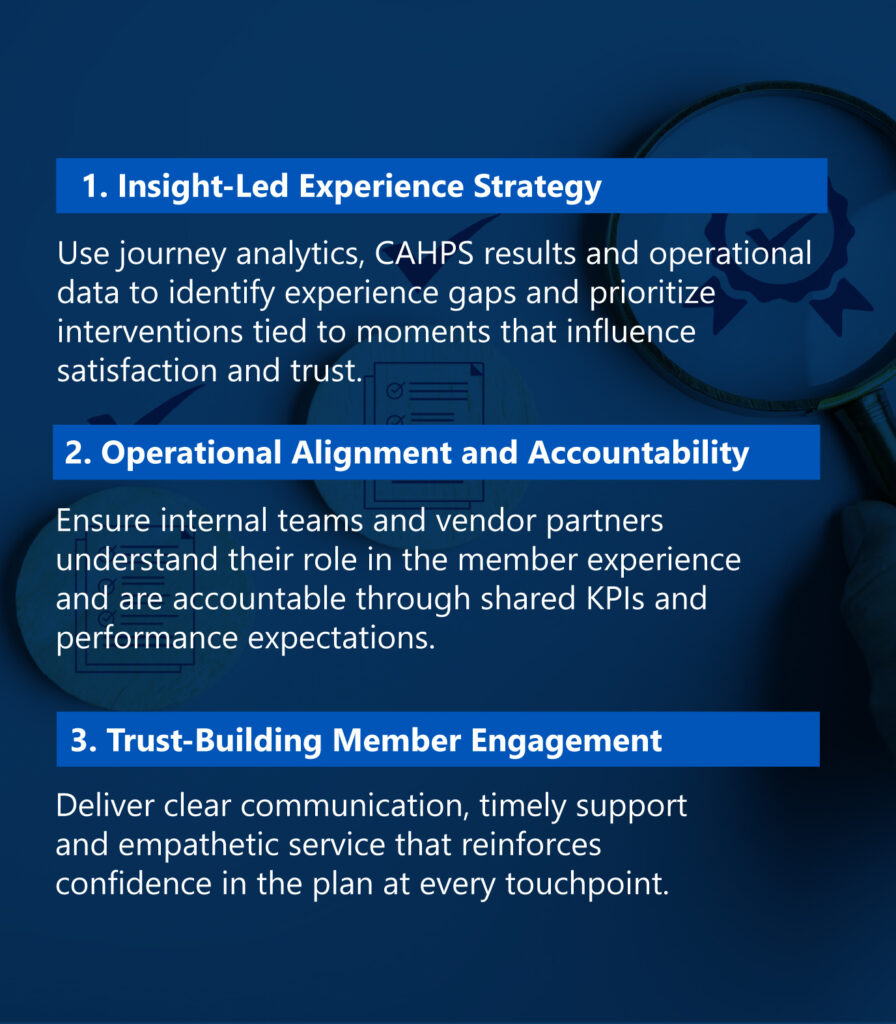
A successful ACA plan requires not only compliance but also high member engagement. ProspHire helps health plans optimize their enrollment processes, ensuring a smooth experience for new members and improving retention through tailored communication strategies.

Use digital platforms to streamline enrollment process and create targeted communications.

Contact ProspHire for Health Plan Support

The ACA landscape is complex, but with the right strategies in place, health plans can thrive. ProspHire’s solutions help health plans navigate these challenges and achieve success in the ACA market. Is your health plan prepared for the evolving ACA marketplace? Contact ProspHire for a consultation to learn how we can help.