Healthy Aging Month is observed during the month of September. This observance raises awareness on the physical, mental, social and financial wellness of older adults and serves as a reminder that as we age, our minds and bodies change. It is essential to maintain a healthy and positive lifestyle to help deal with those changes and to help prevent common age-related health problems. Even if you have not thought of these changes, it is never too late to consider ways to re-invent yourself.
No Age Limit to Adopting Healthy Habits
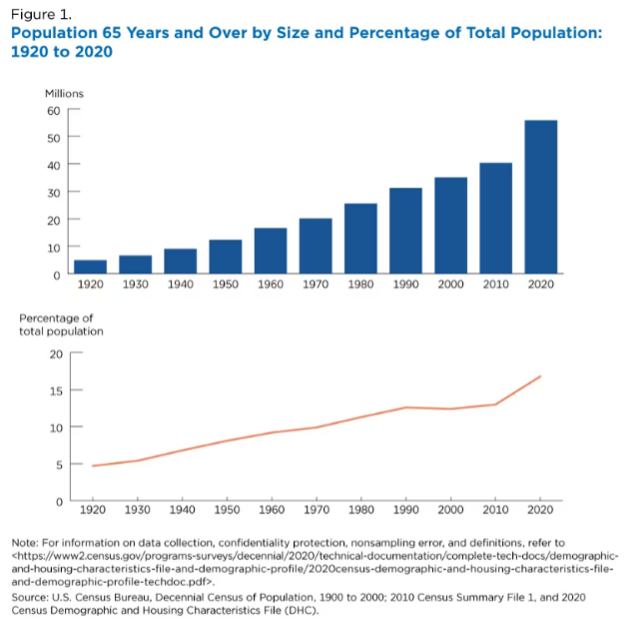
The United States boasts an increasingly aging population; according to the 2020 census, 1 in 6 people are now over the age of 65[1]. This trend is largely driven by the size of the Baby Boomer generation, born 1946-1964. By the 2030’s, it is estimated that older adults (over the age of 65) will outnumber the number of children (under the age of 18)[2]. Figure 1 illustrates this trend over the past century, which further emphasizes the importance of adopting healthy aging habits[3].
What Are Healthy Habits and Behaviors for a Healthy Life?
Embrace a well-rounded approach to your well-being during Healthy Awareness Month and beyond, with a collection of empowering habits and behaviors that build lifelong health and vitality. Try some of these healthy habits and behaviors:
Take a proactive health approach by maintaining healthy habits throughout your life
Adopt a healthy diet and incorporate moderate physical exercise into your daily routine
Monitor your health by receiving regular health screenings from your doctor
Volunteer and get involved with local groups to maintain a sense of community
Take advantage of rewards & incentives tied to maintaining a healthy lifestyle. Talk to your insurance plan today.
How Can ProspHire Help?
ProspHire has subject matter experts working closely with Health Plans, Provider Practices and Community Specialists to enhance healthy lifestyle opportunities while optimizing current benefit offerings. The healthcare community can attain an excellent level of insight into outcomes via Quality Measures. It provides a deeper understanding of how various internal and external contributing factors play a critical role in one’s outcome.
ProspHire is continuously working with key stakeholders to leverage data indicated by these contributing factors such as Social Determinants, Health Equity and Geographical Indicators to improve Quality Measures and provide the right resources needed to maintain a healthy lifestyle.
In the rapidly evolving landscape of modern dentistry, staying ahead of the curve requires a comprehensive approach that integrates technological advancements, innovative services and streamlined clinical operations. The key to success lies in embracing these changes and leveraging them to not only enhance patient care but also boost the efficiency and profitability of your practice. Clinical operations support plays a pivotal role in achieving these goals by encompassing various elements such as technology and equipment upgrades, expanded service offerings and continuous education for both clinicians and staff.
Technological Evolution and Dental Equipment Upgrades
Technology has revolutionized nearly every industry and dentistry is no exception. The integration of advanced dental equipment has not only transformed the way procedures are conducted but has also significantly improved patient outcomes and experiences. From digital radiography and intraoral scanners to computer-aided design and manufacturing (CAD/CAM) systems, technology has expedited diagnosis and treatment planning while reducing patient discomfort.
Dentists now have access to state-of-the-art equipment that enhances precision and accuracy. For instance, cone-beam computed tomography (CBCT) provides 3D images that aid in the placement of dental implants and complex procedures, minimizing complications and increasing success rates. Similarly, CAD/CAM systems enable same-day restorations, saving time for both patients and practitioners.
Furthermore, vendor offerings and supplies have adapted to these technological changes. Companies are now providing more customizable solutions, offering dental professionals the flexibility to tailor equipment to their specific needs. This not only improves patient care but also enables practices to optimize their workflows.
Continuous Clinical Education and Staff Training
Staying current in the ever-evolving field of dentistry requires a commitment to continuous learning. Clinical education not only ensures that practitioners are delivering the highest standard of care but also empowers them to integrate new technologies and techniques effectively.
Staff training is equally crucial, as the success of any practice depends on the collaborative efforts of the entire team. Dental assistants, hygienists and front-office staff all play pivotal roles in delivering exceptional patient experiences. Providing ongoing training not only boosts their confidence and skill set but also enhances the overall efficiency of the practice.
Vendor Management and Workflow Optimization
Managing relationships with vendors is a vital aspect of clinical operations support. Partnering with reputable suppliers ensures a steady supply of quality materials and equipment, ultimately contributing to the smooth functioning of the practice. Vendor management involves:
Negotiating favorable terms
Maintaining clear communication
Staying updated on the latest offerings in the market.
Integrating new equipment and software into existing workflows can be a challenging process. However, with proper planning and training, the transition can lead to increased efficiency and reduced room for errors. Workflow optimization includes:
Assessing the current processes
Identifying bottlenecks and implementing strategies to streamline operations
Reconfiguring operatory layouts
Standardizing protocols
Utilizing software solutions for appointment scheduling, treatment planning and patient communication.
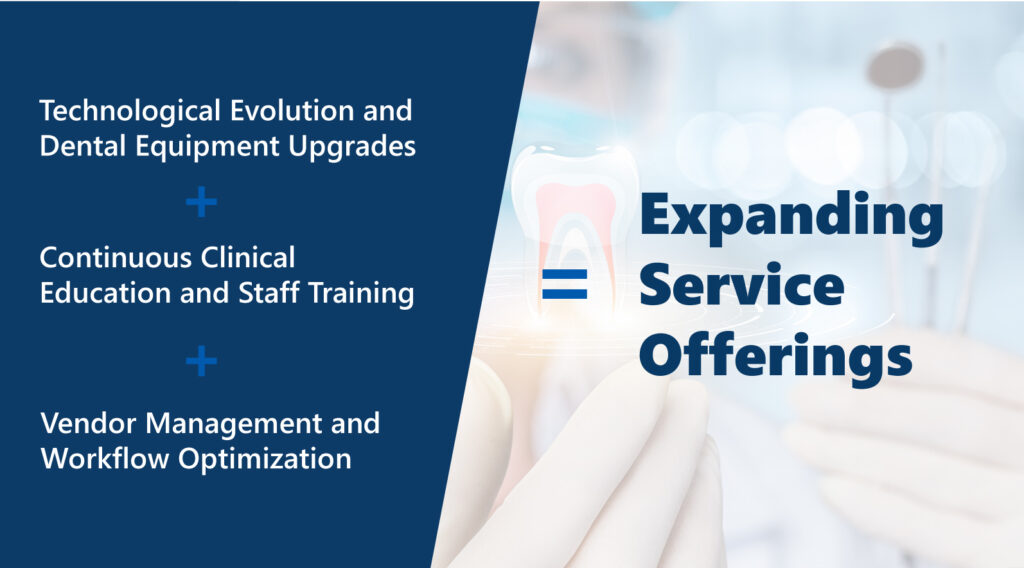
These three areas of Technological Evolution and Dental Equipment Upgrades, Continuous Clinical Education and Staff Training and Vendor Management and Workflow Optimization are all a part of the process that leads to Expanding Service Offerings. Offering new or enhanced services not only attracts a broader patient base but also positions your practice as a comprehensive solution provider. Implant placement and restoration, orthodontic treatment, sleep apnea therapy, TMJ/TMD management, general muscular pain relief and enhancements to facial aesthetics are areas that have seen significant growth.
ProspHire Helps Dental Practices Through the Process of Expanding Service Offerings
In the dynamic landscape of modern dentistry, advancing your practice through clinical operations support is a multifaceted endeavor. ProspHire’s Dental Management team will collaborate with you and lead you through technological advancements, expansion of service offerings, clinical education, staff training, vendor management and workflow optimization. Our experts will identify potential new offerings or ways to enhance your current services via a detailed assessment process of your current state business and guide you through the implementation processes and activities using best- in-class program and vendor management techniques. For more information, connect with us today.
Welcome to Season 1, Episode 4 of the Soaring to New Health Podcast.
This episode is This is Like Pulling Teeth. We talk with Paul Reda, CEO, and Armanda Lester, VP of Operations, from North American Dental Group (NADG) – a dental services organization that provides nonclinical administrative services to more than 240 affiliated dental practices across 15 states and continues to expand access to care.
As NADG started to evolve the leaders looked at group dentistry practices and aimed to add best-in-class providers to the organization. Today, NADG is pioneering a new culture of dentistry… to be available to patients when it suits the patient and serve patients in the way they want to be served. It’s about providing the best patient care for every patient at every visit.
A technology that was born out of listening to their patients is a platform called Ask Nicely. The patient receives a text message after each visit that asks for a rating about the recent office visit experience. The question responses scale from one to ten and any response below a nine prompts a call to the patient within 24 hours to discuss. The goal is to ensure every patient is receiving the best care and to continue to improve the patient’s experience.
Innovation is a continuous path at NADG. In early 2023, the organization began rolling out an artificial intelligence (AI) platform for dental called Overjet. It is an intelligence support mechanism that involves an overlay of color coding that the dentist or hygienist uses to determine a treatment path and that visual makes it easier to communicate to the patient. Additionally, many of the top insurance companies are making claim decisions with this platform. Reda says, “AI is in its infancy and I think we need to use it responsibly. It’s not a replacement for human beings and it’s certainly not a replacement for a doctor. Patients want to talk to a real person and be treated like a real person rather than an object or a number.”
NADG encourages community service within its practices, participating in events such as Give Kids a Smile or local school training for teaching children how to brush their teeth. It’s a part of the culture and the core values. Every year, Paul Reda acknowledges team members who exemplify community involvement. A select group travels with him to Zurich, Switzerland for a global ceremony for the Chairman’s Award.
For more on innovative dentistry and what it takes to be a strategic partner with NADG, download the Soaring to New Health podcast, This is Like Pulling Teeth, where you find your podcasts.
PITTSBURGH, PA – ProspHire announced today that it ranks #4307 on Inc. Magazine’s annual list of America’s Fastest-Growing Private Companies – the 2023 Inc. 5000. The rank reveal also put ProspHire at #19 in Pittsburgh, #132 in Pennsylvania and #516 in the nation for business products and services. The list represents a unique look at the most successful companies within the U.S. economy’s most dynamic segment – independent, small businesses. ProspHire, a national healthcare consulting firm, is recognized for its rapid revenue growth while navigating inflationary pressure, the rising costs of capital and hiring challenges. In the history of Inc. 5000, only 5% of companies have made the list 4 times.
“Making the Inc. 5000 list is a huge honor that we credit to our employees,” said Lauren Miladinovich, Managing Principal and CEO of ProspHire. “The hard work and dedication from across all departments is the reason for our success and growth.”
Chris Miladinovich, ProspHire’s Principal and Chief Strategy Officer, said, “Being recognized with innovative and high growth companies across the U.S. for the 4th consecutive year is an accomplishment that we celebrate. This accolade showcases not just our success but demonstrates resilience though the threat of economic downturn, labor shortages and lasting impact of Covid-19.”
“Thank you to all our team members and clients for helping ProspHire reach this incredible milestone,” says Dan Crogan, Principal and SVP of Consulting. “Our dedication to the healthcare industry and our focus on project execution has enabled us to develop and maintain genuine partnerships with our clients where we act as an extension of their team to help them solve their most significant people, process and technology challenges.”
Complete results of the Inc, 5000, including company profiles and an interactive database that can be sorted by industry, region and other criteria can be found at www.inc.com/inc5000.
What is the difference between health equity and SDOH?
Imagine a scene where an elderly individual, a young adult and a disabled child are all provided the same level of care – that is health “equality”. Health “equity” focuses on providing unique unequal care to each individual to ensure the care they receive will result in the appropriate, desired and equal outcome. Now, taking the scene one step further, imagine the disabled child we are caring for has limited access to food at home, does not have housing that can accommodate a wheelchair and the family has minimal income. The barriers that this child faces due to the conditions in which they are born, grow, live and age, are social determinants, or drivers, of health (SDOH).
Why is addressing the role of SDOH important?
Recent studies show that SDOH can account for approximately 80% of an individual’s health. As providers, payors and supporting organizations, it simply makes sense to provide care that addresses the 80%, despite most of our efforts traditionally focusing on the other 20%. SDOH disproportionately impacts our underserved communities, which ultimately drives us toward additional discussion and consideration of health equity.
What are clients’ biggest challenges related to SDOH?
Although SDOH is no longer a new concept and our clients understand the importance of addressing SDOH, there is still a question of how. Understanding how to implement effective interventions, quantitatively assess SDOH needs, plan for a return on investment and identify partnerships for success, all pose challenges.
What health equity issues are clients focused on today?
Health equity is a major area of focus generally for many of our clients, but today, the greatest area of focus is maternal and perinatal health equity. Inequities in maternal and perinatal health have been prevalent for some time, and unfortunately the pandemic has exacerbated some of these inequities. Many of our clients are interested in improving equity among women of color and women in rural communities. In both cases, there is a need for improved access to and quality of care. From organizational interventions to community-based partnerships, we are supporting our clients to implement strategies that best meet the needs of their most vulnerable populations.
What are CMS’s new SDOH quality measures?
CMS implemented new SDOH quality measures in their 2023 IPPS Final Rule that will be voluntary in 2023 and required in 2024. These new measures are mandated for hospitals reporting to the Inpatient Quality Reporting (IQR) program and both focus on SDOH. Separate from the existing Z-codes, these measures are flexible in their collection and give hospitals the opportunity to self-select their screening method. The two measures “SDOH-1” and “SDOH-2” have separate goals.
“SDOH-1” focuses on the rate of screening. Simply put, what percent of patients admitted to the hospital were screened for SDOH based on the five assigned domains: food insecurity, housing instability, transportation needs, utility difficulties and interpersonal safety. “SDOH-2” focuses on these domains and captures the percent of admitted patients that screen positive for any of the five SDOH domains.
Previously, CMS issued guidance to support states in addressing SDOH in Medicaid and the Children’s Health Insurance Program (CHIP) in 2021. Health plans and providers alike can continue to expect increased SDOH guidance and measures in the future.
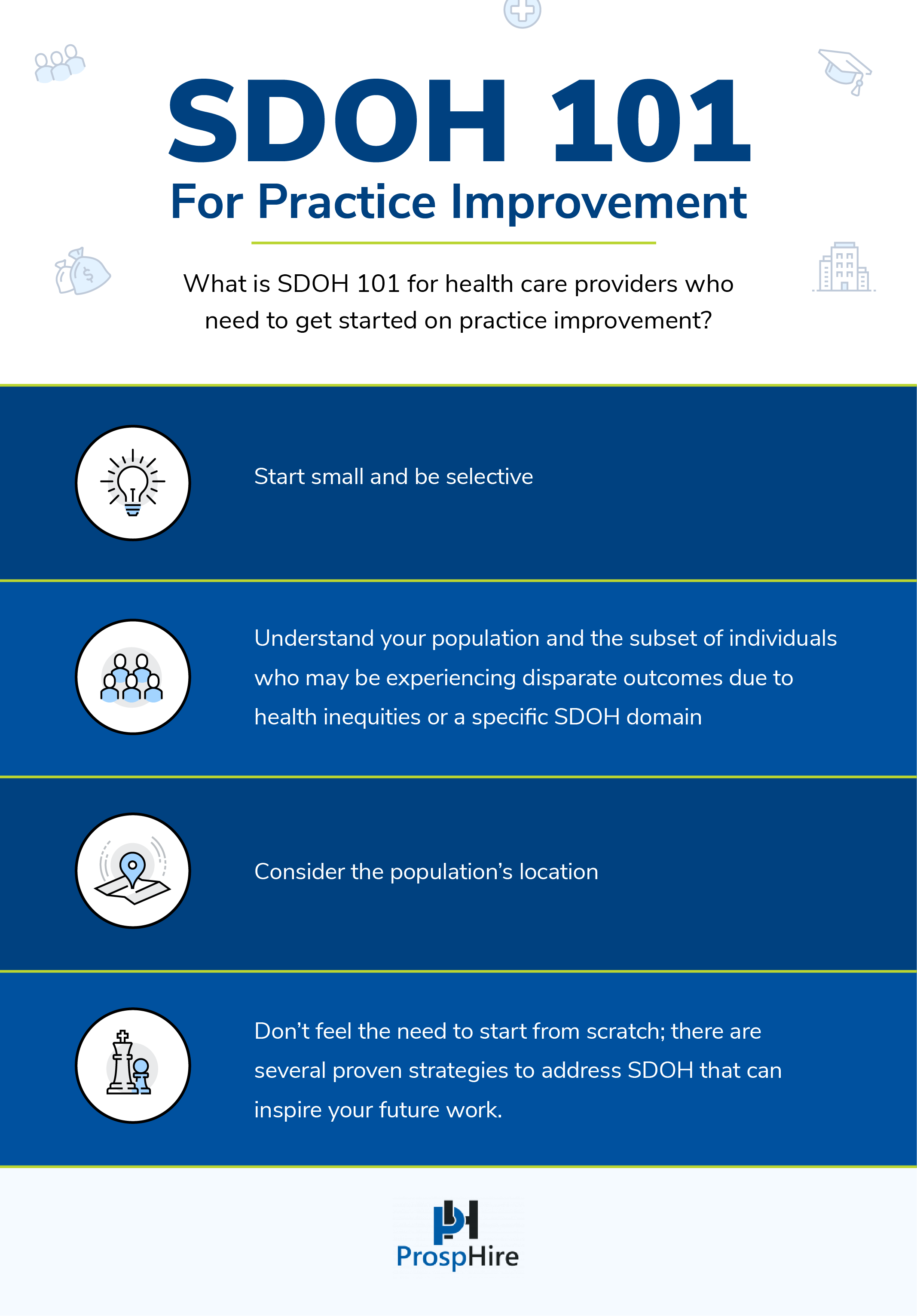
What is SDOH 101 for health care providers who need to get started on practice improvement?
Start small and be selective! Understanding your population and the subset of individuals who may be experiencing disparate outcomes due to health inequities or a specific SDOH domain offers an opportunity to pilot a solution and measure effectiveness. One key consideration in following this method is considering the population’s location. An intervention in one community may not work in another and addressing SDOH regionally with consideration to local barriers, needs and partnership opportunities will increase the likelihood of success. Additionally, don’t feel the need to start from scratch; there are several proven strategies to address SDOH that can inspire your future work.
What is the risk of not screening patients, assessing conditions and implementing change?
Now that there is an understanding of the true impact of SDOH on an individual’s health, not screening patients, assessing conditions and implementing change is equivalent to not looking under the hood of a car during an inspection and only looking at the car’s physical appearance. SDOH are underlying conditions that directly affect an individual’s health outcomes and are a key consideration to their treatment plan. Whether it be a mechanic and their car or a provider and their patient, we don’t want to send “patients” home without an understanding of how they may operate once they leave the safety of our care. It is the responsibility of the healthcare industry to implement change in the interest of our most vulnerable populations, so when they do leave our care, we have an understanding and care plan to ensure the right supports are available at home and in the community.
Do you have any predictions for Health Equity and SDOH in 2023?
During and following the height of the COVID-19 pandemic, we saw the influence of SDOH and the disproportionate impact of the pandemic on individuals already facing barriers in relation to social determinants and the importance of community-based care and support. As economic instability is expected through 2023, I would expect to see this trend continue, but this time around there may be more limited resources to support our community-based partners. This will open the door for providers and payors to collaborate and increase their engagement in SDOH intervention. Ultimately, SDOH and health equity are tightly intertwined and with magnification on equitable outcomes, this offers an opportunity to intervene.
How can ProspHire help?
ProspHire has always been in the business of assessing, understanding and implementing change across the healthcare industry. Through regional data assessments, understanding your patient population, evidence-based methodologies and community-based partnerships, ProspHire is equipped to support strategy development, intervention implementation and drive change within your organization. As you begin to explore opportunities to effectively address health equity and SDOH impact, we hope you will include us in your journey as we bring an industry and subject matter understanding to the forefront of our work.
What is Vendor Management as a Service Solution in the Healthcare Industry?
Vendor management as a service solution is providing healthcare organizations with best-practice strategies to optimize management of third-party vendors by streamlining vendor management workflows, reducing vendor costs and improving compliance with regulatory requirements.
We offer our clients a range of vendor management services, including vendor selection, contract management strategies, performance monitoring KPI definition, risk assessments and compliance monitoring. By utilizing a collaborative partner for these functions, healthcare organizations can free up internal resources focused on these efforts, reduce costs associated with vendor contracts, and improve the quality of their vendor management processes.
Are there industry regulations around vendor management?
Vendor management is critical to ensure ongoing patient safety, regulatory compliance and operational efficiency. In healthcare, the Centers for Medicare & Medicaid Services (CMS), the Office of Inspector General (OIG) and the Joint Commission have published guidelines regarding vendor management practices. CMS requires healthcare organizations to have written policies and procedures for selecting and managing vendors, including risk assessments and ongoing monitoring of vendor performance. OIG emphasizes the need for proper due diligence before selecting a vendor, which includes a qualitative and quantitative process that should lead to a decision that best fits the needs of the healthcare organization.
The Joint Commission includes vendor management as a standard for medical equipment and facility management. In addition to regulatory requirements, many healthcare organizations also have their own internal operating procedures for vendor management. These standard operating procedures may include requirements for vendor selection, contract management and ongoing vendor performance management.
Why is coordinating services from multiple vendors so important?
In healthcare, there are many vendors that provide products and services that need to work together to support patient care. Ensuring interoperability between these vendors will help them work better together. Coordinating services from multiple vendors can help with reducing duplicate efforts and resources, which often results in reduced costs. Improving communication between vendors leads to better outcomes for a patient and a better customer experience in the often-confusing world of consumerism in healthcare. By streamlining the vendor management process, most healthcare organizations find they can reduce the number of vendors they need and will consolidate to critical mass in order to “get it done” the right way.
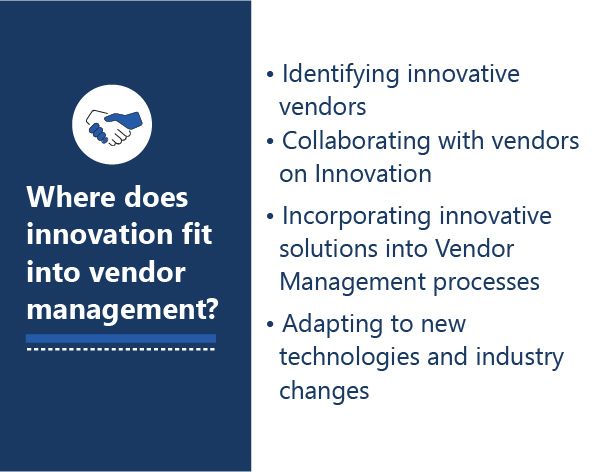
Where does innovation fit into vendor management?
Innovation can play an important role in vendor management, especially as technology and other advancements continue to shape the way products and services are developed and delivered in the healthcare industry.
Here’s where I see recent innovation fitting into the vendor management process:
Identifying innovative vendors: Vendor management involves selecting and managing vendors who can provide products and services that meet the needs of the healthcare organization. Innovation can be an important factor in selecting vendors who can provide cutting-edge solutions and stay ahead of industry trends.
Collaborating with vendors on innovation: Healthcare organizations can collaborate with their vendors to develop new products and services that can improve patient care and drive operational efficiencies. By fostering innovation in their vendor relationships, healthcare organizations can stay at the forefront of industry trends and maintain a competitive edge.
Incorporating innovative solutions into vendor management processes: Healthcare organizations can leverage innovative technologies and solutions to streamline their vendor management processes, automate tasks and improve data analytics.
Adapting to new technologies and industry changes: As new technologies and industry trends emerge, healthcare organizations must adapt their vendor management processes to stay up-to-date. By embracing innovation and being open to new ideas, healthcare organizations can stay agile and responsive to industry changes.
How Can ProspHire Help?
ProspHire’s Vendor Management Office team has extensive experience in assessing current processes, identifying the gaps and developing a centralized VMO operating model strategy. That may include identifying cost saving measures and formalizing vendor management from selection to onboarding processes. We have also helped clients in developing custom analytical dashboards to monitor critical KPIs to keep our clients compliant with regulations and monitor overall vendor spend to ensure value is achieved.
Connect with us today to start talking about how we can partner with you to improve your vendor management.
With the final release of Star Year (SY) 2024 data coming in October, plans should expect a slow release of data to health plans in the period leading up to that date. One of the first big data releases included Members Choosing to Leave the Plan Part C and Part D measure data. CMS has also released information to plans to indicate that potential data errors occurred for some contracts and that an investigation into performance should be conducted.
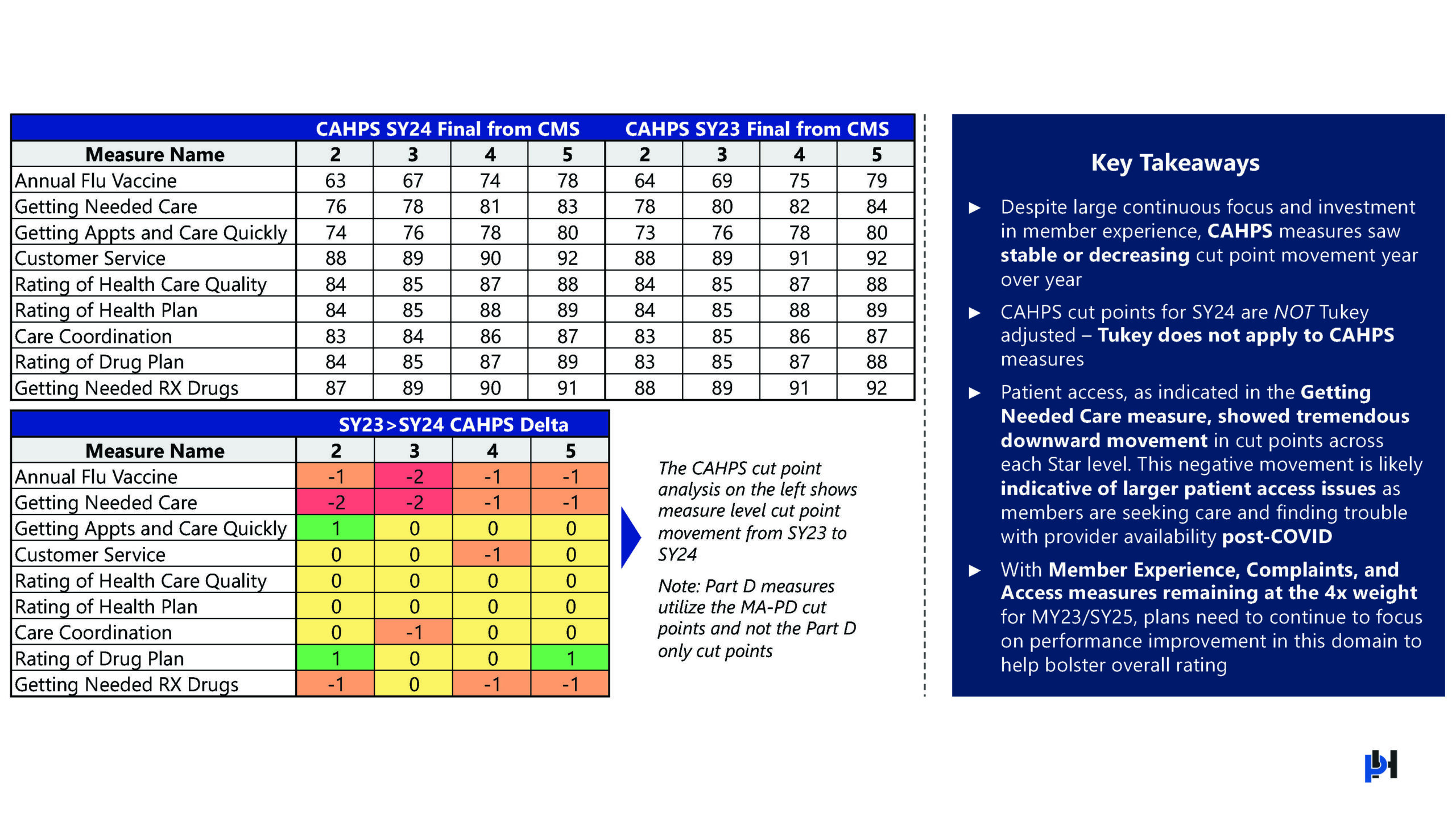
The second data release contained the publishing of contract level CAHPS data in HPMS. This CAHPS data also includes cut points for each measure. The ProspHire Medicare Stars team reviewed and analyzed the movement from Star Year 2023 to Star Year 2024.
CMS will continue to release data to plans via HPMS: Plan Preview #1, Plan Preview #2 and the final public data release in early October. Health Plans should quickly review data as it is released to validate its accuracy. They also should utilize that data to better inform their contract’s overall SY24 projection. It would benefit Stars leaders to ensure that their senior leadership team is aware of projections in advance of the final release.
If you are not satisfied with your contracts Stars performance and require a refreshed approach to Stars performance improvement, the Medicare Stars team at ProspHire can partner with you to create a strategy moving forward and execute on your behalf.Connect with our experts today.
In the healthcare industry, operational efficiency is crucial for providing high-quality patient care, reducing costs and improving overall organizational performance. With healthcare costs continuing to rise, organizations must find ways to improve efficiency and reduce waste without compromising patient care.
We will explore some practical tips and strategies for improving operational efficiency in healthcare. By implementing these tips, healthcare organizations can streamline their operations, improve patient outcomes and position themselves for long-term success in a rapidly changing industry.
What Is Operational Efficiency?
Operational efficiency refers to the ability of an organization to produce goods or services with the minimum amount of resources and waste possible. In other words, it is the ratio of output to input in terms of time, money and resources.
Operational efficiency can be achieved by optimizing the processes and systems that are involved in producing a product or service. This includes:
Improving the efficiency of workflows
Minimizing waste and errors
Reducing costs
Maximizing productivity
In healthcare, operational efficiency is particularly important, as it can have a significant impact on patient outcomes. By optimizing processes, healthcare providers can improve patient flow, reduce wait times and help patients receive high-quality care in a timely manner. Overall, operational efficiency is a key factor in helping healthcare providers deliver high-quality care in a cost-effective manner.
Overview of Process Optimization in Healthcare
Process optimization is a key aspect of improving operational efficiency in healthcare. It involves identifying opportunities for improvement in the processes and workflows used in delivering patient care and making changes to optimize those processes.
The goal of process optimization is to reduce waste, improve patient outcomes and increase efficiency. By analyzing the way healthcare organizations operate, it is possible to identify areas where processes can be streamlined, standardized or automated through these methods:
Using technology: One key aspect of process optimization in healthcare is the use of technology. Electronic health records (EHRs), telemedicine and other digital tools can help automate processes, reduce errors, and improve communication and collaboration among healthcare providers.
Optimizing workflows: Another aspect of process optimization is optimizing workflows. This involves identifying the steps involved in a particular process and determining how those steps can be streamlined or eliminated to improve efficiency. For example, by standardizing processes for admitting patients, hospitals can reduce the time it takes to get patients into a room and receiving care.
Reducing administrative burdens: Administrative burdens can also be reduced through process optimization. By simplifying administrative tasks, such as billing and insurance claims, healthcare providers can reduce the time and resources needed for these tasks, freeing up more time to focus on patient care.
Why Process Optimization in Healthcare Is Important
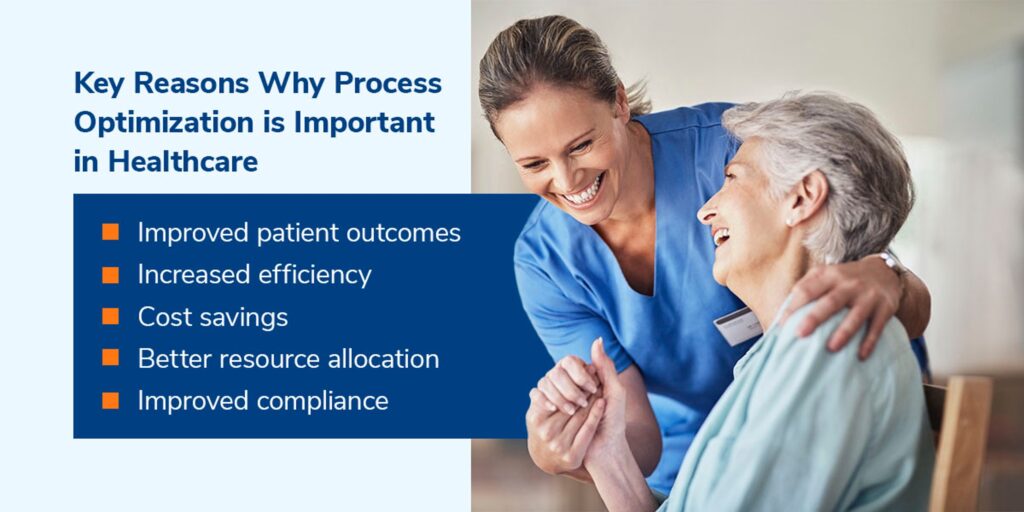
Process optimization is essential in healthcare for a variety of reasons. Here are some key reasons why:
Improved patient outcomes: Process optimization can lead to improved patient outcomes. By streamlining processes and reducing errors, healthcare providers can help patients receive the best possible care.
Increased efficiency: By optimizing processes, healthcare providers can increase efficiency, reducing wait times and improving patient flow. This can lead to better patient experiences and improved outcomes.
Cost savings: Process optimization can also result in cost savings for healthcare organizations. By reducing waste and increasing efficiency, healthcare providers can save money on staffing, supplies and other resources.
Better resource allocation: Process optimization can help healthcare organizations allocate their resources more effectively. By identifying areas where resources are being underutilized or overutilized, healthcare providers can allocate resources more efficiently.
Improved compliance: By optimizing processes, healthcare organizations can work to be in compliance with regulations and standards. This can help to avoid fines and penalties and protect the reputation of the organization.
Process optimization is essential in healthcare to offer patients high-quality care, use resources effectively and maintain efficient and effective operations.
Tips on How to Increase Operational Efficiency
Here are some ways to increase operational efficiency:
Standardize processes: Standardizing processes can help reduce variation and improve efficiency. By creating standard workflows, procedures and guidelines, healthcare providers can reduce errors and improve patient outcomes.
Use technology: Leveraging technology can help automate processes and reduce administrative burdens. EHRs, telemedicine and other digital tools can help healthcare providers communicate and collaborate more effectively, leading to increased efficiency.
Optimize workflows: Analyzing and optimizing workflows can show areas where processes can be streamlined, automated or eliminated. These changes can help reduce wait times, improve patient flow and increase efficiency.
Improve communication and collaboration: Effective communication and collaboration among healthcare providers can help to reduce errors, improve patient outcomes and increase efficiency. By using digital tools and other communication methods, healthcare providers can work more efficiently and effectively.
Continuously monitor and improve: Continuously monitoring and analyzing operational processes can help identify areas where further improvements can be made. By regularly evaluating and optimizing processes, healthcare providers can operate at peak efficiency.
Strategies for Healthcare Process Improvement
There are several strategies healthcare organizations can employ to improve their processes and drive better care at lower costs:
Implement evidence-based practices: Evidence-based practices are medical interventions that have been proven to be effective through rigorous scientific research. By implementing these practices, healthcare organizations can improve patient outcomes while reducing costs by avoiding unnecessary tests, procedures and treatments.
Focus on prevention: Preventive care can help address health issues early before they become more serious and require more expensive treatments. Healthcare organizations can encourage patients to adopt healthy lifestyles and provide preventive services, such as screenings and vaccinations.
Reduce waste and inefficiency: Healthcare organizations can reduce waste and inefficiency by improving processes such as inventory management, reducing wait times and eliminating unnecessary tests or procedures.
Collaborate with other providers: Collaborating with other healthcare providers, such as hospitals and primary care providers, can improve care coordination and reduce duplication of services, which can lead to lower costs.
Engage patients: Engaging patients in their own care can improve outcomes and reduce costs. Healthcare organizations can provide education and resources to help patients manage their conditions and make informed decisions about their care.
How ProspHire Can Help
ProspHire is a healthcare management consulting firm that specializes in helping healthcare organizations optimize their operations and improve performance. Here are some ways we can help improve operational efficiency in healthcare:
Process optimization: We can help healthcare organizations identify opportunities for process optimization and implement changes to streamline workflows, reduce waste and increase efficiency.
Technology optimization: We can help healthcare organizations optimize their technology infrastructure, including EHRs, telemedicine and other digital tools, to improve communication, automate processes and reduce administrative burdens.
Performance improvement: We can help healthcare organizations improve their performance by setting performance goals, tracking progress and making changes to improve performance over time.
Change management: We can help healthcare organizations manage change effectively by communicating changes to staff, training staff on new processes and technologies and supporting staff through the change process.
Interim management: We can provide interim management services to help healthcare organizations maintain continuity of operations during times of transition or change.
By leveraging our expertise, your healthcare organization can optimize your operations, reduce waste and improve patient outcomes. Connect with us today to learn more about how we can help.
Season 1, Episode 2 of the Soaring to New Health Podcast
This episode is Ask the Next Generation Pharmacist. We talk with ProspHire’s Mark Thomas, an experienced pharmacist and consultant in the healthcare industry and Chris Antypas, a seasoned pharmacist, executive owner and innovator, about the pharmacist’s rapidly change role, the new ways to deliver patient care and the evolvement of medication management.
Today, pharmacy is at the forefront of many conversations. Drug costs are rising at an unprecedented rate. Employers and employer sponsored plans are trying to navigate and tackle pharmacy costs; and health plans are trying to zero in on how to contain costs while also ensuring access to innovative therapies.
On the innovation side, drug manufacturers continue to bring novel and rare disease therapies to the market. This, while the payer side is addressing rising drug costs and trying to navigate how to continue to afford to pay for medications and ensure access. Plus, billionaire business owner Mark Cuban is on a mission to “disrupt” the pharmaceutical Industry and sell low-cost prescription drugs directly to Americans.
Antypas says, “We spend a lot of time talking about healthcare costs and unfortunately what I’m seeing is there’s really not been enough attention put on the role that medications play in managing total cost of care”. His personal journey in trying to disrupt healthcare and improve healthcare is focused on the relationship with his patients – knowing who they are, understanding their personal situation and providing them with meaningful solutions to access or afford a medication. You’ll find that relationship-based care blended with a custom pharmacy experience at Antypas’s Asti Pharmacy in Pittsburgh’s South Hills area. Adherence packaging is an example of this care model, where the patient receives a customized blister pack containing all their daily medications.
In the digital heath and technology space, Antypas’s Perigon Pharmacy, umbrellaed under Perigon Health 360, a 50-state licensed, dual accredited specialty pharmacy that is creating tools for patients to help them take their medications more accurately and effectively. One such device sits on a countertop in the patients’ home and intelligently dispenses medication. This intersection of healthcare and innovation optimizes the care team’s ability to track and monitor whether the patient appears to have missed a dosage and then sends reminder notifications via text message or phone call. It’s at that point the pharmacist can connect with the patient to determine the cause and a solution.
The opportunity for health plans is to view pharmacy as a strategy to address any healthcare gaps and help manage member health. Thomas talks about the opportunity for the next generation pharmacist to think differently and outside of the box when it comes to drug delivery models. Antypas says those new ideas and pathways to success are built from being brave and having the courage to advocate and make a difference in a patient’s life. To hear more about today’s pharmacy trends and what some pharmacists are doing to push the boundaries of the traditional pharmacy practice, download Soaring to New Health’s episode two, Ask the Next Generation Pharmacist here.