In recent years, the health insurance industry has witnessed a profound shift towards harnessing artificial intelligence (AI) to streamline operations and enhance service delivery. At ProspHire, we are at the forefront of this transformative wave, leveraging AI-enabled process reengineering to drive unprecedented improvements in efficiency, accuracy and customer experience.
Enhanced Efficiency Through AI
AI’s ability to analyze vast amounts of data with speed and precision has revolutionized how health insurers manage administrative processes. Tasks that once consumed valuable time and resources are now automated, allowing teams to focus on more strategic initiatives. Whether it’s claims processing, member enrollment or provider management, AI has optimized workflows, reduced operational costs and accelerated decision-making processes.
Precision and Accuracy in Decision-Making
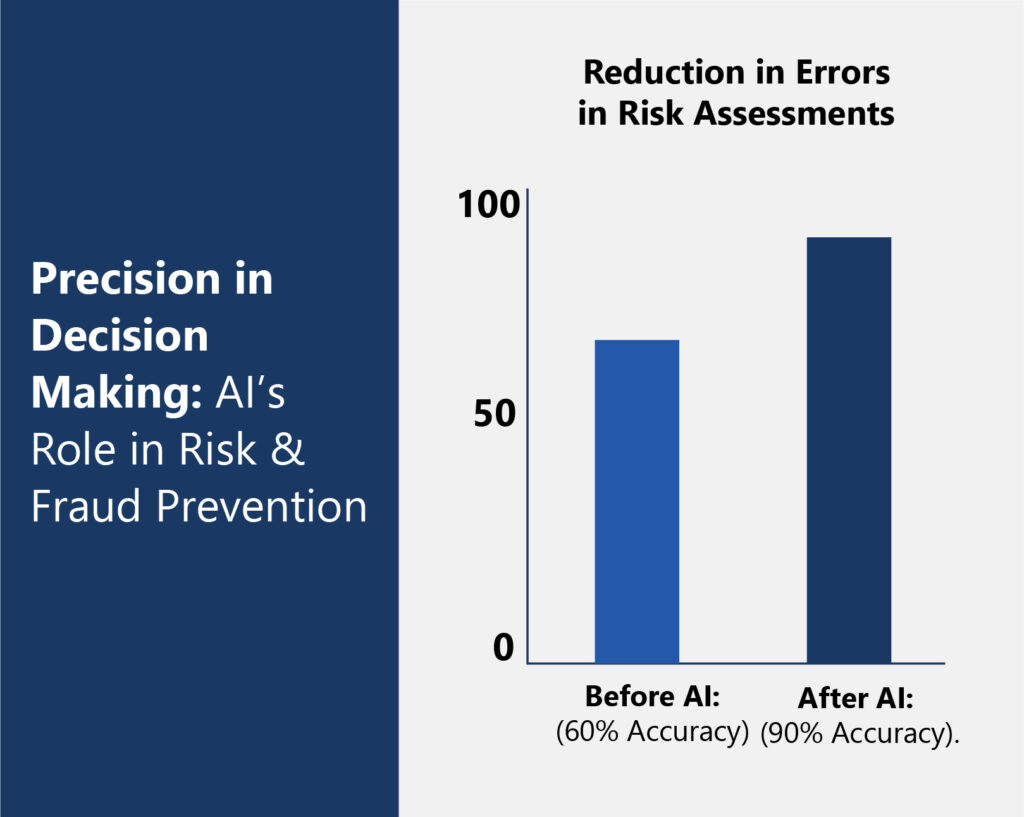
The accuracy of decisions in health insurance is paramount. AI algorithms, trained on historical data and equipped with machine learning capabilities, have significantly enhanced the accuracy of risk assessments, fraud detection and claims adjudication. This precision not only minimizes errors but also improves compliance with regulatory requirements, ensuring that insurers can confidently deliver on their promises to stakeholders.
Elevating Consumer Experience
Consumer expectations in healthcare are evolving, demanding personalized experiences and seamless interactions with insurers. AI-powered tools, such as chatbots and predictive analytics, enable proactive customer engagement, personalized recommendations and real-time support. By understanding consumer behaviors and preferences, insurers can tailor their services, anticipate needs and enhance overall satisfaction.
The Future of AI in Health Insurance
Looking ahead, AI’s role in health insurance will continue to expand. From predictive modeling for disease management to optimizing network management and beyond, AI promises to unlock new opportunities for innovation and efficiency. At ProspHire, we remain committed to driving this transformation, empowering insurers to navigate complexities and deliver exceptional value to their stakeholders.
In conclusion, AI-enabled process reengineering represents more than a technological advancement—it is a catalyst for profound industry-wide transformation. As we embrace AI at ProspHire, we are excited about the possibilities it brings to revolutionize the health insurance landscape, ensuring sustainable growth and improved outcomes for all.
How Can ProspHire Help?
At ProspHire, we specialize in helping health insurers leverage AI-driven process reengineering to maximize efficiency, improve accuracy, and enhance customer engagement. Our expert consultants bring deep industry knowledge and technical expertise to ensure a seamless AI integration that aligns with your strategic goals.
✅ AI Strategy & Implementation – We assess your current processes and develop AI-driven solutions tailored to your needs. ✅ Operational Efficiency Optimization – Our team helps automate manual workflows, reducing costs and improving productivity. ✅ Advanced Analytics & Risk Management – We implement AI-driven risk assessment models to enhance error detection and compliance. ✅ Customer-Centric AI Solutions – We enable personalized customer interactions and improved retention. By partnering with ProspHire, health insurers can confidently navigate AI transformation, unlocking new efficiencies and delivering superior member experiences. Let’s shape the future of health insurance together!
ProspHire brings a wealth of expertise and insights into the dynamic field of Dental Practice Management. We’re talking with Practice Leader Luke Laurin and diving into the strategies, challenges and innovation that shape the modern dental landscape.
What are the current trends and challenges in Dental Practice Management?
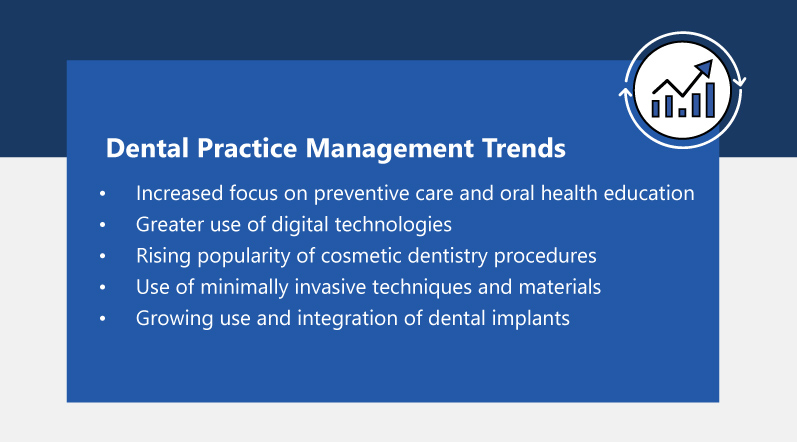
There are several trends we are seeing:
Increased focus on preventive care and oral health education with patients to reduce the need for more invasive treatments. There’s more emphasis on prevention rather than just treatment.
Greater use of digital technologies like integrative practice management systems (PMS), digital imaging, digital impressions and scans, digital treatment planning and AI. This includes technologies like CAD/CAM for restorations.
Rising popularity of cosmetic dentistry procedures like teeth whitening and veneers driven by greater consumer focus on dental aesthetics and appearance.
Use of minimally invasive techniques and materials to preserve more natural tooth structure whenever possible. Less drilling and removing of tooth material.
Growing use and integration of dental implants to replace missing teeth and provide anchor points for replacements like bridges and dentures.
We are also seeing a number of challenges:
Practices are aiming to control costs, reduce overhead expenses and manage lower insurance reimbursement rates. Not focusing on these challenges can impact profitability and the ability to reinvest into implementing new technology at the clinic.
It is challenging to keep up with rapidly evolving technologies and integrate them into the dental office and workflow. Additionally, there are significant learning curves with clinic employees and DSO support staff.
The increasing amount of student debt for new dentists makes it harder for them to purchase and finance a practice.
Increases in the cost of capital have led to a slowing in acquisition activity and lowering ROI, forcing some to consolidate practices.
There are ongoing shortages of non-dental healthcare workers like dental assistants and hygienists in many areas. This makes it harder to adequately staff practices.
How does ProspHire support dental practices?
ProspHire’s Dental Management Practice team addresses challenges for our dental clients with innovative solutions that help streamline practice/administrative processes, improve communication and collaboration between DSOs and practices, ensure compliance, enhance revenue cycle management and bolster your reporting capabilities. We partner with you and your vendors to implement standard solutions that are fine-tuned to your unique way of operating dental practices.
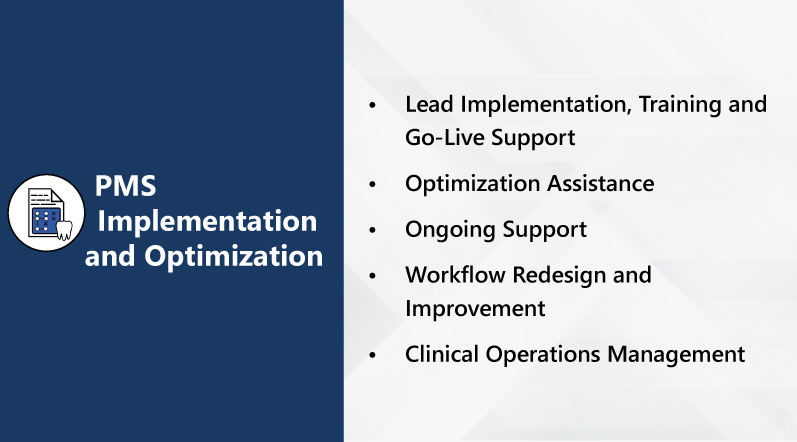
Here are some of the ways we can support you through PMS implementation and optimization:
Lead Implementation, Training and Go-Live Support
Conduct training sessions (both online and in-person if possible) for staff on using the new software, focusing on workflows, key features and basics.
Provide user manuals and standard operating procedure guides for workflows that are changing.
Offer onsite go-live support when transitioning from old system to new PMS, having IT staff/PSM vendor on-site to help troubleshoot issues in real time.
Set up feedback channels to gather input on challenges or questions about the system post implementation and provide timely responses.
Optimization Assistance
Review initial workflows set up in the PMS and work with practice to optimize these based on how the staff actually uses the software. Look for unnecessary steps and correct user behavior
Examine reporting needs and ensure correct reports are being generated and used to support decision making around patient care, inventory, billing etc. Set up new reports as needed
Conduct usage reviews to identify additional PMS features that could streamline workflows. Offer recommendations and end-user training.
Ongoing Support
Field staff questions and respond to system issues. This includes troubleshooting error messages, fixing configuration bugs, resolving login issues etc.
Set up system for feature requests/enhancement suggestions from dental practice and prioritize these change requests based on impact to operations and effort required to complete.
Maintain PMS with regular software patches, updates and bug fixes to improve stability and performance and provide release notes of changes to end-user community.
Workflow Redesign and Improvement
Discovery, Analysis and Redesign
Conduct interviews and shadow staff to map out current workflows, identify bottlenecks and improvement opportunities.
Review relevant metrics and key performance indicators (production, patient cycle time etc.).
Document findings in process maps and improvement recommendations report.
Facilitate working sessions with dentists and staff to redesign workflows based on findings.
Consider opportunities to standardize processes, eliminate non-value steps and improve technology integration.
Develop updated process documentation and job aids once new workflows are finalized.
Workflow Implementation
Provide staff training on changes to workflows, systems and responsibilities.
Ensure forms, checklists and other documents align to support new workflows.
Project team members remain available onsite during rollout to answer questions and resolve transition issues.
Ongoing Workflow Refinement
Gather staff feedback regularly post-implementation to identify remaining pain points.
Continuously review metrics for target areas not yet hitting goals and make minor tweaks.
Conduct refresher training on updated workflows if major gaps are observed.
Clinical Operations Management
Staffing & Scheduling
Help dental practices create schedules that maximize provider time while ensuring adequate coverage for projected patient demand. Adjust as needed based on cancellations, no-shows, emergencies, etc.
Develop a staffing plan tied to a schedule that allows for proper patient handoffs, task distribution across dental assistants and hygienists and coordination with front office team.
Patient Flow & Experience
Review office layout and patient flow to identify opportunities to improve bottlenecks and lag times and provide recommendations.
Ensure schedule allows sufficient time for procedures while avoiding excessively long patient cycle times. Adjust slots if needed.
Offer front-office optimizations for phone interactions and in-office exchanges to deliver positive patient experiences and that correct information is collected during scheduling and registration.
Quality & Safety Protocols
Provide templates for clinical operation policies and protocols around infection control, medical emergencies, documentation etc.
Implement checklists and reminders to verify compliance with dental regulations and quality control procedures.
Coordinate OSHA and HIPAA training logistics with practice safety officer.
Performance Reporting
Help leadership define relevant KPIs to track patient access, cycle time, cancellation rate, procedure volume etc.
Set up dashboards and automated reporting to distribute for consistent monitoring of operational performance.
Identify areas not meeting targets and facilitate problem-solving initiatives to resolve.
Can you share an example of a successful cost-saving measure or revenue enhancement strategy you’ve advised dental practices to adopt?
One effective strategy is the adoption of modern technologies to streamline operations, enhance patient experience and improve overall efficiency. While the initial investment in technology may seem significant, the long-term benefits often outweigh the costs. Improved efficiency and patient satisfaction can lead to increased revenue and reduced operational costs contribute to overall savings. It’s essential for dental practices to carefully evaluate their specific needs and select technologies that align with their goals and patient demographics.
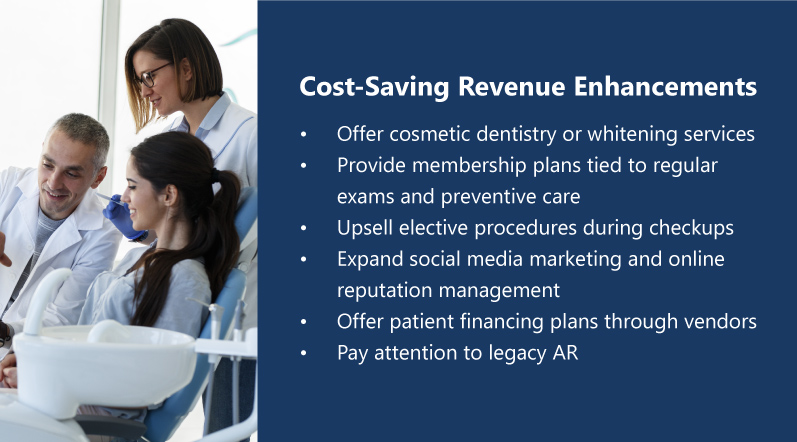
Additional examples of cost-saving revenue enhancements include:
Offer cosmetic dentistry or whitening services. These are often paid directly out-of-pocket so increase profitability.
Provide membership plans tied to regular exams and preventive care. Steady recurring revenue stream.
Upsell elective procedures during checkups. Many patients don’t think of upgrades until prompted.
Expand social media marketing and online reputation management. Drives new patient growth and better word-of-mouth.
Offer patient financing plans through vendors. Increases ability for patients to purchase bigger ticket treatments.
Pay attention to legacy AR and devote a task force / team-based approach.
How do you stay up to date with the latest industry trends and best practices in dental practice management?
Staying informed is an ongoing process and a combination of these is often the most effective approach: regularly reviewing materials and guidance from ADA and state/local dental associations; attending major dental conventions and conferences; meeting with technology vendors for software previews and demos of emerging tools and shadowing dental contacts in their cutting-edge practices. It’s crucial to assess the credibility of the information sources and tailor efforts to the specific needs and goals of the dental practice.
What is your approach to helping dental practices streamline their administrative and operational processes to improve efficiency?
Here is a comprehensive approach I would recommend to help dental practices streamline processes and enhance efficiency:
Ensure accurate CDT coding for maximum insurance reimbursement
Provide ongoing coding education to billing staff
Strategize Staffing Plans and Roles
Cross-train where helpful to increase flexibility
Consider expanded roles for hygienists and assistants
Track KPIs for Continuous Improvement
Key metrics like chair utilization, case acceptance rates, accounts receivable
Make adjustments based on practice data
Implementing these strategies requires a collaborative effort and a commitment to ongoing improvement. Regularly reassess and adjust processes based on feedback, technological advancements and changes in industry standards to ensure long-term efficiency gains.
In what ways do you guide dental practices in ensuring compliance with industry regulations and maintaining high standards of patient care?
Maintaining rigorous compliance and high care standards is a top priority when supporting dental practices and ProspHire can play a crucial role in guiding the practices to ensure compliance with industry regulations and maintain high standards of patient care. Here are some of the ways we can support:
Stay constantly up to date on changing regulations from OSHA, CDC, ADA and state dental boards and relay important updates to the practice.
Conduct regular reviews with the practice to identify any areas of vulnerability or gaps related to infection control, radiography safety, data security, etc and develop action plans.
Develop easy-to-follow protocol guidelines and visual aids for display in clinics regarding proper PPE use, disinfection techniques, etc.
Schedule annual or bi-annual practice infection control audits using established assessment frameworks to systematically identify opportunities.
Monitor patient review/rating platforms along with internal surveys to benchmark satisfaction and care experience.
Develop staff continuing education curriculums covering both hard and soft skills to reinforce stellar care delivery.
Guide the design and scheduling of clinical spaces to allow abundant time for complete sterilization/disinfection between patients.
Ensure clarity on latest regulations around digital patient record storage systems including frequent encrypted backups.
Update informed consent forms and advise on appropriate patient documentation procedures.
Promote high standards by comparing the practice against quantified benchmarks on key parameters.
ProspHire’s Dental Practice Management team can empower dental practices to navigate complex regulatory landscapes, uphold high standards of patient care and implement continuous improvement processes. This collaborative approach helps practices not only meet regulatory requirements but also excel in delivering quality dental services.
What key performance indicators do you use to measure the success and progress of dental practices you work with?
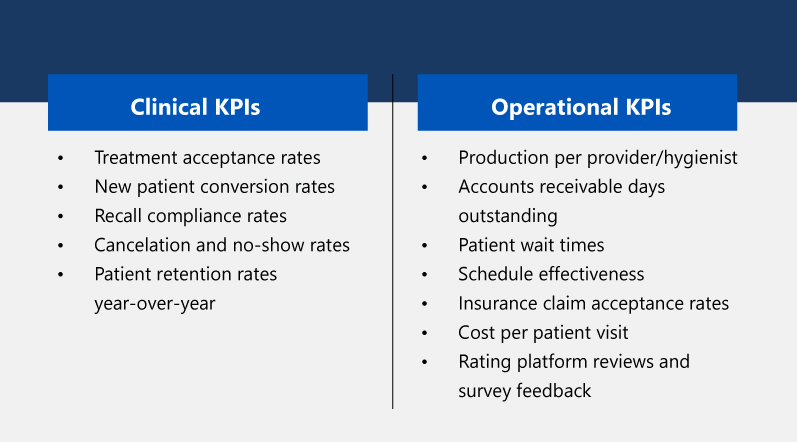
Measuring the success and progress of a dental practice involves tracking key performance indicators (KPIs) that reflect various aspects of the practice’s operations, financial health and patient satisfaction. Here are some key performance indicators that we recommend assessing the success and progress of dental practices, including clinical and operational metrics:
Clinical KPIs:
Treatment acceptance rates – % of recommended procedures ultimately performed
New patient conversion rates – % that schedule follow-up from inquiries
Recall compliance rates – % of patients following maintenance intervals
Cancelation and no-show rates
Patient retention rates year-over-year
Operational KPIs:
Production per provider/hygienist – tracks revenue contribution
Accounts receivable days outstanding – gauge collection efficiency
Patient wait times – ensures prompt service
Schedule effectiveness – measures how well appointment slots are filled
Cost per patient visit – manages practice overhead
Rating platform reviews and survey feedback – indicates patient satisfaction
We collaborate with dentists to determine the optimum targets for each KPI based on practice goals and then build customized dashboards that compile the data points from electronic records, billing systems and patient platforms to allow for clear tracking over time. Reviewing the insights together enables data-driven decisions to continuously refine strategies and operations.
How do you tailor consulting services to meet the unique needs and goals of each dental practice you serve?
Our approach always starts with developing a deep understanding of each dental practice’s unique set of circumstances, priorities and objectives. From there, tailoring the unique needs and goals of each practice is essential for providing effective guidance and support. Here are a few key steps and strategies:
Goal-setting collaborations – Facilitate sessions to define practice vision, targets for growth/profitability, areas for improvement.
Custom practice analyses – Conduct assessments aligned to established goals, focused specifically on SWOT variables, operations data, patient metrics.
Targeted execution planning – Develop strategies and detailed project plans based directly on the practice’s most pressing identified opportunities.
Personalized coaching services – Provide regular guidance aligned to practice strengths, culture and growth pace, adjusting as dynamics shift.
Differentiated reporting tools – Design KPI dashboards indexing indicators like production, collections, ratings etc. per the practice’s key areas of focus.
Hand-picked recommendations – Curate technologies, solutions and vendor partnerships appropriately suited to support the practice’s priorities.
Ongoing innovation – Continually suggest fresh, relevant ideas tailored to the practice’s evolving objectives.
The most impactful solutions emerge when every aspect stems from a complete understanding of the practice’s unique starting point challenges and aspirations for the future. Our personalized approach enhances the likelihood of successful outcomes and long-term collaboration.
How is ProspHire positioned to assist dental practices to stay ahead of the industry curve?
We aim to help dental practices stay ahead of the industry curve by providing tailored solutions from strategic planning to technology integration to performance optimization to staff training and development. The combination of broad industry perspective and personalized practice partnership enables us keep clients on the cutting edge.
Connect with us today for more details on our services, methodologies and industry-specific expertise.
Healthcare faces constant scrutiny due to ever-changing industry regulations. Healthcare compliance necessitates adherence to ethical, legal and professional standards. These regulations increase patient and consumer safety by preventing abuse, fraud and waste. A strong culture of compliance is a proactive and continuous commitment to not only meeting regulatory requirements but also safeguarding the organization’s reputation and fostering ethical conduct.
Healthcare providers and insurers must stay ahead of evolving regulations and develop strong compliance strategies. Noncompliance can result in penalties, license revocation, sanctions, business cessation and patient and consumer risks.
This guide explores key regulatory changes and how organizations can ensure compliance.
The Importance of Regulatory Compliance in the Healthcare Industry
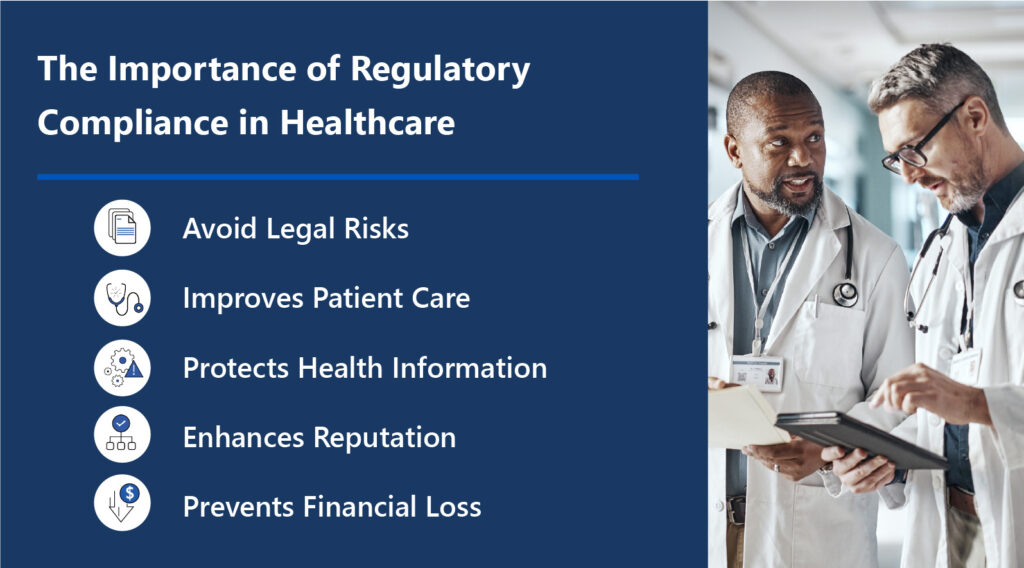
Regulatory compliance in healthcare is essential because it ensures safe, quality patient care. Healthcare regulations apply to all healthcare enterprises, including hospitals, practices, insurers and pharmacies. Complying with healthcare regulations is critical for the following reasons:
Avoids legal risks: Healthcare organizations must adhere to local, state and federal laws. Legal violations can lead to patient lawsuits or imprisonment.
Improves patient care: Regulations set safety and infection control measures for patient safety.
Ensures protected health information (PHI): Medical records contain patients’ sensitive data. Healthcare institutions must follow privacy and security standards to prevent unauthorized access.
Enhances reputation: Adhering to best practices enhances an organization’s trustworthiness and reputation.
Prevents financial loss: The cost of noncompliance is higher than imposed fines. Sanctions or license revocation can cause service disruption that impacts revenue.
Significant Healthcare Regulatory Bodies
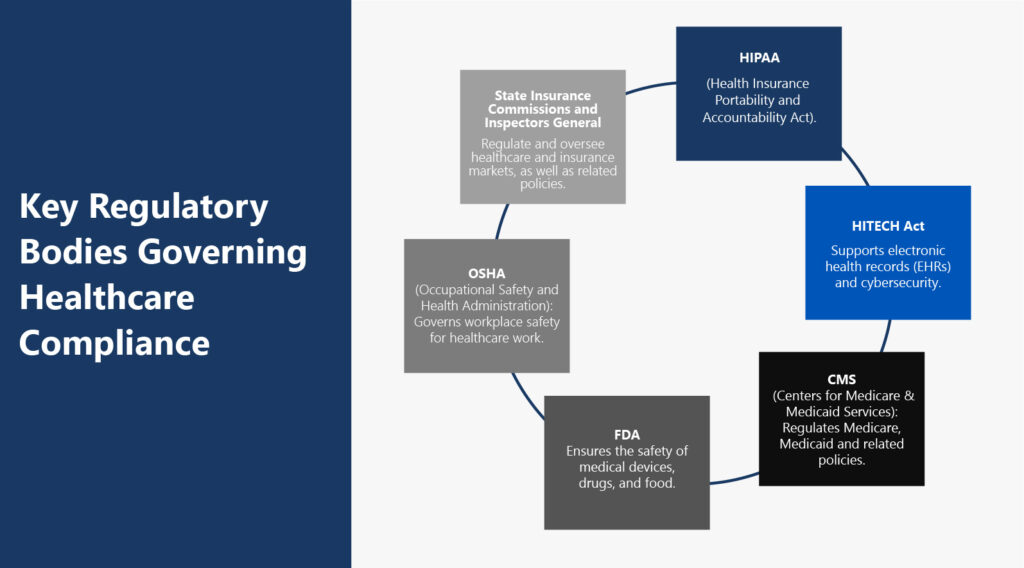
Key regulatory bodies govern healthcare industry standards. These include the following:
Centers for Medicare & Medicaid Services (CMS): Regulates Medicare, Medicaid and related policies.
Food and Drug Administration (FDA): Ensures the safety of medical devices, drugs, and food.
Occupational Safety and Health Administration (OSHA): OSHA governs safe and healthy working conditions for healthcare workers and other employees. Healthcare workers face unique safety hazards. OSHA enforces standards around biological waste, chemical exposure and bloodborne pathogens.
State Insurance Commissions and Inspectors General regulate and oversee healthcare and insurance markets, as well as related policies, to enhance the efficiency and integrity of healthcare programs.
Fundamental Regulatory Changes Affecting Healthcare Organizations
Recent changes in healthcare regulations address healthcare transactions. Many changes in the first quarter of 2024 focused on healthcare transactions. Noteworthy developments include:
Transaction Review Laws
States have adopted healthcare transaction legislation on access, quality, competition and need impacts. The definition of “material transactions” may differ depending on the state.
Healthcare transaction review laws require:
Prior approval for some transactions based on due diligence.
Long timelines for the relevant bodies to review transactions.
Consideration of proposed transaction cost, competition, access and equity.
Transparency on all aspects of a healthcare transaction, including divulging all parties involved.
CMS Broker Rule and 80/20 Rule
In April 2024, CMS published the Medicare Advantage and Part D Final Rule. The rule increased guardrails in many programs, including the Medicare Advantage and Cost Plan. Part of the rule included a cap on broker compensation. This limit prevents brokers from guiding patients to specific plans for financial incentives.
CMS released the Ensuring Access to Medicaid Services Final Rule. The rule states that 80% of Medicaid payments for home health services must go to care workers instead of overheads or profit.
Laboratory-Developed Tests Final Rule
Another legislative release in April 2024 was the FDA’s final rule on laboratory-developed tests (LDTs). LDTs are diagnostic tests developed and validated in-house by laboratories. The regulation amends in vitro diagnostic (IVD) products to fall under the Federal Food, Drug, and Cosmetic (FD&C) Act. This amendment phases out the FDA’s previous approach of discretion. It aims to ensure that LDTs are safe and effective for clinical use.
Evolving Telehealth Regulations
Since the COVID-19 pandemic, telehealth has shifted from a secondary to a primary healthcare choice. Regulations have risen to meet this shift:
Payment parity: Some states require insurers to reimburse telehealth at the same rate as in-person visits. This differs from service parity, which requires the same services for in-person and telehealth.
Licensure: States have specific regulations for providing telehealth services across state lines. Some, such as California, have exceptions, such as treatment for life-threatening illnesses. Other states, like Florida, have registration processes for external providers.
Safe: Prioritizing patient safety in care and service delivery
Effective: Allocating care to those who need it and refraining from misuse
Patient-centered: Considering the patient’s needs in all care decisions
Timely: Preventing delays or lengthy wait times
Efficient: Using resources in a way that avoids waste
Equitable: Equal care provided regardless of demographics or socioeconomic status
These metrics help healthcare entities ensure quality and meet changing regulations.
The Impact of Regulatory Changes in the Healthcare Landscape
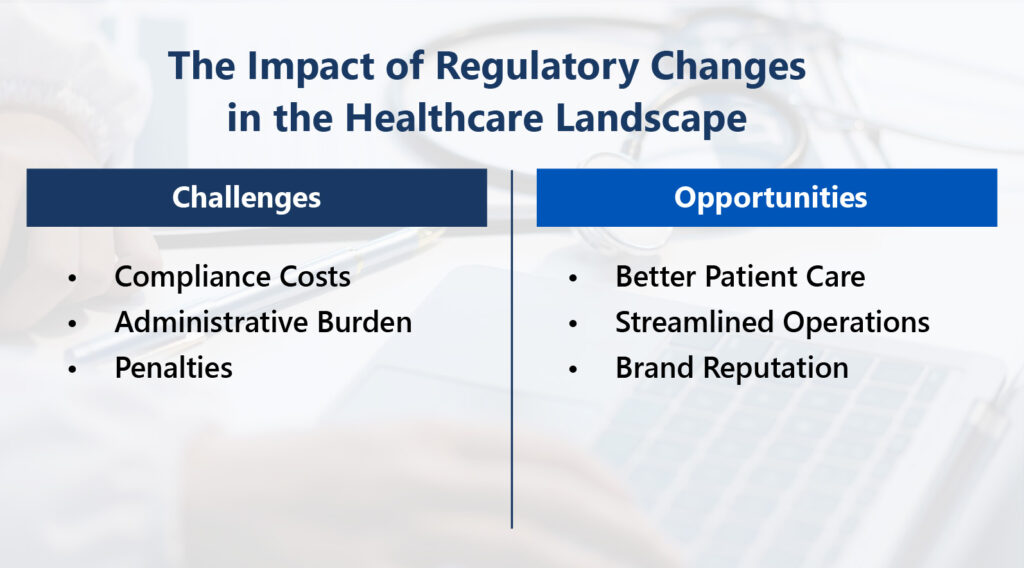
Each regulatory change brings unique challenges and opportunities to healthcare. Organizations must adapt or risk noncompliance.
Challenges Posed by Changes
Shifting regulations can pose obstacles for healthcare providers, including:
High compliance costs: Adapting to changing regulations can mean spending funds on new systems, training or data handling.
Administrative burden: Updating policies, procedures or practices requires time and administrative effort.
Service impact: Evolving healthcare standards can impact the services offered. The COVID-19 pandemic increased the use of telehealth and virtual consultations.
Noncompliance penalties: Organizations may face fines or lost business due to brand damage.
Pricing revisions: Regulations may require changes to pricing strategies. Healthcare organizations with Medicare patients must account for changing Medicare reimbursement rates.
Increased risk management: New standards introduce compliance, financial and operational risks. The shift to value-based care models in the U.S. requires healthcare providers to prioritize care quality over volume.
Staff training: Healthcare employees need ongoing training to keep updated with regulatory changes. Training involves costs and operational disruption.
Technology adoption: Regulations mandate technologies like EHRs (HITECH) and data security measures (HIPAA). To comply, healthcare organizations must adopt these technologies. New systems come at an expense and require training.
Opportunities Created by Changes
If healthcare organizations can navigate the obstacles, changing regulations present significant opportunities:
Improved patient care: Complying with regulations increases patient safety and satisfaction. Strict controls mean lower infection rates with better quality care.
Enhanced data security: Data privacy laws lower breach risks, safeguarding patients and organizations. Security measures restrict unauthorized access.
Competitive advantage: Effective compliance makes healthcare organizations stand out from competitors. Regulations level the playing field. Providers who use sneaky practices to win patients risk the consequences.
Streamlined operations: Advanced healthcare technology can increase efficiency, boost productivity and reduce errors.
New revenue opportunities: Expanding services can create additional revenue streams for practices.
Increased brand reputation: Following compliance and ethical best practices enhances brand reputation. Compliant healthcare organizations that provide high-quality care gain more patient trust.
Collaboration benefits: Regulations can foster partnerships with entities like EHR compliance-focused IT firms. These partnerships offer knowledge not available internally. Collaboration can open up new markets and make it easier to adapt to regulatory changes.
How to Create an Effective Compliance Program
A compliance program is a set of policies and processes to ensure healthcare organizations follow relevant laws. This program helps prevent, detect and correct regulatory noncompliance.
Follow these best practices for a successful compliance program:
1. Establish Procedures, Policies and Conduct Standards
The first step in creating a compliance program is identifying which regulations apply. The second step is evaluating the existing compliance measures. Following this assessment, formulate a plan to address any gaps. Policies and procedures establish guidelines for compliance. They should be straightforward, easy to understand and communicated to all staff. Below are examples of what to include:
Compliance responsibilities: Outline roles for compliance officers, the compliance committee, management and staff.
Program structure: Describe the program’s operations, including reporting procedures, compliance resolutions and monitoring.
Success measures: Determine methods to measure program effectiveness.
2. Assign a Compliance Officer and Committee
HIPAA regulations mandate healthcare providers to appoint a privacy officer. The compliance officer ensures the organization complies with internal and external standards. A compliance committee of individuals with diverse backgrounds supports the officer. The compliance officer and committee administer the program together. They should hold regular meetings to discuss regulation updates, reporting and compliance enforcement.
3. Train and Educate Staff
All healthcare staff must receive continuous training on compliance and regulatory updates. HIPAA’s Privacy Rule mandates training staff on policies, procedures and security awareness. This education ensures staff and management understand expectations and codes of conduct. Any vendors or associated partners should also understand compliance standards.
4. Develop a Communication Strategy
Creating open channels of communication is essential for both top-down and bottom-up communication. This way, staff remain aware of regulation updates and can report compliance issues.
A strong communication plan should include:
The process for reporting compliance issues.
Methods for anonymous reporting, such as a hotline.
A log for reported compliance issues.
5. Monitor and Audit
A healthcare compliance program doesn’t mean automatic compliance. Regular program assessments ensure compliance with the relevant laws, rules and regulations. Monitoring and auditing serve different objectives:
Monitoring: Internal reviews assess procedure effectiveness and identify potential issues. Problems uncovered while monitoring may lead to an audit for further investigation.
Auditing: This process involves deep-diving into specific areas of concern and using measures to assess compliance. An audit looks into how or why issues occur.
Healthcare organizations must enforce compliance violations or noncompliant behavior through appropriate disciplinary measures. The consequences must be consistent and well-communicated. A disciplinary policy detailing transgression mechanisms must be accessible to all staff.
7. Respond Fast and Take Corrective Action
Prompt responses and corrective actions address ineffective policies, compliance violations or data breaches. Quick correction of identified issues can prevent penalties or legal action. Corrective actions may include disciplinary action, overpayment recovery or policy updates.
8. Stay Informed About Regulatory Updates
Keeping updated on the latest trends and changes helps keep your organization compliant.
Several tips to stay informed include:
Subscribe to regulatory body newsletters, like the HIPAA Journal, or set up Google Alerts for specific regulations.
Network with industry professionals at conferences, webinars or on social media platforms.
Consult with compliance experts, whether internal or external.
Why Trust ProspHire for Healthcare Regulatory Compliance?
ProspHire’s sole focus is healthcare. Since 2015, we have built a team of experts experienced in both public and private healthcare. With our extensive industry knowledge, we help our healthcare clients meet regulatory changes. Our areas of expertise include Medicaid practice, ACA planning, dental practice management and Stars performance improvement.
A recent example illustrates our compliance expertise. A large Pennsylvania managed care organization (MCO) had to achieve CMS document compliance. ProspHire assessed existing processes, established formal governance and implemented an operating model. We developed a Required Documents Program and Program Toolkit that defined processes. The result? The client achieved document compliance, saved costs and satisfied members.
Let ProspHire Help You Meet Regulatory Requirements
Healthcare organizations can find it challenging to stay updated with changing regulations. At ProspHire, healthcare is our passion. Our team anticipates healthcare regulation changes to offer effective compliance strategies. We customize our solutions to meet your organization’s unique needs.
There’s a reason ProspHire has appeared on Inc. Magazine’s annual list of America’s Fastest-Growing Private Companies five years in a row. Our people-first culture and exceptional customer service drive our continuous growth.
Many healthcare organizations implement technology to enhance patient care or consumer engagement. However, implementing new technology is also a powerful strategy for improving operational efficiency, streamlining project delivery and prioritizing collaboration. These improvements can lead to cost savings and more satisfied patients, making technology a worthwhile investment.
Read on to discover various emerging technologies within healthcare that can help your business complete projects, stay competitive and provide quality care.
What Is Project Delivery in Healthcare?
Healthcare project delivery refers to planning and executing projects for healthcare organizations. Projects can include initiatives that improve facilities, processes, technology, systems and services. The goal of project delivery is to implement projects that modernize your business, improve communications and decision making, improve quality and timeliness and help you provide improved patient care.
Successful project delivery can streamline business operations, reduce compliance risk, save employees time, improve service offerings and provide quality care to patients. However, the success of a project lies in its implementation. With the right tools and processes, you can deliver projects on time, within budget and with minimal disruptions. Technology is a key factor in achieving this outcome.
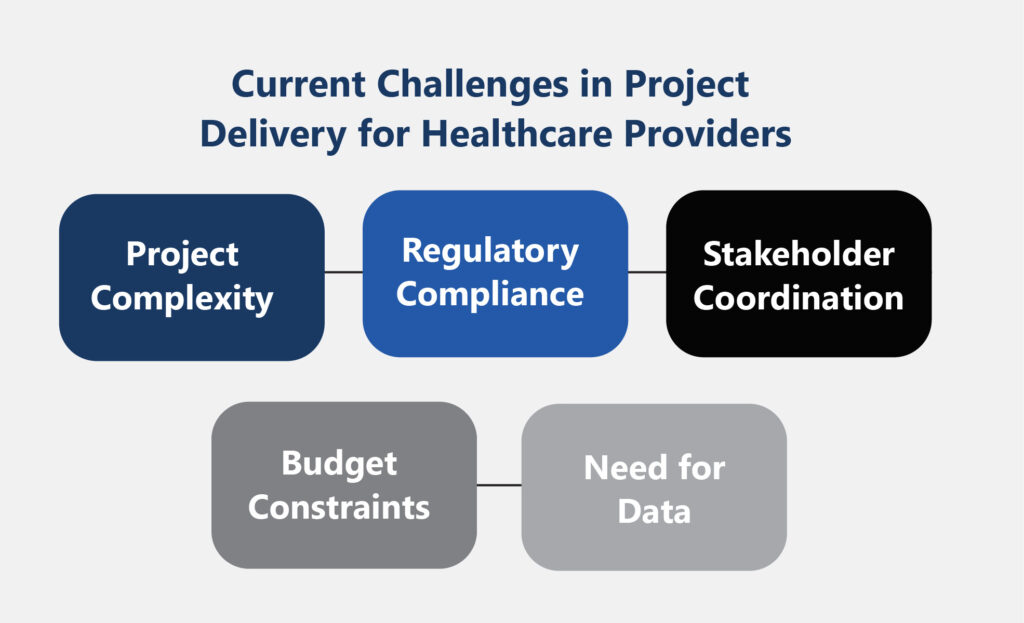
Current Challenges in Project Delivery for Healthcare Providers
Despite the necessity and benefits of healthcare projects, businesses often face many challenges throughout the project delivery process. Some of these include:
Project complexity: The sheer scale and scope of some healthcare projects can make delivery challenging. Miscommunication can happen when coordinating various departments, resulting in delays and failure to meet project objectives.
Regulatory compliance: During project delivery, healthcare providers must comply with rules, regulations and standards. The number of regulations and how often they change make staying compliant challenging.
Stakeholder coordination: Healthcare providers must receive buy-in from several stakeholders before beginning a project. Managing each stakeholder’s expectations and coordinating with them throughout project delivery can be difficult.
Budget constraints: Healthcare projects often have large budgets and resource requirements. Acquiring funds and allocating sufficient resources for projects are two of the biggest project delivery challenges.
Need for data: Project success often relies on the collection of accurate and timely data. Without it, tracking project progress and determining goal alignment becomes a challenge. Outdated systems and technology are often to blame for data issues.
Emerging Technologies in Healthcare
Emerging technology is any technological innovation that is gaining traction but has yet to realize its full potential. This includes current and old technology that people are discovering new applications for. Your business can take advantage of the following emerging technologies to overcome project delivery challenges and streamline project management.
1. Telemedicine and Telehealth
Telehealth broadly refers to remote health services that use communication technology to enable long-distance provider and patient contact. A subsection of telehealth is telemedicine, which doctors use to provide virtual care to patients. Telemedicine and telehealth are revolutionary for patient care, as patients can receive medical services regardless of bad weather, mobility limitations, poor access to healthcare and other obstacles.
Telehealth technology and software make offering patients remote services a breeze. This technology allows your staff to collaborate and work from various locations. It can speed up administrative processes related to these services, saving them time. Most telehealth software also includes integrated data management tools. Staff can quickly collect and analyze essential patient information, and patients can access a portal to view their important information quickly and easily.
Telehealth also allows specialized physicians to connect with and assess patients who may be experiencing a medical emergency. For example, neurologists from around the country use telehealth to assess possible stroke patients quickly and efficiently without making them wait for a physician to be available in person.
2. Artificial Intelligence and Machine Learning
Artificial intelligence (AI) can simulate human thought processes. It encompasses various subsets, including generative AI and machine learning (ML). AI is most beneficial in healthcare for quickly analyzing large data sets that would previously take a long time to assess. The time savings alone help healthcare providers reduce the administrative burden on staff and encourage them to use data to make more informed decisions.
AI is also beneficial for project delivery. Most AI and ML solutions can analyze historical data and provide accurate predictive analytics. Predictive analytics allow you to predict future events or trends, such as staffing needs, patient admissions and resource utilization. With this information, you can identify and address project delivery challenges or disruptions before they occur.
3. Project Management Software
Project management software is a must for healthcare project delivery. This software is designed to make creating project plans, managing resources and tracking progress simple. Most project management software provides a centralized place for project timelines, tasks, budgets and objectives. With everything in one place, all stakeholders have access to the same up-to-date project information.
Project management software often has built-in communication tools that facilitate team collaboration and prevent human error related to communicating with various providers. Improved communication and collaboration can eliminate confusion, reduce conflict and increase the chances of project success.
Software can often integrate seamlessly with other healthcare systems to enable seamless data transfer and streamline workflows.
4. Internet of Medical Things and Wearable Technology
The Internet of Medical Things (IoMT) refers to medical devices — with sensors and software — that collect data and communicate with each other over a network. IoMT often refers to wearable devices patients can use to track health and fitness data. The device can send this data to a patient’s healthcare provider, allowing them to monitor their health remotely.
For example, some devices can monitor irregular heart rhythms to decrease hospital stay and help prevent readmission. Wearable devices can also be used in hospital settings to assess a patient’s vital signs and automatically upload them to their chart. This saves time and allows for closer monitoring.
Beyond patient monitoring, healthcare providers can also use IoMT devices to manage resources. Smart devices can attach to medical equipment and other resources, allowing you to track their status and location. Having access to real-time patient and resource data is pivotal to project delivery. It enables staff to make informed decisions quickly, increasing efficiency and reducing the chance of mistakes that often derail project timelines.
5. Electronic Medical Records
Gone are the days of physical medical records. Today, healthcare professionals can use electronic medical records (EMRs) — also called electronic health records (EHRs) — to record and store patient data in the cloud. In addition to saving staff time, EMRs protect patient data and help practices comply with privacy laws.
The digitization of health records benefits patients because it means their information is readily accessible and sharable, which can contribute to more accurate and timely diagnoses. For healthcare providers, EHRs are vital to efficiency and on-time project delivery. Having easy access to data allows staff to easily create, access and share patient information. Digital health records can also integrate with other systems, improving workflow, cross-departmental communication and care delivery.
Why Trust ProspHire to Implement New Technology?
ProspHire is a leading national management consulting firm dedicated to transforming healthcare businesses. We specialize in optimizing project delivery and implementing new technology. Our team consists of certified Project Management Professionals, Six Sigma Green Belts, Scrum Masters and Product Owners. We’ll work closely with your business and its stakeholders to understand expectations, tackle operational challenges and meet long-term goals.
Don’t just take our word for it — check out what our clients have to say. One of our clients recently required assistance with their care management system. Their old system involved manual processes that were time-consuming and inefficient. The ProspHire team conducted a current state assessment and collaborated with key stakeholders to establish the requirements for a new care management system.
Our partnership resulted in their first multistate clinical software platform. Thanks to automated workflows, enhanced analytics and a better member experience, they saw improvements in their overall efficiency.
Collaborate With ProspHire Today
We work tirelessly to provide consistent and reliable results for all our clients and look forward to doing the same for your business. If you’re ready to implement new technologies and achieve your organizational goals, fill in our online contact form. A member of our team will be in touch to discuss your requirements further.
In the 2025 Medicare Advantage and Part D Final Rule, CMS introduced several enrollment updates for Dual Eligible Special Needs Plans (D-SNPs) aimed at improving the integration of Medicare and Medicaid services for individuals fully eligible for both programs. The rule provides guidelines that state, starting in 2027, D-SNPs must adopt exclusively aligned enrollment when paired with an affiliated Medicaid plan.
Additionally, in the Proposed Final Rule for CY2026, CMS reinforces its stance on enhancing the experience of dual eligible members. Proposed provisions include requirements to create a more seamless and integrated experience, such as implementing an integrated member ID card and streamlining the health risk assessment (HRA) and individualized care plan (ICP) processes.
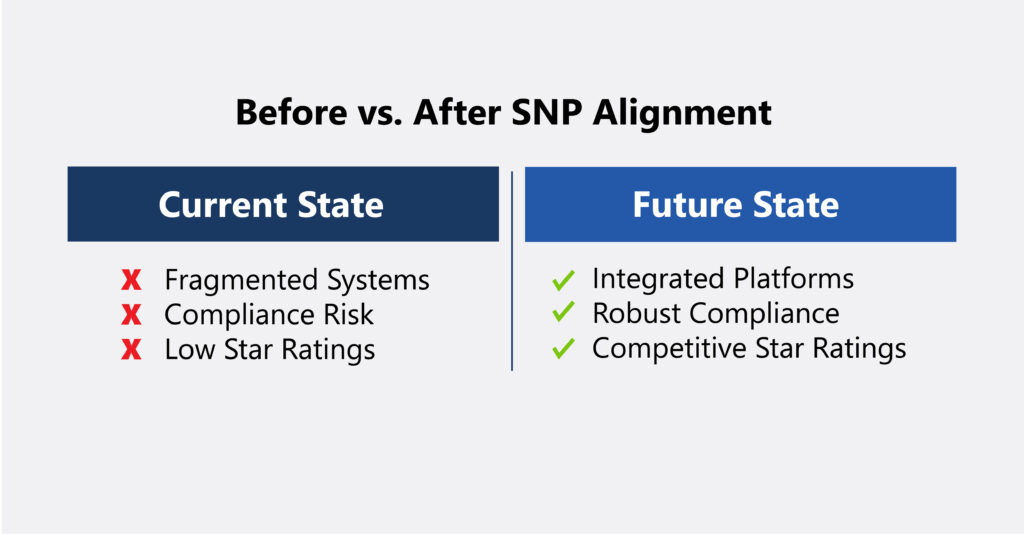
As CMS and state governing agencies move toward aligning D-SNPs with Medicaid programs, health plans will face operational, enrollment, quality and member experience headwinds.
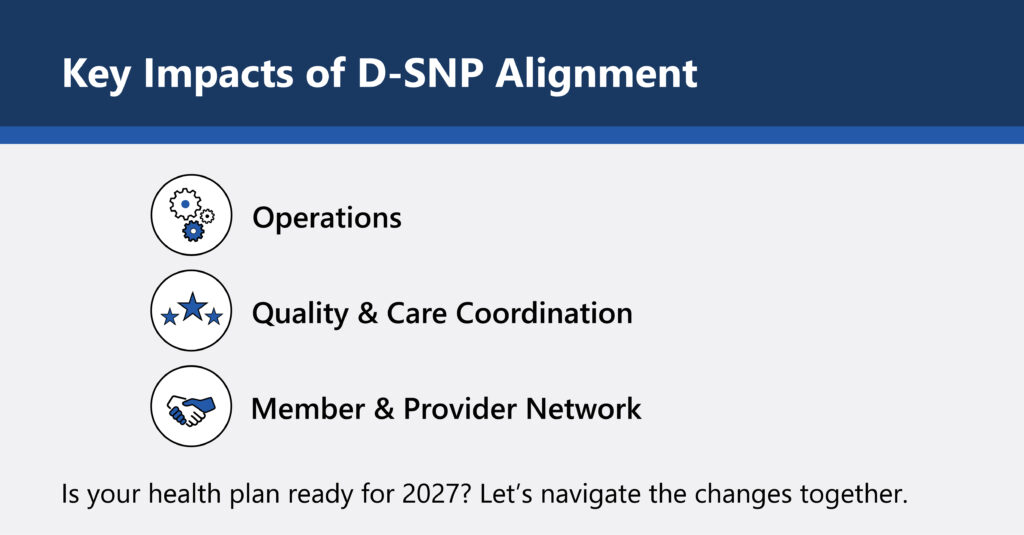
To successfully implement these changes, health plans must evaluate the impact on the key areas outlined below and develop strategies to execute them seamlessly, prioritizing member experience and delivering value.
Key Impacts of D-SNP Alignment
Operations
Unifying Medicare Advantage and Medicaid systems for seamless care coordination
Balancing comprehensive performance on Star Ratings, HEDIS measures, and relevant State quality programs
Addressing SDOH to meet state requirements and improve member outcomes
Member & Provider Network
Educating providers on new claims, payment and care coordination processes
Simplifying dual-eligible member experiences to reduce confusion
Maintaining continuity of care during transitions to aligned plans
Is your health plan ready for 2027? Let’s navigate the changes together.
Impact on Health Plan Operations
Identifying impact on the key areas below is necessary to ensure plans can meet D-SNP alignment requirements, including:
Systems Integration: Plans must integrate Medicare Advantage and Medicaid platforms to allow for data sharing and effective care coordination and care management
State and Federal Regulatory Compliance: The increase of state and federal regulations will require more oversight and monitoring to ensure compliancy
Enrollment Processes: Dual-eligible individuals may experience a smoother enrollment process into aligned plans, potentially boosting membership in dual-eligible SNPs
Member Retention: Alignment guidelines may result in members being auto enrolled into specific plans, which could lead to membership losses during the process if members are moved to a competitor’s plan
Impact on Health Plan Quality and Care Coordination
Aligned SNPs present opportunities and challenges to quality improvement:
Improved Care Coordination: Improved integration between Medicare and Medicaid services is expected to enhance quality by streamlining processes for member engagement, completing health risk assessments and coordinating care
Focus on Star Ratings and HEDIS Measures: Both Medicare Star Ratings and Medicaid quality measures will need to remain competitive and plans will need to prioritize performance
Social Determinants of Health (SDOH): SNP alignment highlights the importance of addressing SDOH to improve member outcomes and meet state contract expectations
Continuity of Care: Through integrated networks, plans aligned across state Medicaid programs may offer better continuity of care and may experience minimal to no disruption
Impact on Health Plan Members and the Provider Network
For members, the shift to aligned SNPs can improve care experiences but also introduces complexities that could lead to provider and member confusion and abrasion if not changes are not executed thoroughly:
Provider Education: Plans will need to educate providers on changes for dual-eligible members for areas such as claims submission and payment, benefit design and care coordination
Simplified Benefits: Members may benefit from the increased between Medicare and Medicaid benefits enabling a streamlined approach to accessing care
Continuity of Care: Plans aligned across state Medicaid programs may offer better continuity of care through integrated networks.
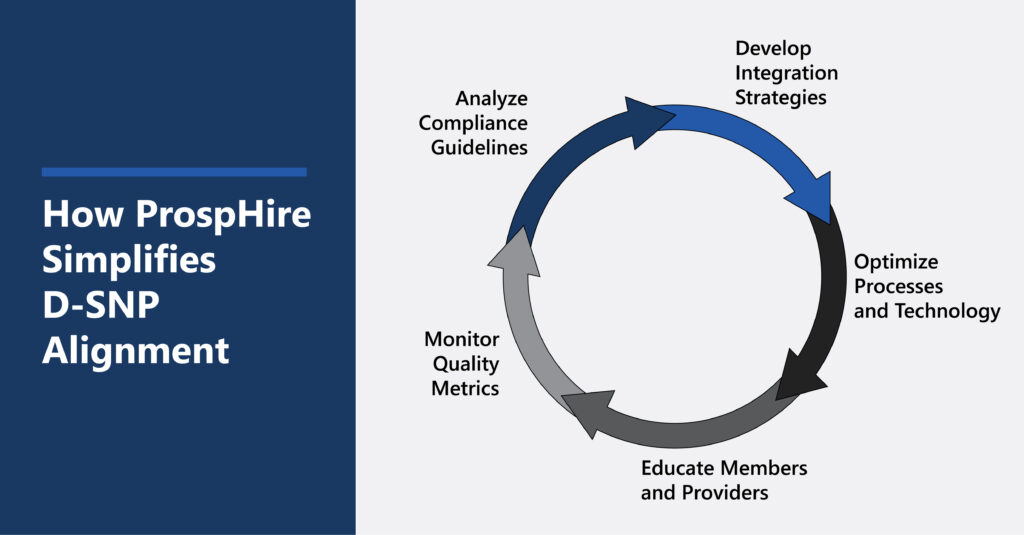
How ProspHire Simplifies D-SNP Alignment
Analyze Compliance Guidelines
Develop Integration Strategies
Optimize Processes and Technology
Educate Members and Providers
Monitor Quality Metrics
How ProspHire Can Help
At ProspHire, we support health plans through navigating complex transitions like D-SNP alignment requirements. Our deep expertise in healthcare strategy, operations and compliance, ProspHire is here to support plans by:
Analyzing compliance guidelines to fully understand regulatory requirements
Developing strategies for seamless Medicare-Medicaid integration across cross-functional business areas
Supporting operational readiness through technology, process optimization and member and provider educational opportunities
Identifying quality improvement opportunities tied to dual-eligible populations
By partnering with ProspHire, health plans can navigate the complexities of SNP alignment confidently, ensuring sustainable growth and improved outcomes for dual-eligible members.
Donald J. Trump’s return to the White House has already ushered in sweeping discussions about the future of healthcare policy in the United States. Among the administration’s top priorities is a renewed push to reform Medicaid, aiming to curb federal expenditures and reshape the program’s scope. With millions of Americans relying on Medicaid for essential healthcare, these proposed rollbacks carry profound implications for beneficiaries, providers, insurers and state governments.
As the Trump administration begins its second term, understanding the potential changes to Medicaid and preparing for their consequences is crucial for stakeholders across the healthcare system.
Medicaid Rollback Policy Changes
Medicaid Under the Trump Administration: A Second Chapter
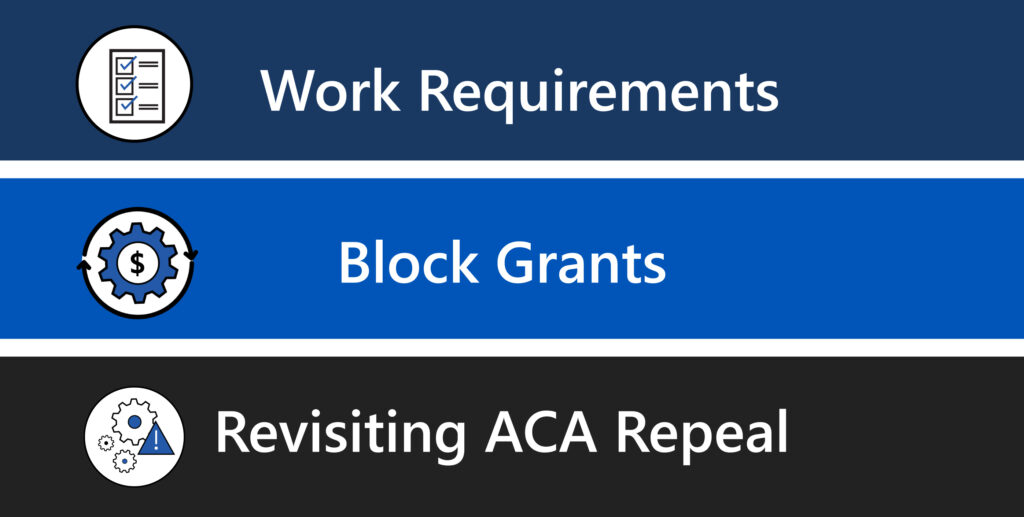
Trump’s earlier presidency laid the groundwork for what could come next. Efforts to repeal the Affordable Care Act (ACA) and introduce work requirements showcased the administration’s focus on limiting Medicaid’s reach and increasing state-level control. Key initiatives included:
Work Requirements: The Trump administration previously encouraged states to implement work or community engagement conditions for Medicaid eligibility. While these measures faced legal challenges and were ultimately overturned in many cases, the administration has signaled plans to reintroduce them.
Block Grants and Per Capita Caps: The administration continues to support converting Medicaid funding into block grants, giving states fixed allocations instead of the open-ended federal matching system.
Revisiting ACA Repeal: With Congress now more favorable to Trump’s policies, there is renewed momentum to dismantle ACA provisions, including Medicaid expansion.
These initiatives reflect a fundamental shift in Medicaid’s structure, moving from a broad federal safety net to a more state-driven and restricted program.
What Could Medicaid Rollbacks Look Like?
Under the current administration, we might see several key policy shifts:
Reduced Federal Contributions: Block grant or per capita cap proposals are likely to resurface, forcing states to shoulder more financial responsibility. This could lead to scaled-back services or reduced coverage for millions.
Increased Eligibility Barriers: Work requirements, stricter income verifications and time-limited benefits could exclude a significant portion of current Medicaid recipients.
Erosion of Medicaid Expansion: If ACA repeal efforts succeed, states that expanded Medicaid could see a significant reduction in funding, directly impacting low-income adults who gained coverage under the expansion.
Broader State Waiver Flexibility: Expanded use of Section 1115 waivers would allow states to experiment with benefit reductions or new eligibility rules, creating further disparities in Medicaid access across the country.
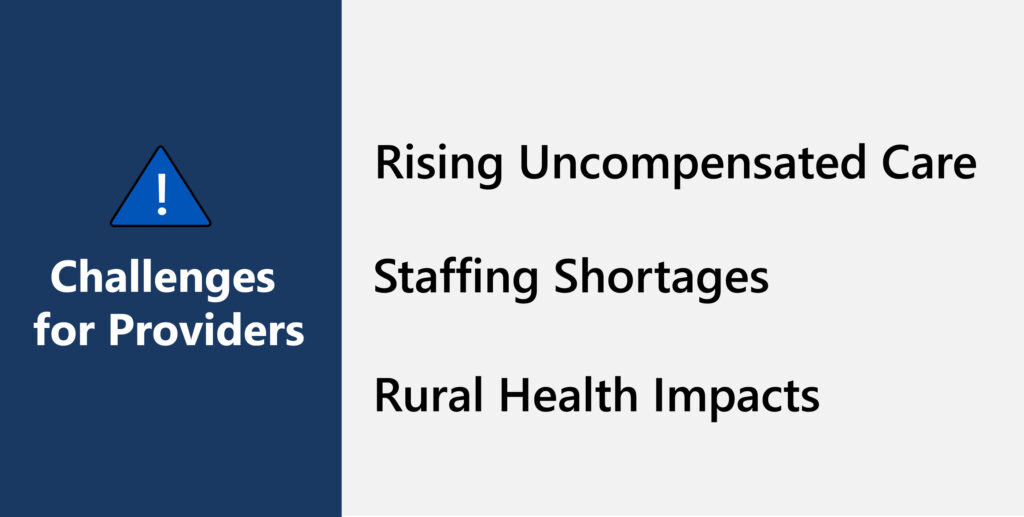
Challenges for Providers
For providers, Medicaid rollbacks could destabilize financial sustainability and disrupt care delivery. Likely challenges include:
Rising Uncompensated Care: As more individuals lose Medicaid coverage, hospitals and clinics would see an increase in unpaid bills, straining resources.
Staffing Shortages: Reduced reimbursement rates could force providers to limit services or stop accepting Medicaid patients altogether, worsening provider shortages.
Impact on Rural Health: Rural hospitals, which rely heavily on Medicaid funding, could face heightened risk of closure, leaving rural communities with limited access to care.
Shift in Primary Care Utilization: Primary Care providers could see a decrease or inconsistencies in utilization as uninsured or underinsured individuals migrate toward emergency services and other means of care rather than preventative care due to financial restraints.
Insurer Impacts
Medicaid managed care organizations (MCOs) and insurers would also face significant challenges, including:
Smaller Risk Pools: With reduced enrollment, MCOs may experience decreased revenue and heightened risk exposure as healthier populations leave the system.
Operational Complexity: Administering programs under new eligibility rules and work requirements could increase administrative burdens and costs.
Market Volatility: Shrinking Medicaid markets might prompt insurers to scale back their participation, reducing options for states and beneficiaries.
State-Level Consequences
Medicaid rollbacks will place immense pressure on state governments, which share responsibility for funding and administering the program. Impacts could include:
Budgetary Strain: States may need to find new funding sources—potentially raising taxes or cutting other programs—to compensate for reduced federal support.
Policy Disparities: Increased reliance on state-level waivers could deepen regional inequities in Medicaid coverage and benefits.
Political Challenges: States with large Medicaid populations may face intense political backlash if significant cuts or changes are implemented.
How ProspHire Can Help Clients Navigate Medicaid Rollbacks
In this rapidly shifting environment, ProspHire is uniquely positioned to support clients in adapting to Medicaid reforms. As a healthcare consulting firm with extensive experience in Medicaid program delivery, ProspHire partners with health plans, providers and state agencies to mitigate risks, enhance efficiency and maintain compliance.
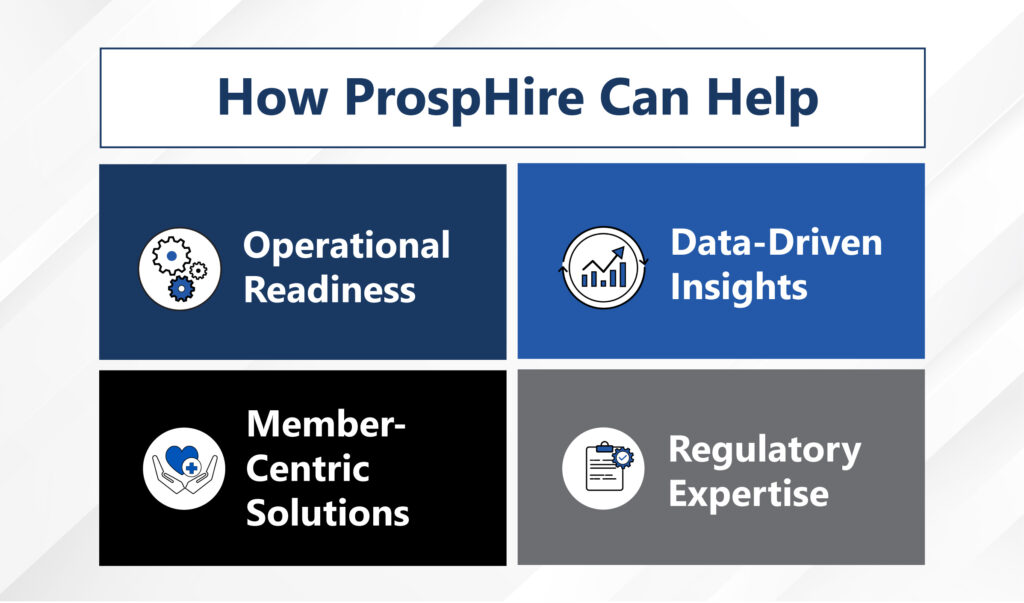
ProspHire’s tailored strategies focus on:
Operational Readiness: Helping clients streamline workflows and optimize processes to manage reduced funding while sustaining quality care.
Data-Driven Insights: Leveraging analytics to identify cost-saving opportunities, monitor compliance and support decision-making.
Member-Centric Solutions: Developing approaches to preserve access and improve outcomes for vulnerable populations.
Regulatory Expertise: Guiding clients through complex policy changes and ensuring readiness for evolving requirements.
With ProspHire’s dedicated expertise, healthcare organizations can adapt to these changes, enabling financial sustainability and member satisfaction despite unprecedented challenges.
The return of the Trump administration marks a critical juncture for Medicaid, as potential rollbacks threaten to reshape one of the nation’s most important safety-net programs. While these changes present significant risks, they also offer an opportunity for healthcare stakeholders to rethink strategies, prioritize efficiency and advocate for sustainable solutions.
Navigating this uncertain landscape requires proactive planning, collaboration and innovation. With the right partnerships and expertise, healthcare organizations can weather these reforms while maintaining their commitment to delivering high-quality care. ProspHire stands ready to lead clients through these challenges, ensuring resilience in the face of transformation.
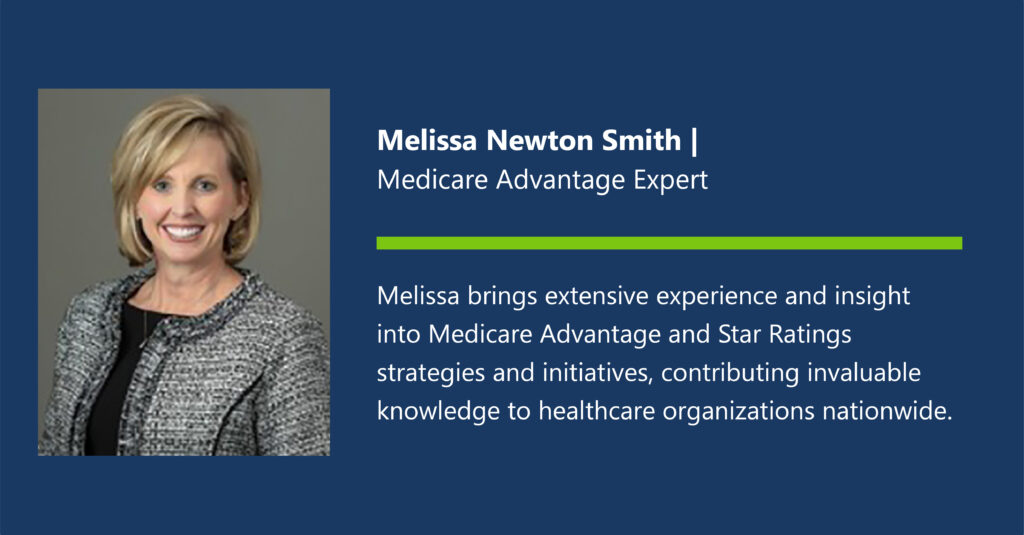
We had the pleasure of speaking with Melissa Newton Smith, a renowned expert in Medicare Advantage and Star Ratings, who recently announced a strategic alliance with ProspHire. Melissa brings three decades of experience in healthcare strategy, operations and quality improvement, with a particular focus on Medicare Advantage. Her expertise has been instrumental in driving innovation and excellence across the industry. In this interview, we’ll explore Melissa’s insights on the evolving landscape of healthcare, the impact of this new partnership and her vision for the future of Medicare Advantage.
Background and Expertise
Can you tell us about your background and how you became an expert in Medicare Advantage and Stars?
As a lifelong learner, it’s very humbling and a little awkward to be called an “expert.” It’s not a title I readily embrace because my goal has never been to become or be an expert, but rather to do meaningful work for my clients by staying curious, knowledgeable and focused on their goals and needs. Every day I dedicate time to exploring the latest regulatory updates, industry news, research publications and insights from others to keep pace with this constantly evolving field.
My journey into Medicare Advantage (MA) and Star Ratings was unplanned and unexpected. As a CPA, my background initially focused on managing federally funded grants and contracts. In 2008, when my children were young, I chose to scale back to a part-time role and a former KPMG colleague graciously created a position for me in a Part D plan. At the time, I knew nothing about Medicare Advantage, but I quickly leveraged my business acumen and innate curiosity to learn and eventually excel in the growing MA and Part D landscape. As CMS transitioned the Star Ratings program from the Demonstration stage, I saw an exciting opportunity to make an impact in a nascent field. I joined an MA-PD plan’s Star Ratings team, where I embraced the challenge of building impactful programs and delving into the complexities of health plan quality from the ground up. My passion for learning fuels me. I am an avid reader and genuinely enjoy dedicating the time required to quickly absorb, comprehend and, more importantly, apply the vast body of knowledge needed to succeed in this industry. I knew nothing about the terms, industry norms and technicalities when I began my Star Ratings journey in 2011. My learning journey was, and still is, vast and my expertise is the product of consistent and persistent learning alongside the relentless pursuit of success for my clients.
The Strategic Alliance
Congratulations on the alliance with ProspHire! What inspired the alliance and what excites you about working with ProspHire?
This alliance is a natural fit of my long-standing belief in the power of partnerships and the reality that organizations need more expertise and support than ever before. This is an exciting time in our industry, filled with rapid, sweeping and frankly existential changes for health plans, providers and vendors.
Our team has increasingly been asked to provide expanded, sustained personnel and support to manage implementations, augment staff capacity and drive routine operations for our clients. By combining our team’s insights and advice alongside ProspHire’s strong project delivery capabilities, we will be able to offer even greater value to our clients as they navigate significant changes in MA, Medicaid and the broader healthcare sector.
Our clients thrive on teamwork and collaboration and this alliance reflects the same spirit of working together for shared success.
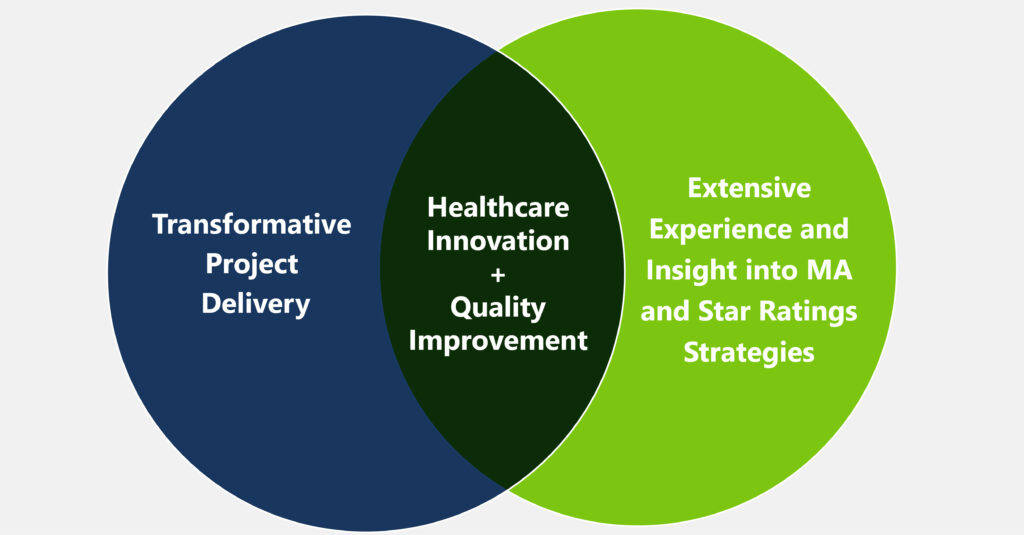
ProspHire has a strong reputation for delivering transformative project outcomes in healthcare. How does your expertise complement their approach and what unique value do you believe this collaboration will bring to the industry?
My expertise lies in optimizing performance using curiosity, creativity and personal experiences to design and implement innovative strategies for success. ProspHire’s reputation for delivering transformative project outcomes perfectly complements my work and approach. Together, we bring a powerful combination of strategic consulting and operational excellence, focused on driving measurable, sustainable improvements in healthcare quality. This collaboration will allow us to design and implement solutions to the industry’s most pressing challenges, from improving member experiences to transitioning to digital quality measurement which will ultimately raise the bar for healthcare outcomes across the board.
Healthcare Innovation and Operational Excellence
The healthcare industry is rapidly evolving, especially with the growing focus on quality and efficiency. How do you envision this partnership helping healthcare organizations navigate these changes and achieve their goals?
Healthcare organizations today are under immense pressure to balance quality with efficiency while navigating regulatory changes. Almost every organization needs some combination of strategic foresight and operational agility to help understand the changes and adapt quickly enough to achieve corporate objectives. Our focus on data-driven strategies, innovative care models and member-centric solutions will enable healthcare organizations to not only meet but exceed their quality and operational goals, ensuring long-term success.
In your opinion, what are the biggest challenges you’re seeing in the Medicare Advantage space and how do you plan to address these through your collaboration with ProspHire?
The nature and number of changes in Medicare Advantage has introduced a complicated web of interrelated changes required for organizations to both survive and thrive. We are seeing plans, providers and vendors struggle to fully understand these changes and design operational adaptations to cope with them as fast as will be necessary for success. We plan to help plans address these challenges by bringing technical expertise and skilled staff to customers to accelerate and enhance operational activities and adaptation.
The alliance between ProspHire and the Newton Smith Group is described as a significant step toward advancing healthcare innovation. What does healthcare innovation mean to you and what areas are you most focused on?
For me, healthcare innovation is about creating solutions that not only address immediate challenges but also anticipate future needs. It’s about making care more accessible, efficient and person-centered. In this alliance, I’m particularly focused on innovations that improve access to care and member experiences, such as integrating technology to achieve personalized engagement at scale in alignment with CMS and NCQA regulatory and quality requirements. We’re also increasingly helping plans, providers and vendors redesign and leverage new payment models to better align incentives across the care continuum, ensuring that both quality and value are rewarded.
Goals and Vision
Looking ahead, what are your long-term goals for this partnership and how do you see it evolving to meet the future needs of the healthcare industry?
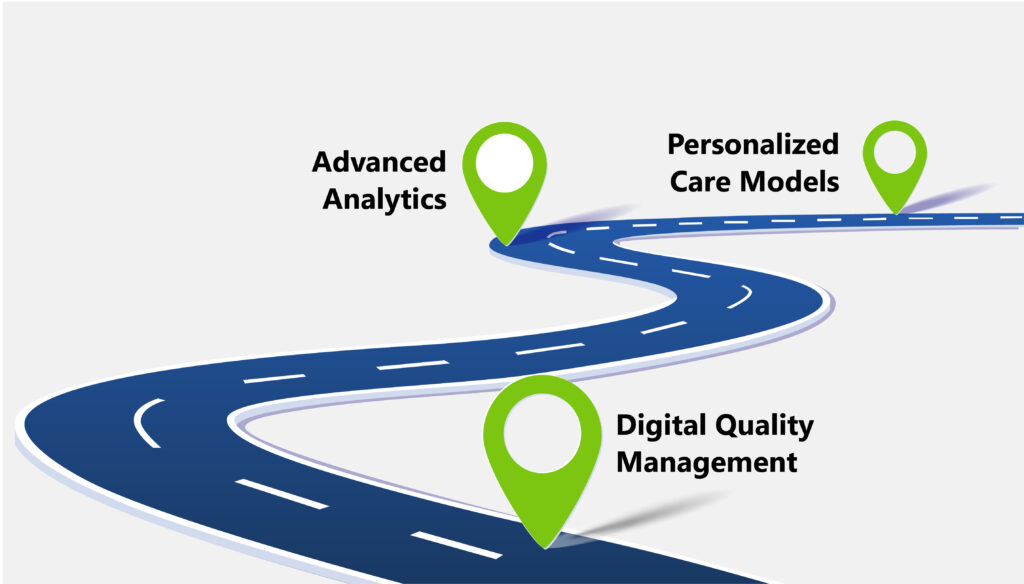
Our long-term goal is to build a framework that allows health plans, providers and vendors to continuously adapt to the evolving healthcare landscape, particularly as Star Ratings, regulations and the healthcare environment in general become more complex. We want to ensure that organizations are not just reactive but proactive in their approach to care delivery and quality improvement. As the healthcare industry continues to evolve, I see this partnership expanding into new areas, such as personalized care models, digital quality measurement, advanced analytics to improve health outcomes and deeper integrations of member experience tools to drive outcomes at scale.
Are there any upcoming projects or initiatives with ProspHire that you are particularly excited about?
YES! Just as we support clients in designing and deploying innovations, we are designing some innovations of our own within our practices. We have exciting plans for 2025 and can’t wait to share them soon!
Industry Trends
What trends do you see emerging in the healthcare industry that will impact Star ratings?
We expect continued technological modernization, which is occurring alongside tighter margins and an unprecedented pace of regulatory changes to continue in the coming years. These interrelated, sometimes competing forces, will require significant examination by leaders and experts to ensure effective decisions are made with reasonable risks.
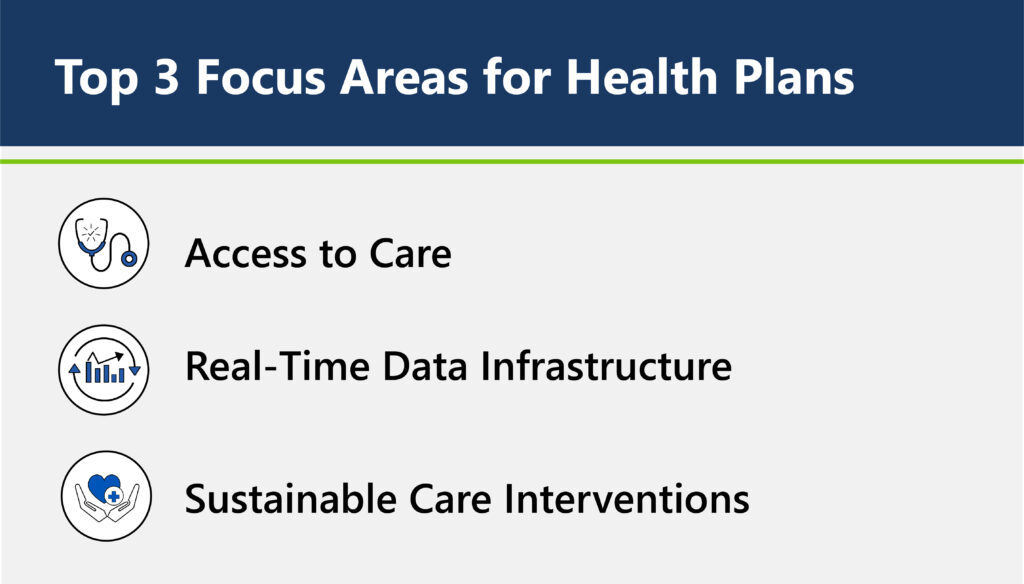
As Medicare plans prepare to navigate the regulatory changes ahead, what are the 3 areas Health Plans need to consider?
Health plans will need to strengthen the degree to which they focus on access to care, sustained health improvements and well-managed costs. Plans will need to prioritize access to care as the most critical aspect of member experience and health outcomes to drive continued Star Ratings success.
Second, they must invest in real-time data infrastructure to ensure that care gaps (not just HEDIS gaps) are closed quickly and efficiently.
Finally, plans need to focus on sustainable, mass-personalized care interventions that address both clinical and social needs, especially as CMS continues to emphasize health equity and outcomes.
As we wrap up our conversation with Melissa Newton Smith, it’s clear that her insights and experience will be invaluable in guiding healthcare organizations through an era of transformative change. Her commitment to innovation, operational excellence and patient-centered care aligns seamlessly with ProspHire’s mission to drive impactful improvements in healthcare quality. This alliance brings together Melissa’s strategic vision and ProspHire’s project delivery strengths, forming a powerful partnership poised to address the most pressing challenges in Medicare Advantage and beyond. With this combined expertise, we are well-positioned to create a lasting positive impact on healthcare outcomes, ushering in a future where quality and efficiency go hand in hand for the benefit of members and the industry.
Ready to take your Medicare Advantage strategy to the next level? Partner with ProspHire and leverage Melissa Newton Smith’s unparalleled expertise in healthcare innovation and quality improvement. Connect with us today to discuss how we can help you drive operational excellence, optimize your Star Ratings and meet the challenges of a rapidly evolving healthcare landscape. Together, let’s build a tailored roadmap for success. Reach out now and let’s get started on your journey to measurable, sustainable outcomes.
The Centers for Medicare & Medicaid Services (CMS) released the 2025 Star Ratings for Medicare Advantage plans on October 10th, 2024.
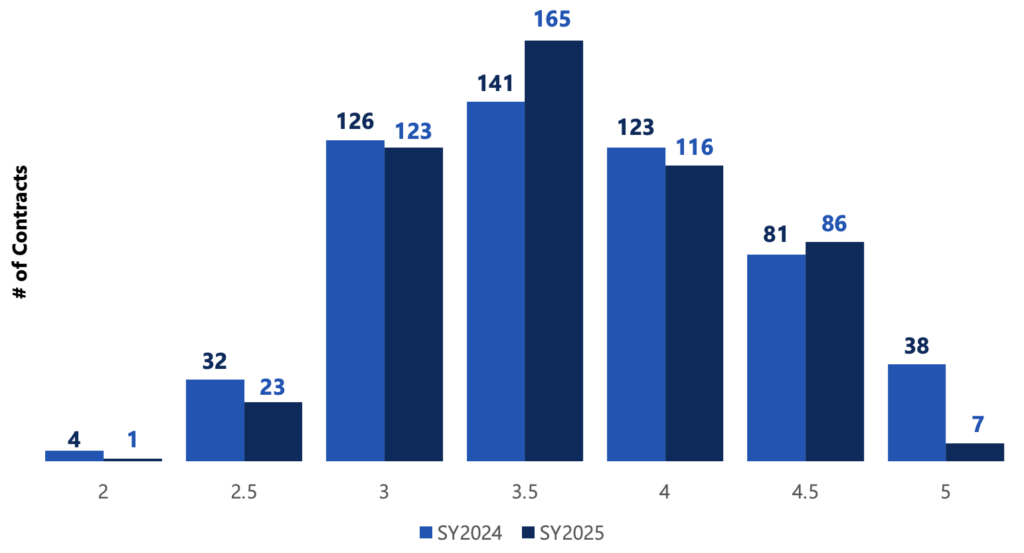
Following the dramatic impact of Tukey outlier deletion in Star Year 2024, Star Year 2025 didn’t face uncertainties or shock in methodology. Instead, we realized an upswing in cut points and the knock-on effect of Tukey and compressed distribution of scores. The guardrails, restricting the majority of measure cut point movement (+/- 5 pts) were in place and had impacts on Stars ratings and plan performance. In a year-over-year trend, the Medicare Advantage Prescription Drug (MAPD) contract enrollment weighted average for Star ratings decreased and faced one of the lowest levels in nearly a decade – shifting from 4.07 to 3.92.
The Star performance ratings also showed that 40% of MAPD plans earned an overall rating of 4 stars or higher for Star Year 2025, down slightly from 42% in Star Year 2024. When weighted by enrollment, 62% of MAPD enrollees are currently in 4+ Star plans for Star Year 2025 which is a significant drop from last year’s 74%.
Seven MAPD contracts earned 5 stars, marking them as the highest quality “high performing” Medicare Advantage plans. The Centers for Medicare & Medicaid Services highlighted these plans on the Medicare Plan Finder website to help beneficiaries identify top-rated options. This is a stark reduction from the 38 5-star plans in 2024. Medicare Advantage Prescription Drug plans with longer tenure also scored higher relative to newer plans, with five of the seven 5-Star plans being established programs for 10+ years. We’ve seen the number of 5-Star plans decrease steadily over the past few years, but with the removal of the reward factor starting in SY26 and the introduction of the health equity index, achieving that 5 Star rating will likely continue to prove more and more difficult.
Our team put together our SY2025 Insights and Analysis to begin to “tell the story” for Star Year 2025. If you have any questions or are curious to speak about your plan’s Star Rating, contact ProspHire to see how we can help improve your Star ratings.
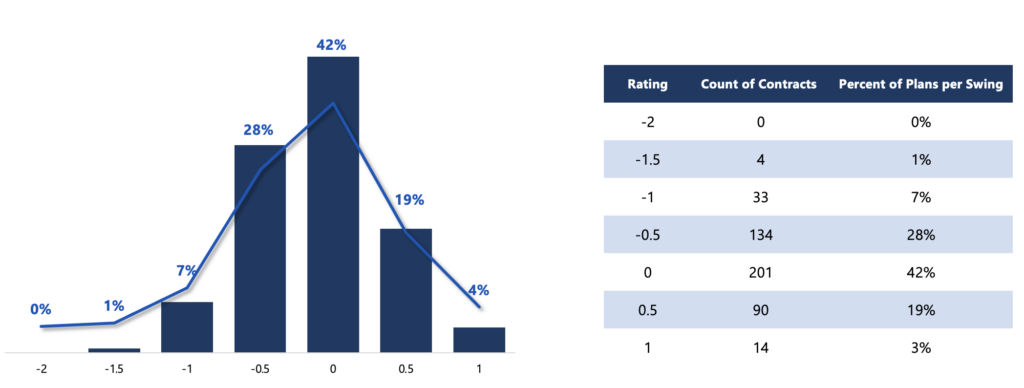
Rating Swing Distribution from Prior Year1
Graph Description:
Compares Health Plans Overall Star Rating between SY2024 and SY2025.
Only includes Local CCP, Regional CCP, PFFS and 1876 Cost. Excludes MSA, PDP, Employer Group.
Excludes Contracts that did not have a Star Rating in SY2024 or did not have enough data available.
Distribution of Star Rating SY2024 and SY20251
Graph Description:
Identified the total count of contract that received a Star Rating in Star Year 2024 and Star Year 2025 and shows the distribution over each year.
Only includes Local CCP, Regional CCP, PFFS and 1876 Cost. Excludes MSA, PDP, Employer Group.
Excluded any plans that were too new to be measured, not enough data available, or not applicable.
Distribution of Domain Level Performance
Using the data presented in the tables below, our team conducted a comprehensive analysis on the distribution of overall plan ratings in correlation with a plan’s performance in five domains: Consumer Assessment of Healthcare Providers and Systems (CAHPS), Healthcare Effectiveness Data and Information Set (HEDIS), Pharmacy, Operations and Health Outcomes Survey (HOS).
Key Highlights:
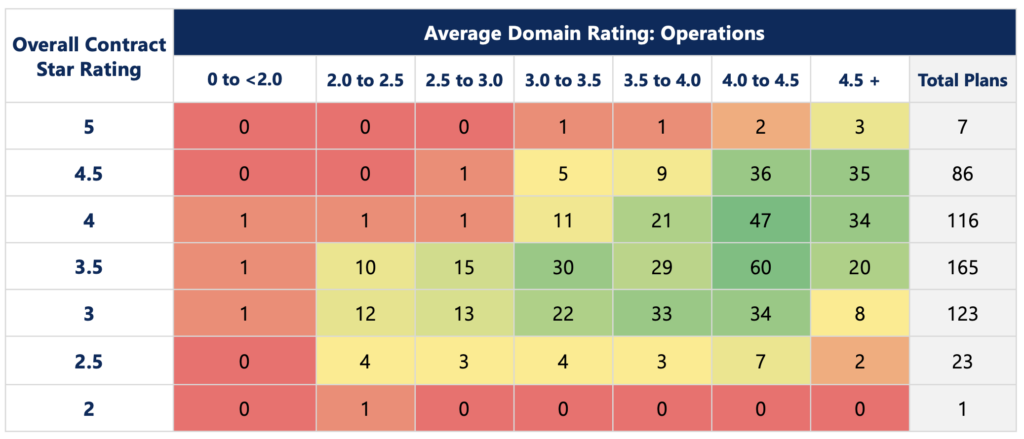
The Operations domain demonstrated a more concentrated performance range for high-performing plans, with 75% of 4.0+ Star plans achieving a score of 4.0 or higher in the designated measures.
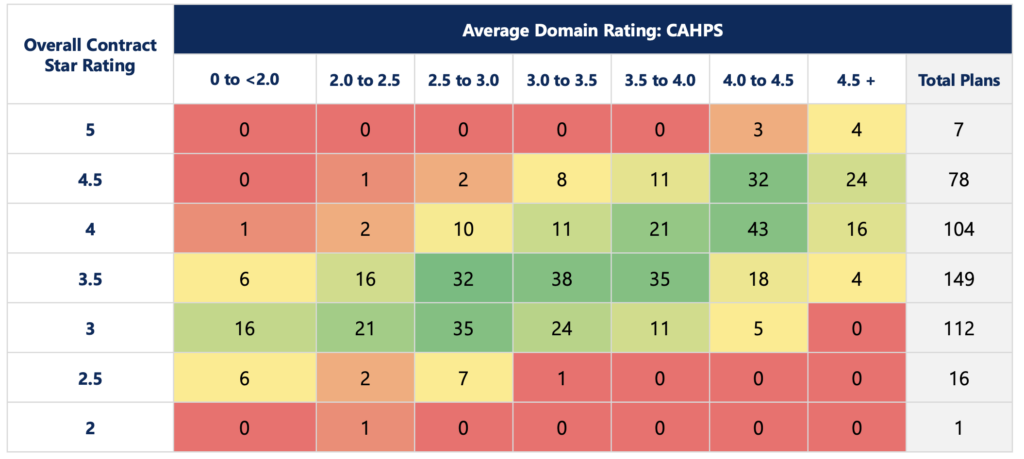
In order to achieve 4.0+ Stars, plans were required to succeed in CAHPS. Of the 189 plans that received a 4.0+ star, 82% of them had a minimum CAHPS scoring average of 3.5 Stars.
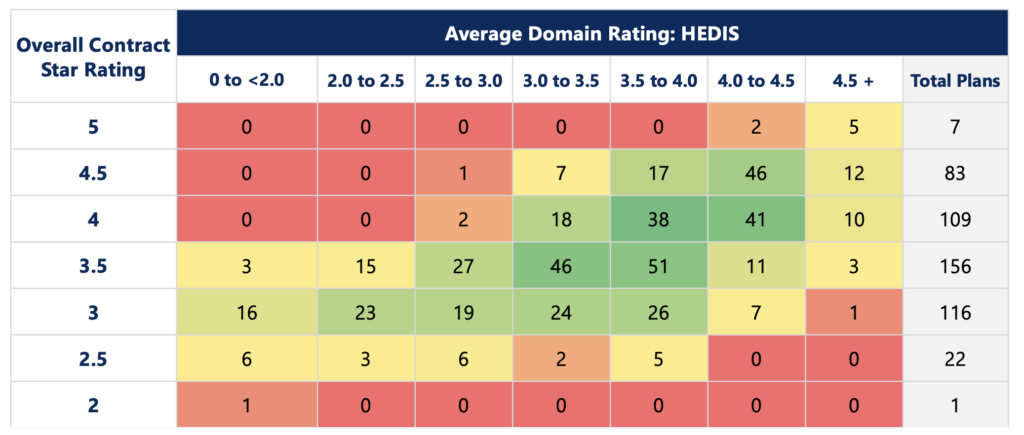
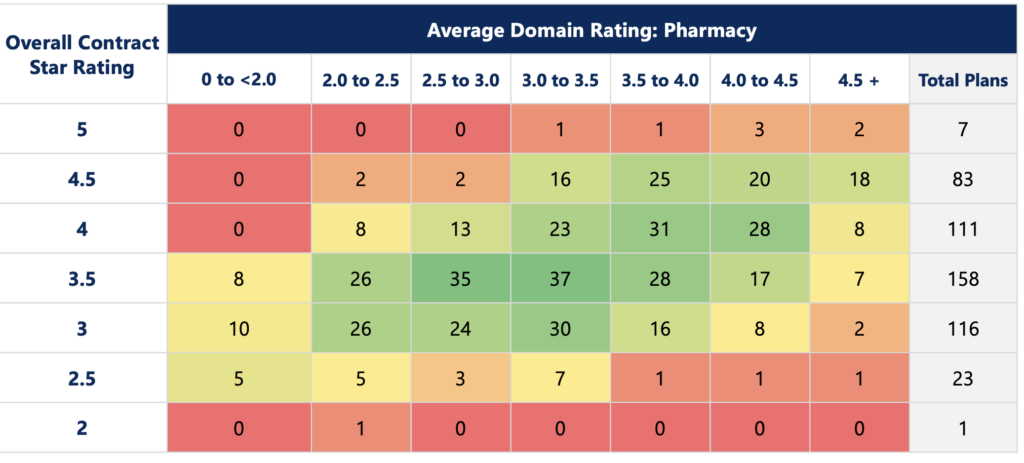
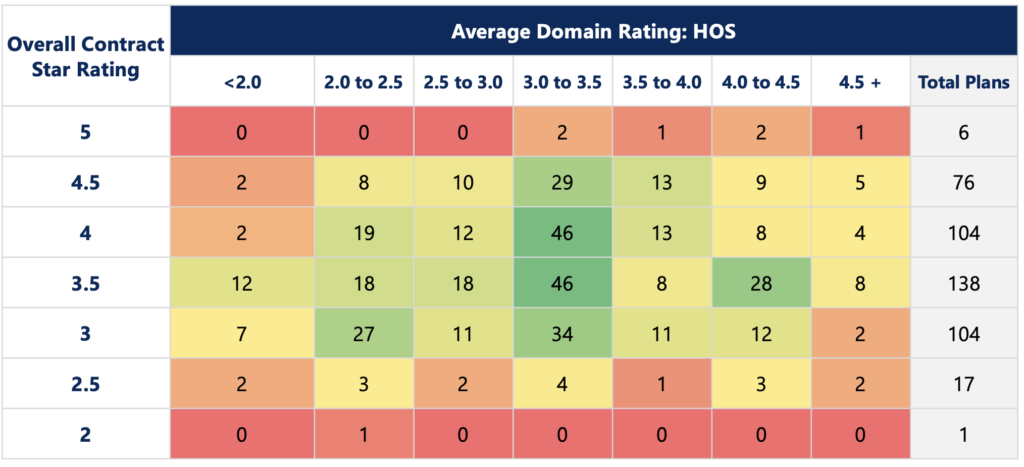
In line with CMS methodology weighting, HEDIS, Pharmacy, and HOS showed a more expected spread in overall health plan performance based on the domain’s average Star rating.
In summary, the health plan operations domain stands out as a consistent and influential factor driving higher Star ratings for health plans. With the shift in weighting moving away from the 4x in the member experience focused measures in operations (e.g., Members Choosing to Leave the Plan, Complaints, and TTY/FLI) the question becomes, “How will performance be impacted for SY26?” A strong focus on HEDIS and HOS will be required especially with the return of the two tripled weighted (x3) Improving/Maintaining Physical/Mental Health measures in HOS for SY2027.
As we enter the final stretch of the performance year SY2024, it is essential to place significant emphasis on the efforts of Q4. Health plans should arrange all available resources and make every effort, giving special attention to driving improvements in HEDIS performance. This Q4 push can act as an additional safeguard prior to the CAHPS survey distribution in March 2025. The MA marketplace faces many headwinds, including benefit reductions across many of the health plans and how plans communicate these changes broadly to their membership could have a significant impact on CAHPS results.
As we look ahead to the future of Stars and the “new normal” we continue to see tremendous value in investing in digital measurement transformation, electronic clinical data systems optimization, interoperability and health data exchanges. The industry will continue to shift this way and the health plans that invest now in this will end up being the biggest winners long term.
Plan Count by Overall Rating & Average CAHPS Rating1,2,3
Graph Description:
ProspHire categorizes the CAHPS domain based on the following 9 measures: Annual Flu Vaccine, Getting Needed Care, Getting Appointments and Care Quickly, Customer Service, Care Coordination, Rating of Heath Care Quality, Rating of the Health Plan, Rating of the Drug Plan, Getting Needed Rx Drugs
Measures that were noted by CMS as ‘Not enough data available’, ‘No data available’, ‘Plan too small to measure’ did not count in the domain calculation per plan due to CMS methodology of excluding those measures in the overall Star rating calculation.
Totals will vary across graphics as some health plans may not have been able to score for some domain categories due to unavailable data as noted in item 2.
Plan Count by Overall Rating & Average HEDIS Rating1,2,3
Graph Description:
ProspHire categorizes the HEDIS domain based on the following 13 measures: Breast Cancer Screening, Colorectal Cancer Screening, Care for Older Adults – Medication Review, Care for Older Adults – Pain Assessment, Osteoporosis Management in Women who had a Fracture, Diabetes Care – Eye Exam, Diabetes Care – Blood Sugar Controlled, Controlling High Blood Pressure, Medication Reconciliation Post-Discharge, Plan All-Cause Readmissions, Statin Therapy for Patients with Cardiovascular Disease, Transitions of Care, Follow-up after Emergency Department Visit for People with Multiple High-Risk Chronic Conditions
Measures that were noted by CMS as ‘Not enough data available’, ‘No data available’, ‘Plan too small to measure’ did not count in the domain calculation per plan due to CMS methodology of excluding those measures in the overall Star rating calculation.
Totals will vary across graphics as some health plans may not have been able to score for some domain categories due to unavailable data as noted in item 2.
Plan Count by Overall Rating & Average Pharmacy Rating1,2,3
Graph Description:
ProspHire categorizes the Pharmacy domain based on the following 5 measures: Medication Adherence for Diabetes Medications, Medication Adherence for Hypertension (RAS antagonists), Medication Adherence for Cholesterol (Statins), MTM Program Completion Rate for CMR, Statin Use in Persons with Diabetes (SUPD)
Measures that were noted by CMS as ‘Not enough data available’, ‘No data available’, ‘Plan too small to measure’ did not count in the domain calculation per plan due to CMS methodology of excluding those measures in the overall Star rating calculation.
Totals will vary across graphics as some health plans may not have been able to score for some domain categories due to unavailable data as noted in item 2.
Plan Count by Overall Rating & Average Operations Rating1,2,3
Graph Description:
ProspHire categorizes the Operations domain based on the following 10 measures: Special Needs Plan (SNP) Care Management, Plan Makes Timely Decisions about Appeals, Reviewing Appeals Decisions, Call Center – Foreign Language Interpreter and TTY Availability, Complaints about the Health Plan, Complaints about the Drug Plan, Members Choosing to Leave the Plan – Part C and Part D, MPF Price Accuracy.
Measures that were noted by CMS as ‘Not enough data available’, ‘No data available’, ‘Plan too small to measure’ did not count in the domain calculation per plan due to CMS methodology of excluding those measures in the overall Star rating calculation.
Totals will vary across graphics as some health plans may not have been able to score for some domain categories due to unavailable data as noted in item 2.
Plan Count by Overall Rating & Average HOS Rating1,2,3
Graph Description:
ProspHire categorizes the Health Outcome Survey (HOS) domain based on the following 3 measures: Reducing the Risk of Falling, Improving Bladder Control, Monitoring Physical Activity
Measures that were noted by CMS as ‘Not enough data available’, ‘No data available’, ‘Plan too small to measure’ did not count in the domain calculation per plan due to CMS methodology of excluding those measures in the overall Star rating calculation.
Totals will vary across graphics as some health plans may not have been able to score for some domain categories due to unavailable data as noted in item 2.
The Affordable Care Act (ACA), commonly known as “Obamacare,” is a transformative law that makes health insurance coverage more accessible and affordable. This guide highlights the importance of innovative ACA plan designs, explores current trends shaping the ACA marketplace and offers key considerations for developing and expanding your ACA plan to meet the evolving consumer needs and regulatory changes.
Importance of Health Insurance Plan Design Innovations
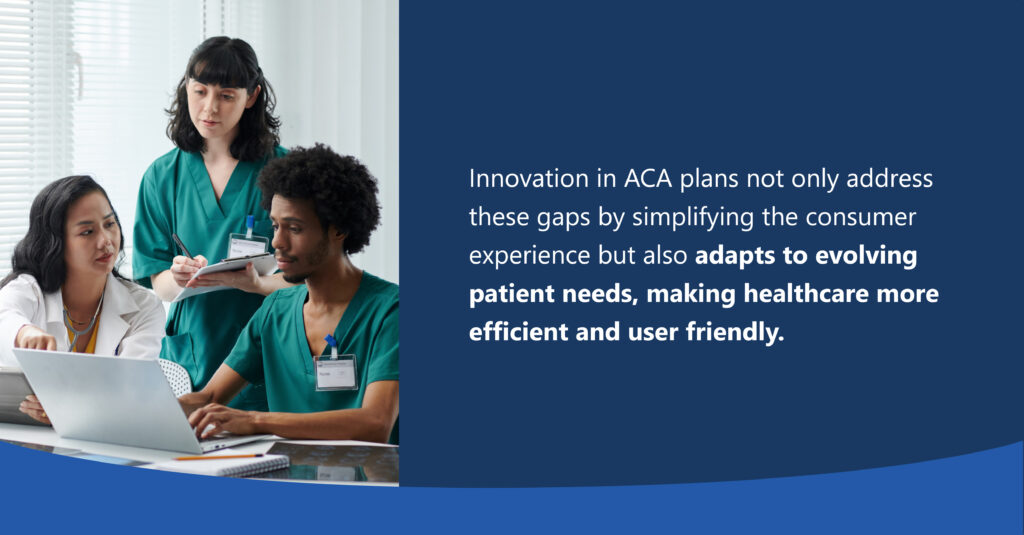
There are numerous opportunities to enhance your existing ACA plans and make healthcare more accessible and affordable. For example, some Americans still don’t qualify for ACA subsidiesleaving them without viable insurance options. Additionally, consumers often face challenges in navigating enrollment windows and comparing plans, products and issuers due to complex information and formats. Innovation in ACA plans not only address these gaps by simplifying the consumer experience but also adapts to evolving patient needs, making healthcare more efficient and user friendly. These innovations also help health providers remain relevant and competitive in an ever-changing industry, ensuring that coverage is both comprehensive and affordable while improving health outcomes.
Transformative Trends in ACA-Compliant Health Plans
Innovation in ACA plan design is driving new concepts and strategic approaches that aim to enhance patient care standards and integrate advanced technologies. Here are six trends in the ACA marketplace and healthcare industry.
1. Specialized Plans Cater to Unique Healthcare Needs
Health insurance companies are now breaking ground within the ACA framework to develop specialized plans, for mental health and substance use services, chronic condition management, maternity care and personalized medicine based on molecular and genetic insights. Mental health services are now a priority, with many ACA plans expanding coverage and ensuring parity between mental and physical health care.
2. Technology Continues to Shape ACA Plans
Numerous technology solutions and AI-powered tools are transforming the accessibility and convenience of ACA plans. Newer AI-powered diagnostic tools enhance care plan precision and health policy design. They can analyze vast healthcare data sets to predict costs, identify trends, create more tailored and efficient health policies, lower costs and potentially improve outcomes. Advanced AI and machine learning algorithms may also streamline administration processes such as claims management and patient record-keeping, while enhancing decision-making in patient care and policy design, making the entire system more responsive and effective.
Virtual care options are becoming a standard feature in ACA plans, enhancing accessibility and reducing costs for both patients and providers. Telehealth platforms and digital health records help improve healthcare accessibility. Patients in underserved or rural areas can now consult physicians remotely with telehealth services. Mobile apps and online portals for managing health plans also allow patients access to their healthcare information and services.
3. Major Industry Players Lead the Way in Innovation
The need for new approaches to healthcare has prompted several companies to develop transformative insurance models. For example, Aetna collaborated with Banner Health to combine groundbreaking approaches with traditional insurance expertise. Tech giants and startups are also contributing with digital health initiatives, telemedicine and health data analytics, creating an excellent opportunity for insurance companies to build relationships with tech companies that may aid in digital health initiatives.
4. Personalized Services and Integrated Systems
The evolving healthcare industry is moving toward personalized services for patients with tailored coverage and customized wellness programs based on individual health data. Integrated systems with insurance data, health records and real-time metrics in one place also offer an all-inclusive view of a patient’s health to enhance acute and preventive care.
5. Increased Focus on Patient Outcomes
ACA plan design innovations can now directly influence patient outcomes. For example, plans incorporating advanced care coordination strategies may encourage patients to receive timely and efficient treatment to enhance overall health outcomes. Plans that emphasize wellness and preventive care may influence healthier lifestyles for enrollees. While each example addresses a specific health need, both influences overall positive health outcomes.
6. Opportunities for Cost Savings and Improved Patient Care
Telemedicine and AI technology have significantly lowered healthcare costs while enhancing patient care. When designing your next ACA plan, prioritizing expanded access through telemedicine is a strategic move. Telemedicine enables patients to consult healthcare providers remotely, reducing barriers to care, such as geographic limitations or transportation issues. By incorporating telehealth services, ACA plans can help patients manage chronic conditions, receive preventive care, and address urgent health concerns without the need for costly emergency room or hospital visits.
Considerations and Solutions When Designing a New ACA Plan
Before designing your new ACA plan, you must understand the challenges of implementing innovations and how to counter them.
Adapting to Technological Advancements
Technology, including telemedicine and AI, is rapidly advancing and plans must keep pace to stay relevant and improve efficiency. Implementing advanced technologies like AI-powered tools can be costly and require significant infrastructure. Plans need to incorporate telehealth services and AI-powered diagnostic tools to enhance care delivery. Plans should also leverage data analytics to identify cost-saving opportunities and improve patient outcomes through personalized care plans.
Compliance With Regulations and Industry Standards
Regulatory bodies may still need to release standards regarding newer technologies and innovations in the ACA marketplace. Regularly review insurance, ACA and healthcare regulations to stay updated on and compliant with the latest rules. You may also need to review industry standards to confirm whether the new ACA plan design maintains medication adherence.
Impact on Insurers and Providers
It is crucial to account for how innovative ACA plan designs may impact stakeholders. Insurers must ensure regulatory compliance while managing the cost implications of innovations such as AI-driven tools and telehealth services, which can affect pricing and risk management. They need to balance these factors with maintaining affordable premiums and competitive positioning. On the other hand, providers must adapt to new care delivery models like value-based care and telemedicine, which require significant changes in workflows, skills and payment structures. Effective training and support are crucial to help providers integrate these innovations seamlessly. Collaboration between insurers and providers, along with thoughtful implementation and support strategies, is essential to successfully navigate these challenges and enhance the overall effectiveness of ACA plans.
Patient Education About New Plan Features
Patients may need extra guidance on your new ACA plan design and how to access and pay for care. Be transparent with patients and introduce your new plan features early on, gradually explaining different concepts to them so they fully understand how to use the plan when it launches. This may involve creating user-friendly materials and platforms that outline how these features work, their benefits and how to utilize them effectively. By ensuring that patients are well informed, healthcare providers and insurers can enhance engagement, improve health outcomes and ensure a smoother transition to new plan features.
Potential Disruptions in Traditional Care Patterns
Technology may change how medical professionals deliver healthcare by streamlining and automating previously manual tasks. Help existing workers adapt and create alternative responsibilities for an easier transition.
Develop Your ACA Health Plan Design with ProspHire
Improving the value of your organization’s ACA plan is critical to standing out among the competition and improving patient care. Still, challenges with plan design innovations make it essential to establish worthwhile and compliant ACA plans. At ProspHire, our expert ACA consultants work closely with healthcare organizations to understand their unique needs, obstacles and growth aspirations to help them develop comprehensive strategies to deliver and execute meaningful plans. To learn more about how our knowledgeable team can assist you, contact us about our ACA plan development services today.