Did you know June 18th is Wear Blue Day? Wearblue for Men’s Health! Whether it’s your friend, brother, dad, boyfriend, spouse, or boss, show them you care about them and their health by wearing blue on Friday, June 18th. This day raises awareness of making healthy lifestyle choices, making regular annual visits to the doctor, and getting educated on prevalent health conditions that predominately affect men.
Why is Wear Blue Day important?
Wear Blue Day is an important opportunity to highlight the importance of men’s health and to promote and support the health and well-being of men and boys in our communities.
It was created by the Men’s Health Network, a non-profit organization focused on educating people on men’s health conditions, preventative measures, and healthy habits. The color represents the conditions that primarily affect men, such as testicular cancer, stroke, lung cancer, diabetes, cardiovascular disease, prostate cancer, and other illnesses that arise within the male population.
Show your support by wearing blue and displaying the #ShowUsYourBlue on social media platforms.
Learn how ProspHire can help your health plan improve member health outcomes. Contact us today.
Over the last decade, there has been increasing research and awareness surrounding the impact of Social Determinants of Health (SDOH) on health. The Centers for Disease Control (CDC) reports that SDOH have a greater impact on health than genetics or access to healthcare services.1 Organizations from the international level to the local level are prioritizing interventions that advance health equity by producing policies and increasing funding for programs and interventions with an SDOH focus. The World Health Organization (WHO) defines SDOH as “non-medical factors that influence health outcomes”2 and the US Department of Health and Human Services (HHS) has grouped SDOH into 5 domains: Economic Stability, Education Access and Quality, Health Care Access and Quality, Neighborhood and Built Environment and Social and Community Context.3 The Centers for Medicare and Medicaid Services (CMS) is also showing their commitment to SDOH through their updates to the Medicaid and Medicare programs.
Medicare Advantage Plans’ Opportunity to Support SDOH
Prior to 2019, Medicare Advantage (MA) supplemental benefits had to be primarily health-related and offered on a uniform basis to all plan enrollees; but in 2019 CMS updated these guidelines to allow MA plans to cover benefits tailored to certain populations that address social needs or long-term care needs. MA plans can now offer benefits to enrollees who have a specific health status (Special Supplemental Benefits for the Chronically Ill or SSBCI) and offer benefits that directly address SDOH.4 Some of these benefits cover food insecurity, home safety, transportation and non-opioid pain management. Since these guidelines were updated, there has been a continued increase in organizations offering these benefits. According to research by ATI Advisory, in 2022 the number of plans offering SSBCI increased by almost 40%.5
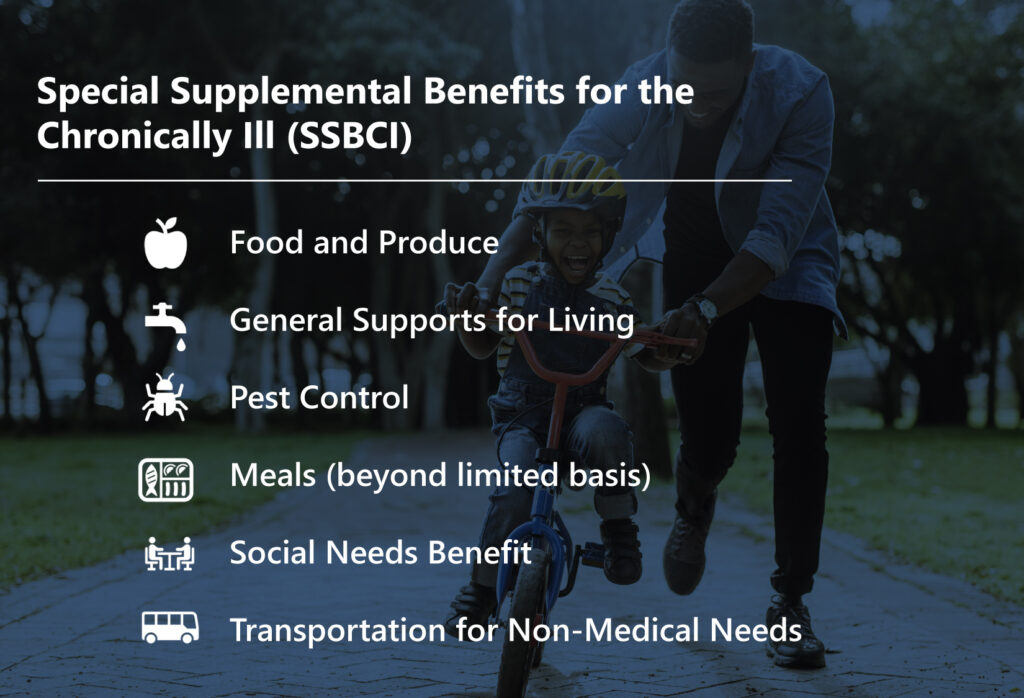
Figure 1. Special Supplemental Benefits for the Chronically Ill (SSBCI) that were offered the most by Medicare Advantage Organizations in 2022
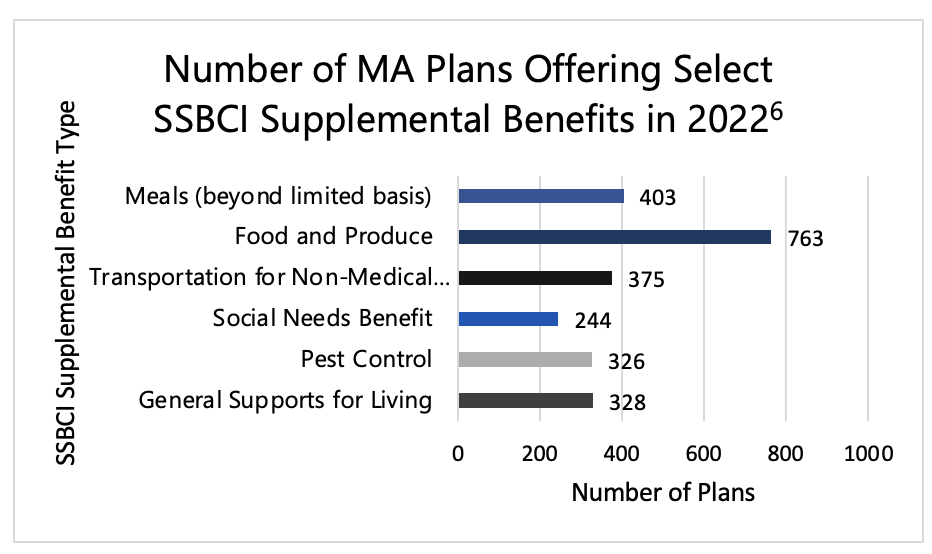
As shown in Figure 1, the most common SSBCI benefits offered in 2022 were categorized as food and produce, pest control, transportation for non-medical needs, meals, social needs benefit and general supports for living.5 Figure 2 reports the number of plans that offered these SSBCI supplemental benefits to their members in 2022.
Figure 2. Number of Medicare Advantage Plans Offering Select SSBCI Supplemental Benefits in 20226
Health plans serving the Medicare population are critical to driving health equity. In 2022, there were more than 28 million people enrolled in a MA plan and over half of these enrollees had at least one unmet SDOH need (AARP).7 By designing their supplementary benefits, these organizations prioritize what services are valued and have the opportunity to greatly impact members’ health outcomes and even their own Return on Investment (ROI). Offering benefits that impact SDOH can reduce the total cost of care, improve utilization, increase member satisfaction and result in higher member retention. In a study conducted by WellCare Health Plans and the University of South Florida College of Health, they found that people who were successfully connected to social services had a 10% reduction in healthcare costs.8
SDOH is innately complex and a study by NORC at the University of Chicago points out that there are further complexities in addressing SDOH. The study suggests that providers don’t have difficulties understanding what benefits each plan offers, who is eligible and what is necessary for their patients to sign-up.9 The article even suggests that providers feel they need to become experts in supplemental benefits to fully support their patients.9 Similarly, beneficiaries have limited awareness of what they have access to. Care Managers become increasingly important in identifying eligibility and enrolling in services. Therefore, organizations that choose to offer these supplementary benefits need to understand how to effectively manage them to fully see the benefits for their members and their ROI.
The Challenges to Implementing SDOH Supplemental Benefits
Like many of the governing agencies throughout the United States, SDOH is at the forefront of many payer organizations’ goals for the coming years. Even America’s Health Insurance Plan (AHIP) launched “Project Link” which aims to bring together payer organizations across the United States to build sustainable SDOH solutions.10 In 2019, their board said that SDOH is an “essential part of the industry’s long-term vision for improved health and financial security.”10 There has been an increase in supplemental benefit offerings impacting SDOH each year since 2019.11 Thoughtful and deliberate implementation of the benefits is critical to success for the payer organization, the provider and the members themselves. Benefit design and selecting which benefits to offer is often the first hurdle for payer organizations. The ability to understand the SDOH impacting the organization’s members allows the organization to use these benefits as a differentiator from competing plans – these benefits can entice members and increase enrollment. The benefits can also serve members in a way that improves their health outcomes and eventually decreases medical costs and increases the ROI.8 After the supplemental benefits are chosen, it’s also important to roll them out in a way that providers, care managers and members can understand. Availability, eligibility, the process to use the benefits and the potential benefit of the benefits need to be well-communicated.
How ProspHire Can Help
At ProspHire, we understand the importance of SDOH and strive to promote health equity. We also understand the complexities and barriers that healthcare organizations face when trying to do the same for their customers. Our team of practitioners have extensive healthcare industry knowledge and are ready to discuss your SDOH goals and how we can help you reach them. Connect with us today.
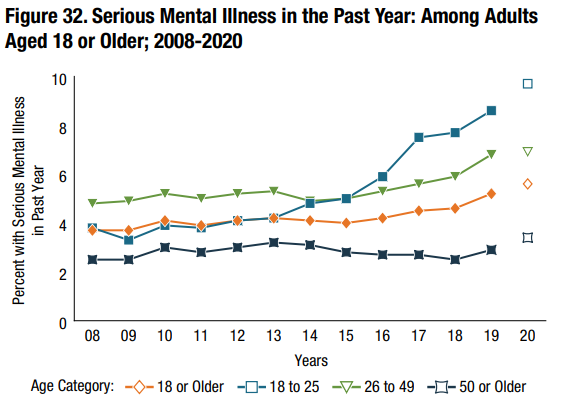
May is Mental Health Awareness Month – a reminder to all of us that checking in on your mental health is just as important as your physical health. Nationwide mental health trends reveal an increasing concern. The Substance Abuse and Mental Health Services Administration (SAMHSA) notes that one in five adults in the United States have a mental health or substance abuse disorder1. Nationwide trends in rates of mental illness reveal a rapid increase of instance over the past decade, as illustrated in Figure 1.
The American Medical Association defines behavioral health as encompassing the following conditions: mental health disorders, substance use disorders, life stressors and crises and stress-related physical symptoms2. For health plans and patients alike, often the first solution that comes to mind when addressing behavioral health issues is to focus on psychiatric interventions. Despite this assumption, mental and physical health are often intrinsically related and influenced by similar environmental factors. As a result, programs that utilize comprehensive Social Determinants of Health (SDOH) data to address behavioral health are often overlooked.
Behavioral Health and Social Determinants of Health
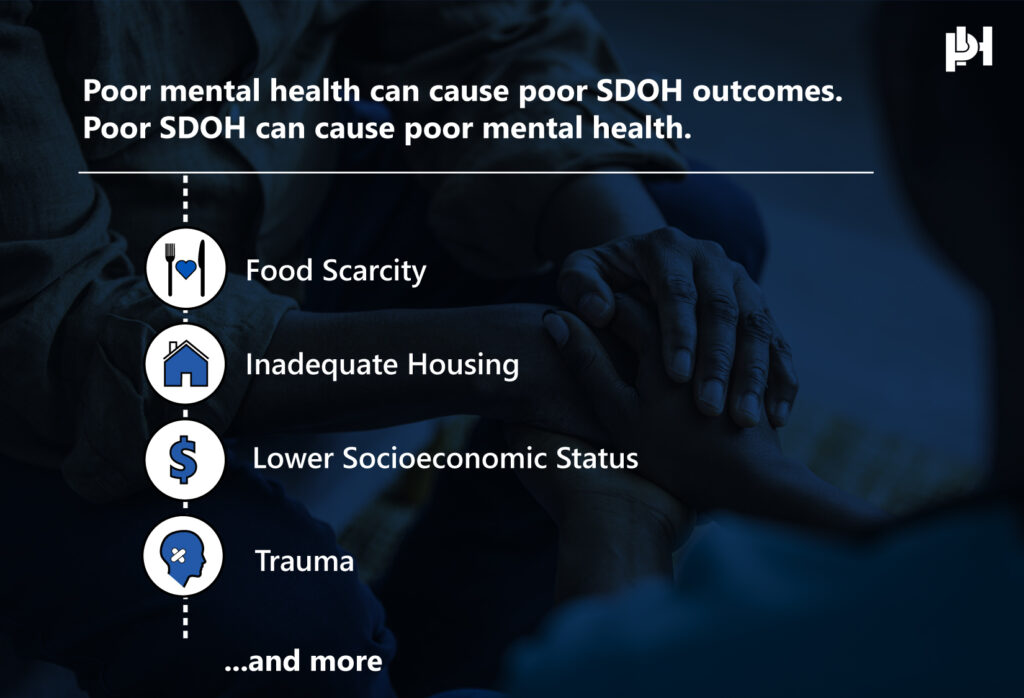
Social determinants, or drivers, are a useful indicator to identify factors which contribute to poor mental health in communities and individuals. Addressing health equity in all forms, including behavioral health, and SDOH factors are intrinsically related. Poor mental health can cause poor SDOH outcomes or vice versa. The National Library of Medicine3 notes that these outcomes are largely tied to food scarcity, inadequate housing, lower socioeconomic status and trauma among additional factors.
Expanding access to quality behavioral health services is a necessary component of efforts to address behavioral health and SDOH outcomes. The following indicators are associated with limited access to behavioral health services and present an opportunity for intervention:
Health Care, including insurance coverage and provider availability
Stable Housing – a significant contributor to mental stress
Education, especially from an early age
Income and Employment
Social Support
Clinical systems are still assessing ways to measure SDOH factors to inform behavioral health policies as there are still shortfalls in assessing these metrics4. Ideally, health plans, providers and communities can partner to address these issues.
Approaches to Target Behavioral Health through SDOH
Understanding and targeting the causal factors of mental health related to SDOH is critical in enabling mental health equity. The importance of various social determinants and their continuous evidence of impact on mental health is a call to action for improved whole-person care. Housing and food access highlight the whole-person impact of SDOH on health:
Stable Housing
Inadequate and unaffordable housing can result in poor mental health5. Increased access to affordable housing and adequate living conditions present examples of interventions focused on SDOH that would directly impact mental health. Poor living conditions such as mold, lack of heating and dampness can impact both mental and physical health. Overall, a lack of affordable housing within a community causes increased rates of homelessness which can lead to even greater mental health issues and physical health risks. An intervention to offer housing programs to those with mental health illness or housing vouchers to access affordable housing are examples of efforts to drive change.
Food Security and Healthy Diet
Access to food and a healthy diet are intrinsically tied to physical health and wellness; however, evidence suggests that unhealthy eating is also a contributor to poor mental health. Having a whole-person approach to care presents a potential intervention. Individuals with illnesses such as diabetes are more likely to have depression, highlighting the correlations between mental and physical health6. Increasing food security by delivering healthy food to farmers markets, community gardens, corner stores or through home delivery offers alternative opportunities for individuals struggling with poor nutrition due to lack of access.
Evidence of successful programs continues to arise as health plans, providers and communities’ partner to address social determinants of health. Pyx Health’s Loneliness Assessment is an example of a successful intervention.
Pyx Health Loneliness Assessment
Providers can also look to interventions which work in conjunction with health plans to address behavioral health and SDOH outcomes. Pyx Health, based in Arizona, is a healthcare company which works with Medicaid and Medicare plans to support individuals experiencing loneliness. Their process involves identifying vulnerable members through SDOH screening tools and offering vulnerable members 24/7 support7. Members use the app to express their needs and are subsequently connected with resources within their health plan and community. The approach improves behavioral health outcomes and reduces stress on clinical health resources. Given the limited amount of multi-dimensional approaches which specifically address behavioral health utilizing social determinants of health, this approach serves as inspiration for similar interventions.
How ProspHire Can Help
Through ProspHire’s Addressing Health Disparities service offering, we strive to support our neighbors and clients to achieve more equitable whole-person care. Through population health assessments, targeted Social Determinant of Health interventions and innovative solutions to support behavioral health needs, we hope to enable positive change for your customers and our communities.
PITTSBURGH, PA – ProspHire, a national healthcare consulting firm, has been selected by Modern Healthcare as one of the 2023 Best Places to Work in Healthcare. The award program identifies and recognizes outstanding employers in the healthcare industry nationwide. Modern Healthcare partners with Workforce Research Group on the assessment process, which includes an extensive employee survey.
“Thank you to all of our dedicated employees who recognize ProspHire as an outstanding employer in the healthcare industry,” said Lauren Miladinovich, Co-founder, Managing Principal and CEO. “Be it an uncertain economy, staffing shortages or increasing demands of flexibility and remote work opportunities, our leadership team constantly strives to understand what our employees need and want in today’s business environment.”
“We are incredibly proud of our fourth consecutive win of the healthcare industry’s most prestigious award. This remarkable achievement is a testament to the unwavering dedication of our team, whose collective spirit and commitment to excellence have made ProspHire a Best Place to Work. We are grateful for this recognition and will continue to foster a thriving, inclusive and empowering environment for our people to innovate, grow and make a meaningful impact in healthcare,” said Chris Miladinovich, Co-founder, Principal and COO. “Next year is one for the thumb.”
ProspHire will find out the ranking on the Best Places list on September 28.
About ProspHire
ProspHire is a national management consulting firm focused on healthcare advisory, project delivery and strategic resourcing. Founded on the core value of relationships, with the goal to “prosper together,” ProspHire partners with clients to identify and solve their most significant people, process and technology challenges. The woman-owned and rapidly growing Pittsburgh-based firm has nearly 100 practitioners and consultants who deliver exceptional service to each one of our clients across the U.S. Visit www.prosphire.com.
PITTSBURGH, PA – ProspHire, a national healthcare consulting firm, has been named to Inc. magazine’s annual Best Workplaces List for 2023. The list is the result of a comprehensive measurement of U.S. companies that have excelled in creating exceptional workplaces and company culture, either operating in a physical or virtual facility.
Inc. selected 591 honorees this year. Each company participated in an employee survey, conducted by Quantum Workplace, which included topics such as management effectiveness, fostering employee growth and overall company culture. Organization benefits were also audited to determine overall score and ranking.
“Being named to Inc. Magazine’s Best Workplaces is an honor,” said Lauren Miladinovich, Co-founder, Managing Principal and CEO. “Proving to the world that you are a magnet for talent and have a culture that keeps teams engaged, productive and proud to come to work is truly a remarkable achievement.”
The List of Best Workplaces will be featured in the May/June 2023 issue of Inc. Magazine and prominently featured on inc.com.
About ProspHire
ProspHire is a national management consulting firm focused on healthcare advisory, project delivery and strategic resourcing. Founded on the core value of relationships, with the goal to “prosper together,” ProspHire partners with clients to identify and solve their most significant people, process and technology challenges. The woman-owned and rapidly growing Pittsburgh-based firm has nearly 100 practitioners and consultants who deliver exceptional service to each one of our clients across the U.S. Visit www.prosphire.com.
Women’s Health Week is aimed to raise awareness about the manageable steps women can take to improve their health and lifestyle. Incorporating simple preventative and positive health behaviors into their everyday lives is important. One’s lifestyle organically impacts day-to-day behaviors that can lead to downstream impacts both positively and negatively. Women’s Health Week provides an avenue for others to share their experiences and enhance exposure to learning opportunities that may have not been realized. During this time of the year, women are encouraged to maintain their preventive screenings, healthy life choices and rejuvenate. ProspHire encourages women to consider the factors that influence their mental health, such as managing stress and talking about anxiety and depression.
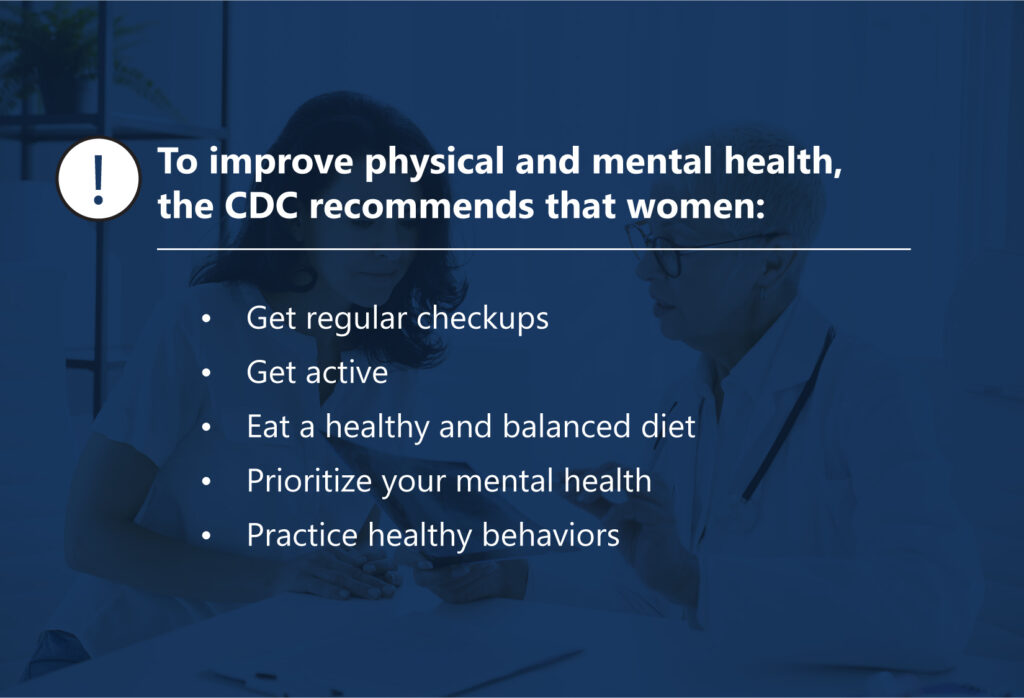
To improve physical and mental health, the CDC recommends that women:
Get regular checkups, including a yearly well-woman exam. Talk to a healthcare provider about any health concerns you have.
Get active.
Eat a healthy and balanced diet.
Prioritize your mental health and learn how to cope with stress.
Practice healthy behaviors. Daily decisions influence your overall health.
Why is Women’s Health Week important?
Women’s health plays an important role within the Healthcare industry that is driven by quality. It brings added awareness and accountability by way of preventative based HEDIS measures which are monitored by providers, health systems, health plans and members themselves. HEDIS (Healthcare Effectiveness Data and Information Set) is a set of standardized performance measures developed by the National Committee for Quality Assurance (NCQA), which allows direct, objective comparison of quality across a multitude of value-based care programs designed to improve the quality of care to members regardless of age, gender, finance and other social determinants.
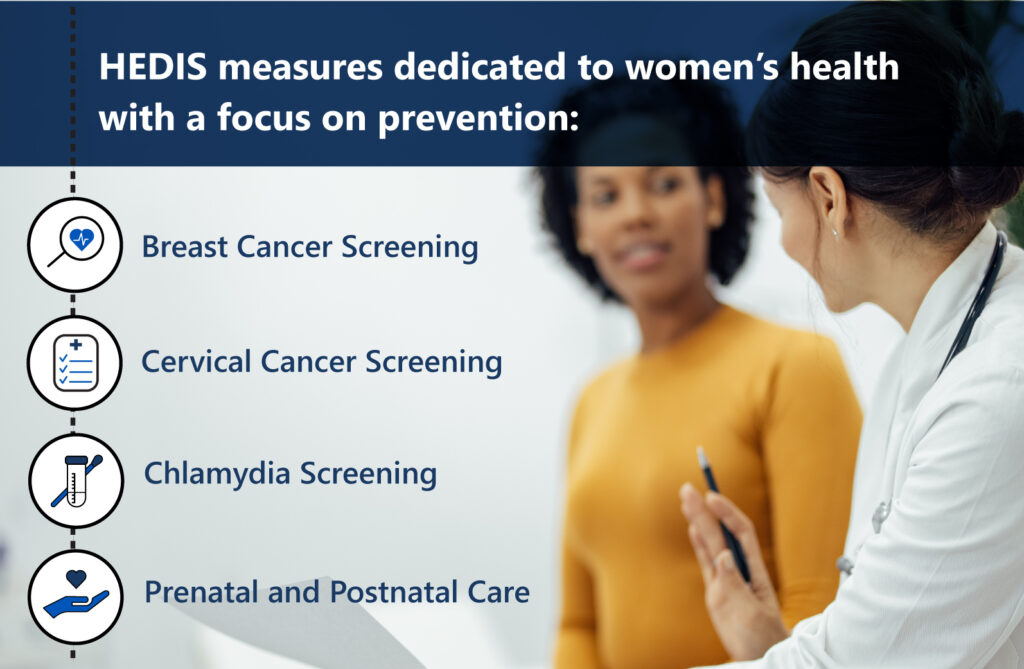
There are specific measures within HEDIS dedicated to women’s health that focus on prevention:
Breast Cancer Screening (BCS) Women who had one or more mammograms to screen for breast cancer during the measurement year or the two years prior.
Cervical Cancer Screening (CCS) Women who were screened for cervical cancer within the eligible time frame.
Chlamydia Screening (CHL) Women who were identified as sexually active and who had at least one chlamydia test in the measurement year.
Prenatal and Postpartum Care (PPC) The percentage of deliveries that received a prenatal care visit and or postpartum visits within the eligible timeframe.
Within HEDIS performance it is expected that better outcomes lead to more enrollees, visits and overall engagement compared to competitors. Physician-specific scores are being used as evidence of preventive care from primary care office practices. These measures are also the basis for physician incentive programs such as ‘pay for performance’ and ‘quality bonus funds’.
How Can ProspHire Help?
At ProspHire, we have dedicated subject matter experts with experience supporting health plans, provider groups and health systems to yield positive quality outcomes that trickle down to enhanced patient and member experience, improved quality of care and reduced costs. Connect with one of our health care experts today.
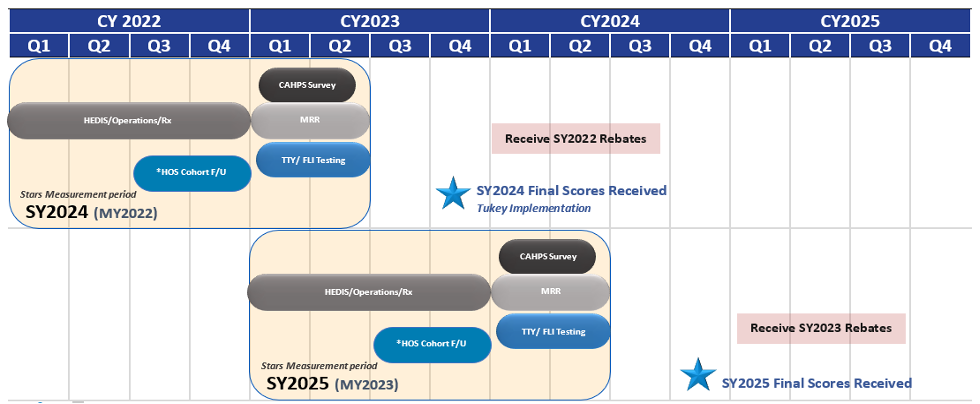
It’s that time again for a new Star Year (SY). We are currently four full months into measurement year 2023 (SY2025), and in the final months of closing out the performance for SY2024. During this time, health plans must have a keen eye on two Star Years at once to maximize interventions and try to increase performance. With the pending changes coming into effect that will have a negative impact on plans, such as Tukey Outlier Deletion (SY2024), it is imperative that as we begin SY2025 we have the right plan in place from the beginning.
ProspHire’s Stars experts provided critical strategies to success as we are within SY2025 planning /execution:
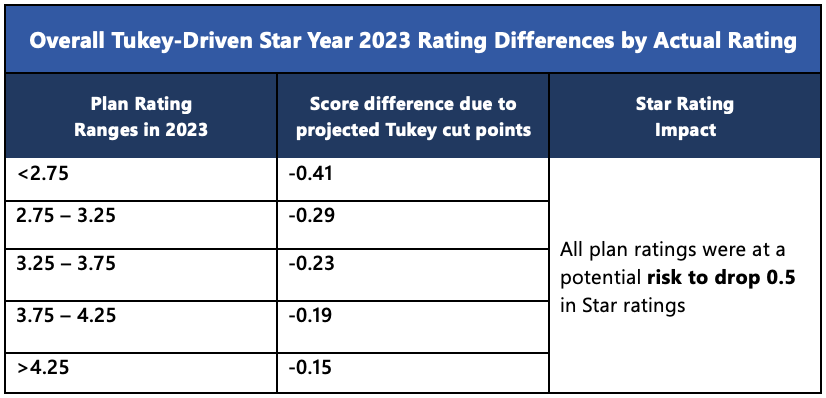
As your health plan continues to map out initiatives for SY2025, Tukey expectation setting and education are important to communicate early with leadership and shared services to understand possible impacts to your organizations Star rating in SY2024 and SY2025. With the implementation of Tukey Outlier Deletion and the reality of a potential drop in overall Star rating, plans must understand the implications of Tukey for their plan. It is important to communicate with leadership early and often to allow for future planning efforts to take place. Plans must continue to educate shared services on these impacts to drive new innovative solutions to continue to boost performance with this barrier.
*These results were calculated in partnership with Hyperlift and use methodology that excludes CAI and Reward Factor. QI Measures were applied
Goal Setting Sessions
Within the plan it’s critical to analyze your goals early and often within the performance year and select targets that consider the potential Quality Improvement measures and promote significant improvement. Doing measure-by-measure goal setting allows for prioritization of targeted measures that the plan can design specific interventions to promote improvement. It is also important to consider potential Tukey Outlier Deletion impacts for SY2025 projected cut points to allow for more aggressive planning and execution throughout the year.
Stars Strategic Plan
Once targets are established for the performance year, it’s imperative to develop a plan by domain that includes targeted interventions and strategies for member outreach and provider partnerships. It is critical that Stars is made a priority throughout the entire organization and measure-level owners are clearly defined to strongly execute defined strategies throughout the year.
After you establish a strategic plan for Stars, it is critical to establish ongoing assessments of intervention effectiveness. Ensuring that the plan has regular access to these KPIs will allow for the proactive monitoring of performance and help inform where strategies may be falling short and additional interventions are needed. These should be set for internal interventions and vendor partners driving measure improvement strategies. Access to data is critical to inform planning and performance success.
Additional key themes to consider throughout SY2025:
Ongoing Training and Education of Stars
Transparency By All Parties Within Shared Services
Understand Organizational and Industry Changes
Ongoing Measure Analysis
At ProspHire, we continue to partner with health plans to offer insights, analysis and execution strategies that improve Star ratings.
PITTSBURGH, PA – ProspHire’s founders, Lauren Miladinovich and Chris Miladinovich have been named finalists for Ernst & Young’s (EY US) Entrepreneur of the Year® 2023 East Central Award. The program celebrates entrepreneurs from Western Pennsylvania, West Virginia, Northeast and Central Ohio and Kentucky.
Unstoppable, serial, entrepreneurial creators and disruptors, Lauren and Chris started ProspHire as an idea on a napkin in the basement of their Western Pennsylvania suburb. Eight years later, despite the unprecedented challenges of a global pandemic, talent shortage, data security issues and economic instability, they took this first of multiple ventures, a healthcare consulting Firm, from $0 to $20m. They have built and sustained a resilient culture focused on healthcare advisory, project delivery and strategic resourcing for each of their clients across the U.S.
“The list of finalists is impressive and we are humbled to be recognized among them,” said Lauren Miladinovich, Co-founder, Managing Principal and CEO.
“We are honored to be named finalists for the EY Entrepreneur of the Year award. This recognition is a testament to the hard work and dedication of our team, who have helped us bring our vision to life. As entrepreneurs, we are committed to creating solutions that make a positive impact on society and being a finalist for this prestigious award is a validation of that mission. We look forward to the opportunity to connect with other like-minded entrepreneurs and share our experiences of driving positive change in the world,” said Chris Miladinovich, Co-founder, Principal and COO. “With a commitment to continued innovation, we aim to deliver on our vision to be a leader in healthcare strategy and execution for our clients.”
To Lauren and Chris, being entrepreneurial is as simple as thinking outside the box and expecting the unexpected. What they don’t say is what their employees and staff see every day… the constant hunger to make things better and enabling those around them to be flexible, adaptable and see opportunities.
28 entrepreneurs were selected as finalists by an independent panel of judges. The candidates were evaluated based on their demonstration of building long-term value through entrepreneurial spirit, purpose, growth and impact, among other core contributions and attributes. Now in its 37th year, Entrepreneur of the Year is one of the preeminent competitive business awards for transformative entrepreneurs and leaders of high-growth companies who are building a more equitable, sustainable and prosperous world for all.
Regional award winners will be announced on June 14, 2023, during a special celebration. The Entrepreneur of The Year program has recognized more than 11,000 entrepreneurs throughout the US since its inception in 1986, and it has grown to recognize business leaders across 145 cities in over 60 countries around the world.
About ProspHire ProspHire is a national management consulting firm focused on healthcare advisory, project delivery and strategic resourcing. Founded on the core value of relationships, with the goal to “prosper together,” ProspHire partners with clients to identify and solve their most significant people, process and technology challenges. The woman-owned and rapidly growing Pittsburgh-based firm has nearly 100 practitioners and consultants who deliver exceptional service to each one of our clients across the U.S. Visit www.prosphire.com.
Did you know? May is Mental Health Awareness Month.
In a given year, 1 in 5 Americans will experience a mental illness and more than 50% of Americans will be diagnosed with a mental illness or disorder at some point in their lifetime1.
To improve access to mental health services, the Mental Health Parity and Addiction Equity Act (MHPAEA) was implemented in 2008 to instate health plan requirements to provide equal treatment of mental health conditions and substance use disorders as would be provided for medical or surgical benefits. What does this mean?
Mental Health Parity and Addiction Equity Act
MHPAEA was established, and has evolved over time, to subject requirements on large group plans, individual and small group plans, to provide the same limitations or allowances for physical and behavioral health care. An example of the law in action is that a co-pay to see a behavioral health provider cannot be higher than that to see a general practitioner. Ultimately, if a health plan offers a mental health or substance abuse benefit, they must provide a benefit that is at least equal to the physical health benefit.
How does MHPAEA Affect Mental Health Equity?
MHPAEA made it illegal for plans to discriminate or offer less generous benefits to people with behavioral health conditions. However, with consideration to equity, the enforcement of the law is managed at the discretion of each individual state leading to some national inequities in coverage. Although there are safeguards in place with the federal law being the minimum requirement, there are several advocates nationally pushing for increased mental health coverage and enforcement.
The need for access to and equitable mental health care goes beyond law and calls for change across the healthcare industry. Data shows that individuals from racial and ethnic minority groups face obstacles in accessing needed care2. There are several obstacles that may contribute to the disparity in outcomes, but racism and racial trauma are known factors that negatively impact mental health3. To learn about ways we as individuals, public health organizations, healthcare systems, states and communities can work together to promote health equity, visit the Centers for Disease Control and Prevention’s publication on Prioritizing Minority Mental Health.
How Can ProspHire Help?
At ProspHire, we continuously strive to improve access to care and address health disparities. While supporting health plans remain compliant with federal and state regulations, we identify opportunities to leverage regulatory programs and initiatives to drive further change to impact your members and our communities.
For more on our Clinical Practice and Addressing Health Disparities visit: prosphire.com.